

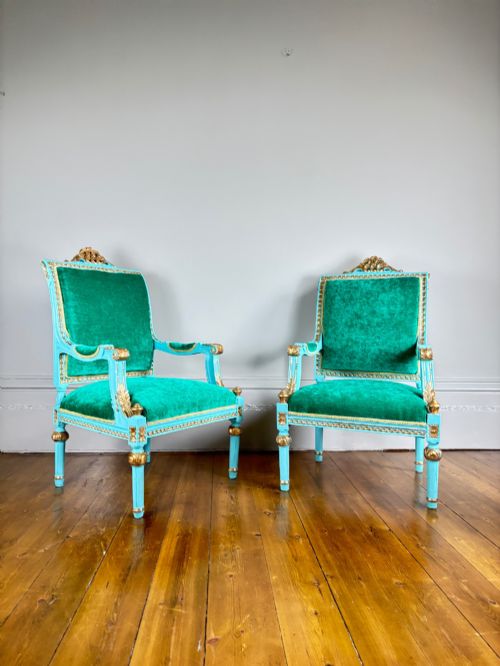
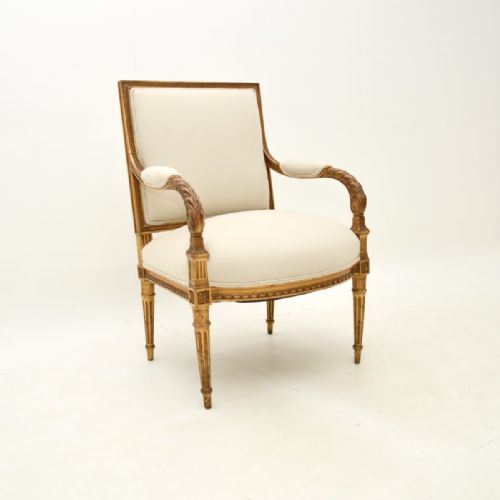
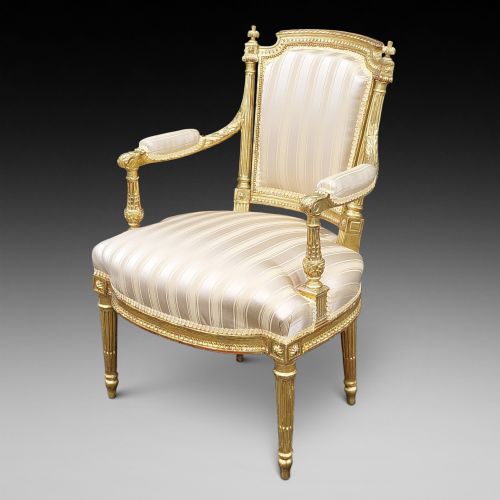
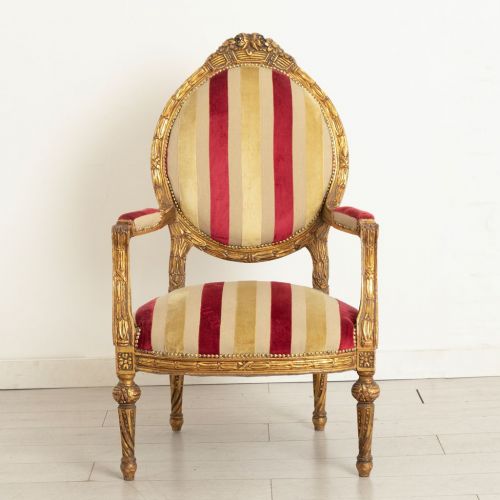


Louis XVI Open Chair
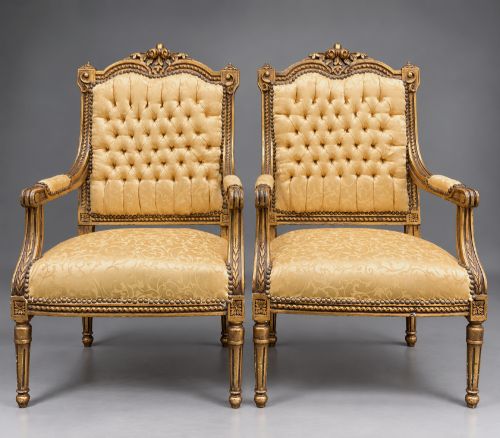
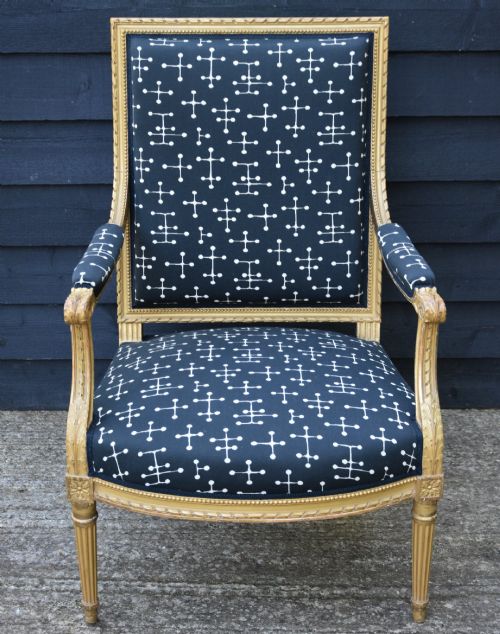
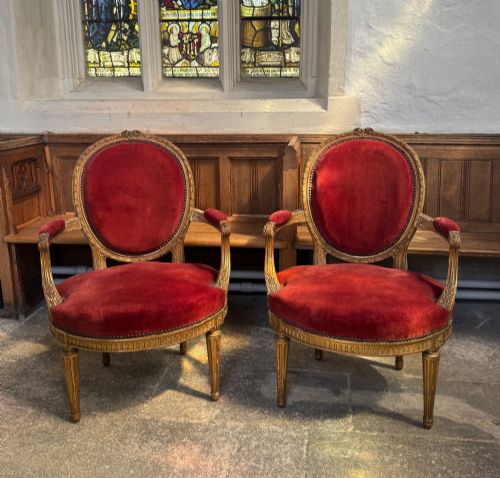
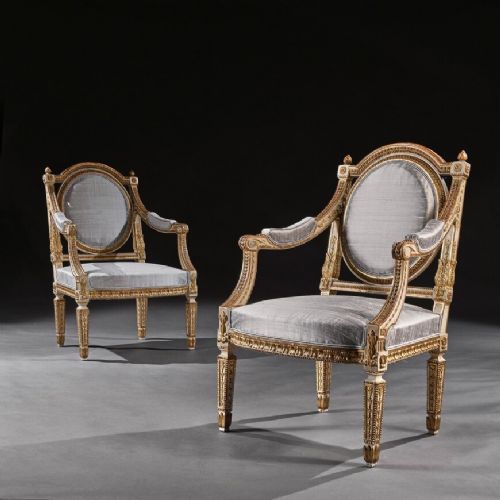
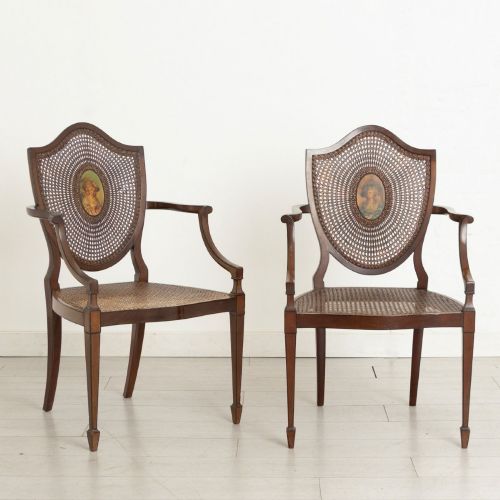
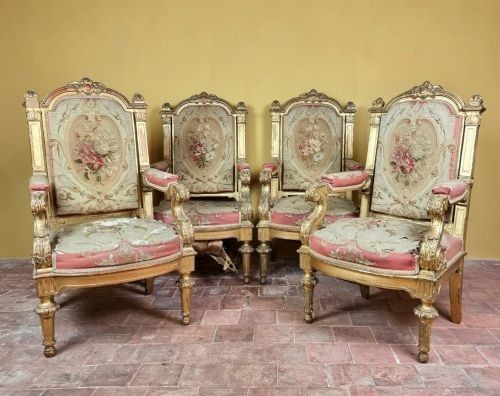
These pieces are a louis xvi open chair, elegant seating offering classic French neoclassical lines for refined interiors.
Louis XVI Open Chair
A louis xvi open chair brings formal French neoclassical seating into a room, taking the form of armchairs, fauteuils, and salon chairs. Buyers seeking this phrase encounter pieces dating from the eighteenth century through the nineteenth century and into the twentieth century.
The version most commonly met on this page is the nineteenth century revival piece, alongside original eighteenth century examples and early twentieth century interpretations. These items typically feature open arms, carved wooden frames, and upholstered seats designed for a salon or parlour.
How they were made
Makers constructed these frames from beech, walnut, or general wood, applying carved details to the structural timber. Surfaces often received paint, parcel gilt, or full gilding to create the characteristic metallic or painted finish.
Upholstery completed the piece, utilising fabric, velvet, brass details, and occasionally needlepoint tapestry panels inserted into the back and seat. Craftsmen shaped these materials into classic open armchairs and fauteuils following strict neoclassical design rules.
Several petite salon chairs were specifically made for children, offering miniature neoclassical luxury.
What varies in quality
Quality depends on the crispness of the carving in the wood and the integrity of the giltwood or painted finish. Superior examples display deep, sharp hand-carved ornamentation rather than soft or mechanical shaping.
The authenticity and preservation of the original upholstery, such as needlepoint tapestry panels, also distinguish finer pieces from standard revival versions. Structural sturdiness in the open arms and joints determines the long-term durability of each armchair.
Holland and Sons
The Louis XVI Open Chair Glossary
- Fauteuil
- An open-armed upholstered armchair with wooden sides originating in France. This form is central to louis xvi seating.
- Giltwood
- Timber coated with gold leaf or a gold-coloured finish. This material defines many formal French chairs.
- Neoclassical
- A style drawing inspiration from classical antiquity, characterised by straight lines and symmetry. It forms the basis of the Louis XVI aesthetic.
- Bergère
- An enclosed upholstered armchair with padded sides set into the wooden frame. It represents a close relative of the open armchair.
Louis XVI Open Chair: Frequently Asked Questions
How do I tell an original from a revival?
Original eighteenth century pieces show authentic age-related wear to the timber, gilt, and construction methods. Nineteenth and twentieth century revival pieces replicate the Louis XVI style using later manufacturing techniques and woods.
Examining the joinery and the preparation beneath the giltwood or paint helps clarify the period of manufacture.
Where should I place these armchairs?
These armchairs suit formal sitting rooms, bedrooms, or entrance halls where their decorative wooden frames and upholstered panels add a classical accent.
Pairs function well flanking a fireplace or set against a panelled wall to maintain symmetrical balance in a traditional interior.
What materials were used?
Makers utilised beech, walnut, and other solid woods for the structural frames. These surfaces were frequently painted, gilded, or finished with parcel gilt.
Upholstery materials included standard fabric, velvet, brass accents, and hand-worked needlepoint tapestry panels.