
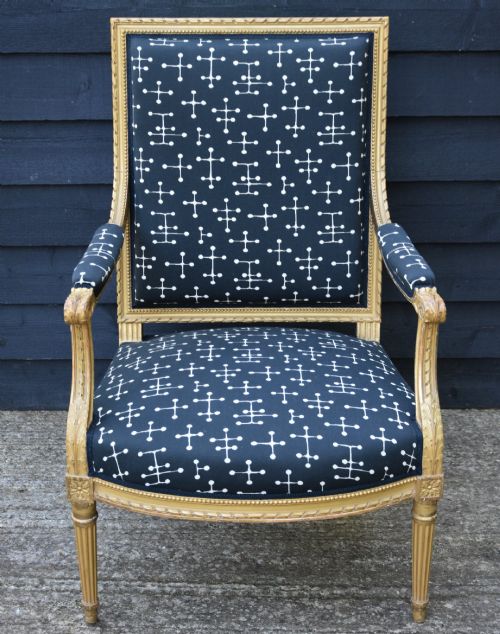
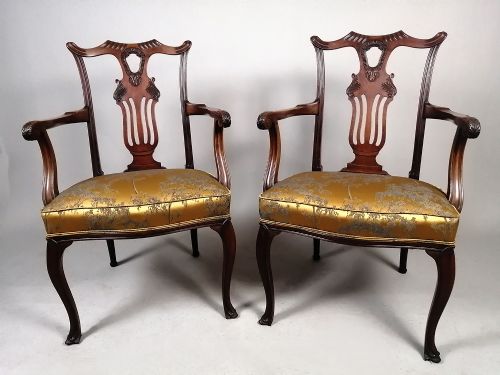
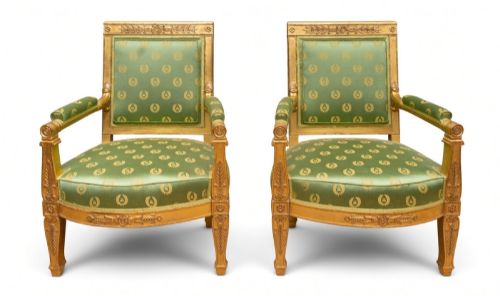
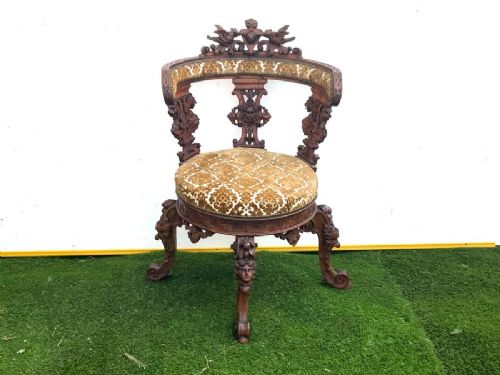
Carved Gold Wood Chair
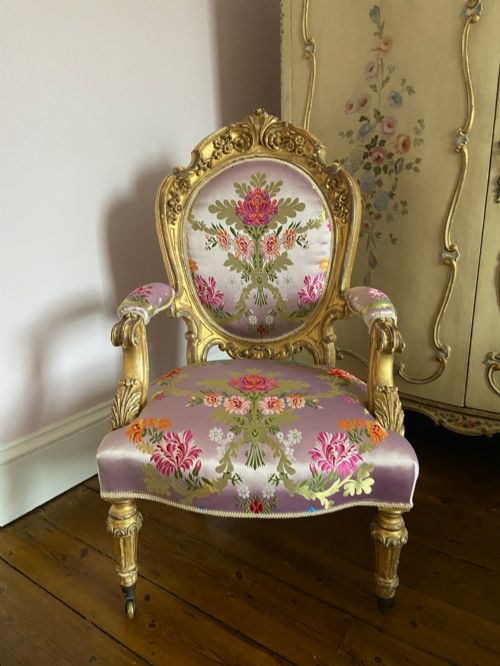
A carved gold wood chair brings immediate presence to a room through gilded surfaces and shaped timber frames.
Carved Gold Wood Chair
When you search for a carved gold wood chair, you encounter seating designed for formal reception rooms and parlours across past centuries. The selection on this page centres primarily on French and English pieces, spanning nineteenth-century revivals and earlier periods.
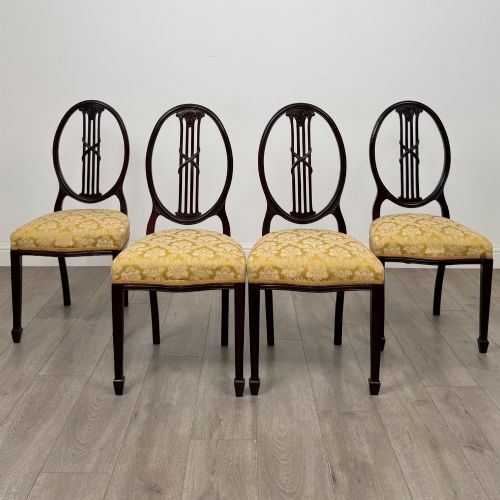
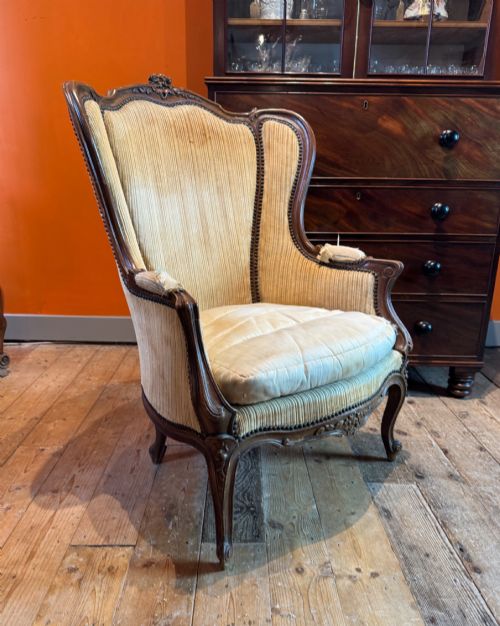
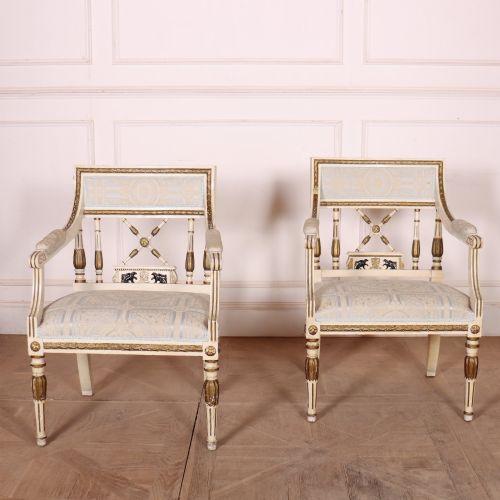
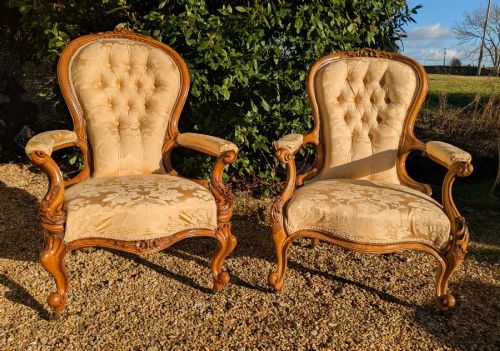
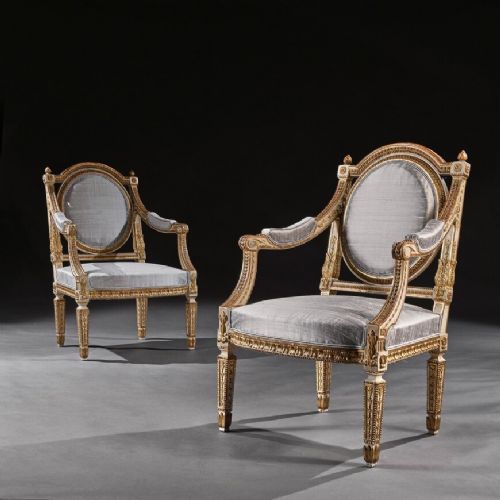
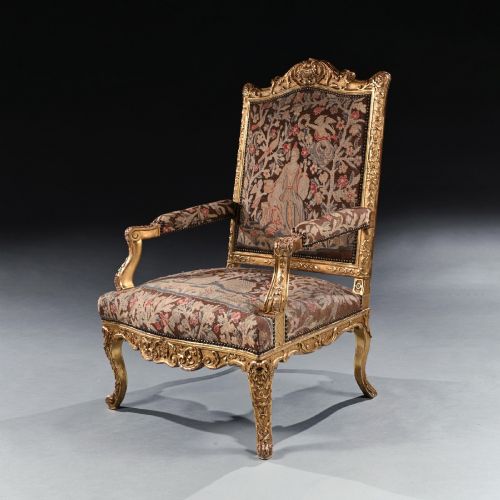
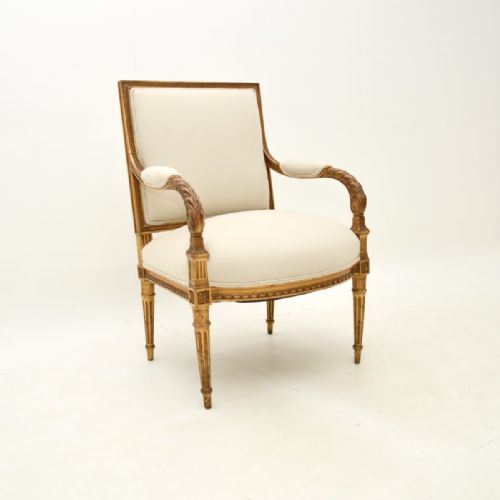
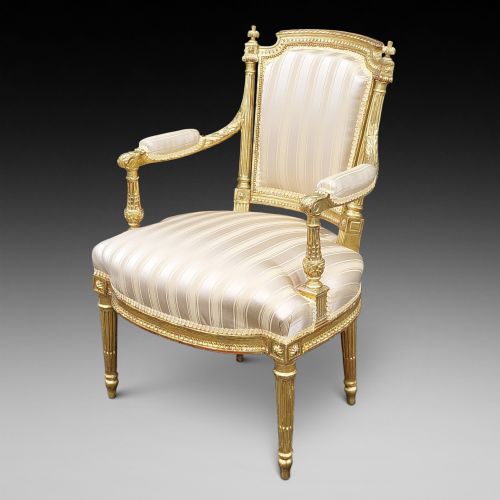
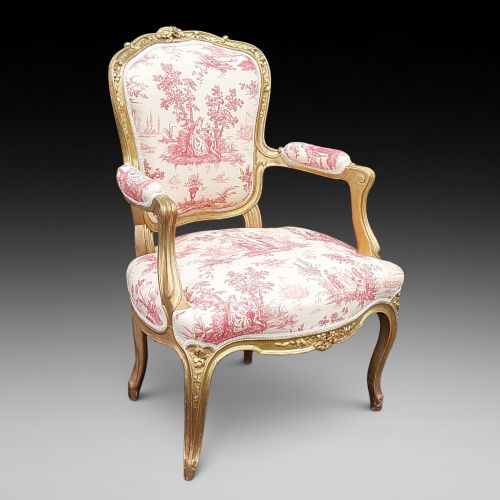
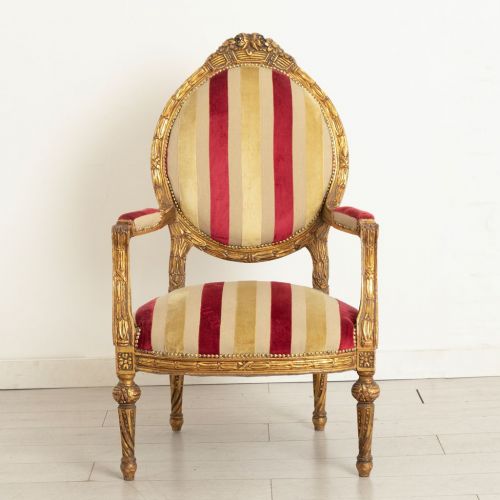
You will find open armchairs, salon chairs, bergères and side chairs bearing giltwood finishes. These forms reflect historical design idioms such as Louis XVI style, French Rococo and Victorian aesthetics.
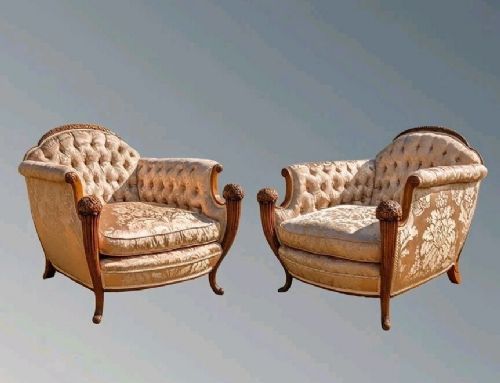
The objects range from single occasional chairs to matched pairs and larger dining sets. Many incorporate carved wooden frames supporting upholstered seats, backs and arm pads.
How they were made
Maker's hands shaped timber such as walnut, beech and mahogany into curving rails, cabriole legs and scroll arms using traditional joinery. Carvers then added relief ornamentation directly into the wood before applying surface treatments.
The golden finish relies on giltwood techniques where thin metal leaf adheres to a prepared ground over the wooden substrate. Artisans then upholstered the supporting frames using textiles like silk, velvet, and patterned fabric.
Listings feature walnut, beech, and mahogany frames finished in giltwood alongside velvet, silk, and woven textile upholstery across the nineteenth century.
What varies in quality
Depth and precision of the hand carving separate standard commercial seating from exceptional examples. Crisp lines in the foliage, scrolls and fluting reveal the skill of the original woodcarver.
The integrity of the gilt surface and the quality of the underlying timber ground dictate the visual weight of the piece. Superior examples retain harmonious proportions across the frame, backrest and leg supports.
Jacob-Desmalter·Blyth and Sons·Lamb of Manchester
The Carved Gold Wood Chair Glossary
- Giltwood
- Wood that has been decorated with gold leaf or powder applied over a prepared gesso surface. This finish provides a bright reflective quality characteristic of formal antique seating.
- Fauteuil
- An open-armed upholstered armchair with exposed wooden armrests and frame. Originating in France, this form became central to formal interior decoration.
- Bergere
- A closed armchair featuring upholstered sides enclosed by wooden framework. These comfortable seats often include a loose down cushion over a cane or spring base.
- Rococo Revival
- A nineteenth-century design movement drawing inspiration from eighteenth-century asymmetrical scrollwork and natural motifs. It manifests in curving lines and ornate floral carvings on chairs and settees.
- Louis XVI Style
- A neoclassical design vocabulary characterised by straight tapered legs, geometric symmetry and classical architectural details. Chairs in this style often feature oval or rectangular padded backs.
Carved Gold Wood Chair: Frequently Asked Questions
How do I care for giltwood?
Dust surfaces gently with a soft dry brush and avoid liquid cleaners or polishes that can lift the delicate gold leaf.
Keep the seating away from direct sunlight and fluctuating radiator heat to prevent the underlying timber and gesso from cracking.
Are these chairs suitable for daily seating?
Many examples are structurally robust enough for regular use, though nineteenth-century salon and reception chairs were originally intended for lighter formal gatherings.
Consider the internal webbing and upholstery support if you plan to use them heavily in a modern living space.
How can I identify a Louis XVI style chair?
Look for straight fluted legs, carved rosette motifs at the frame corners, and symmetry in the structural rails.
The backrests typically take an oval, shield or square form rather than the sweeping curves associated with earlier rococo designs.