
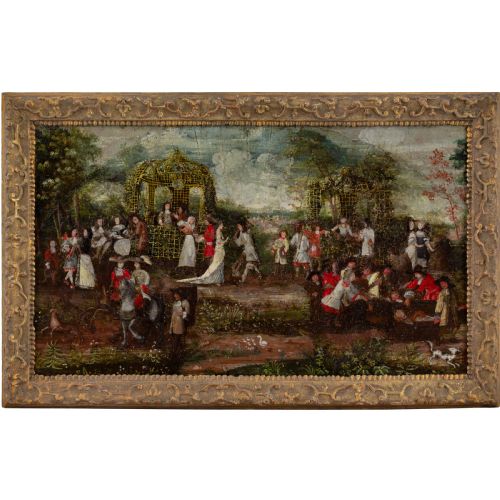
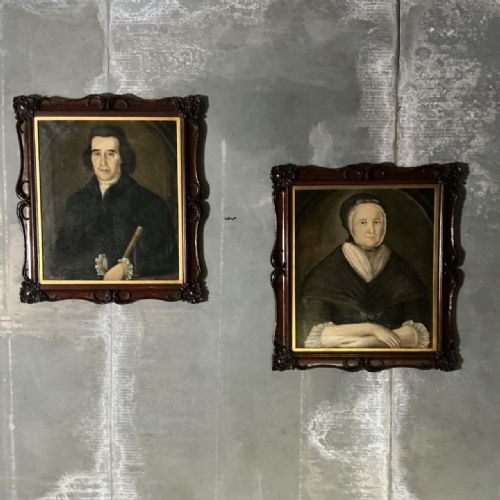
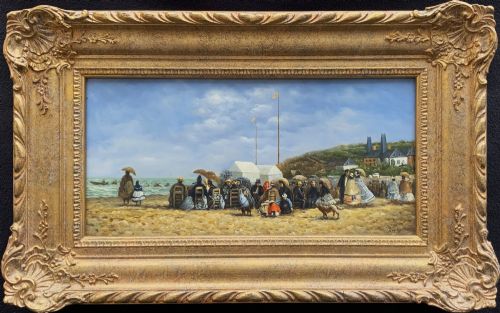
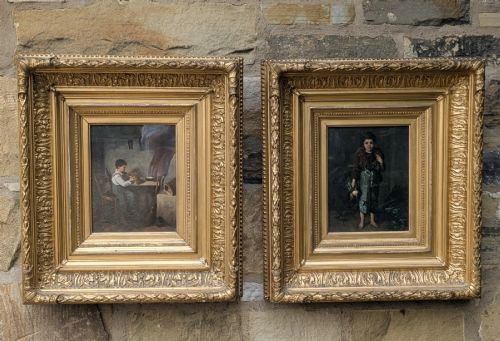
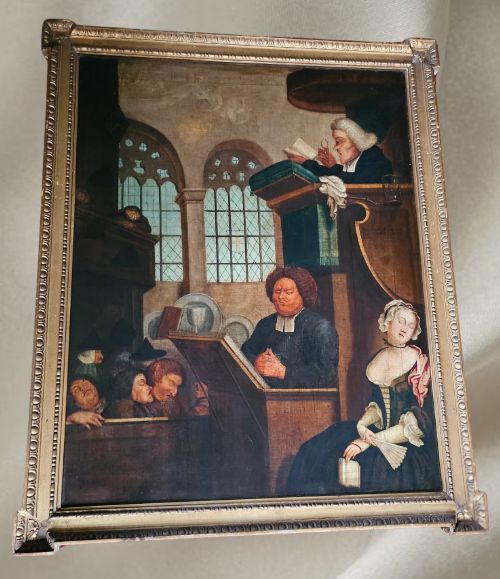
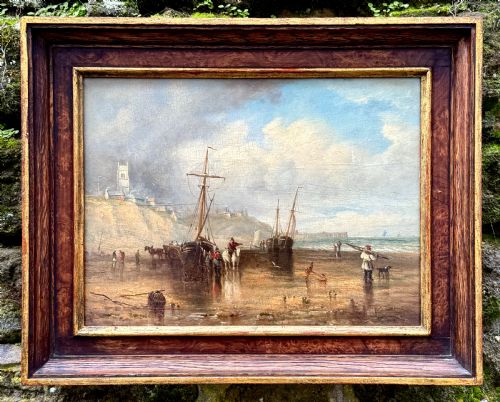
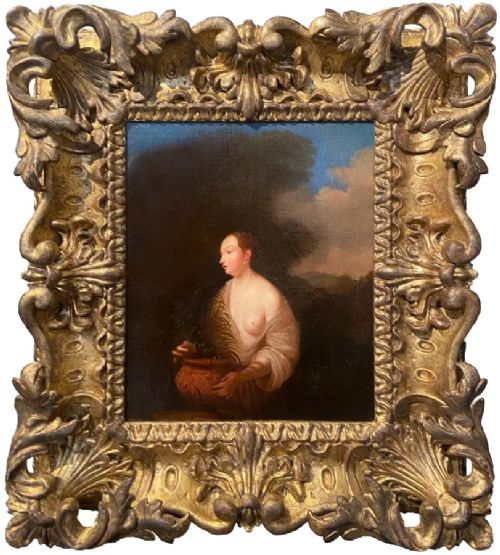
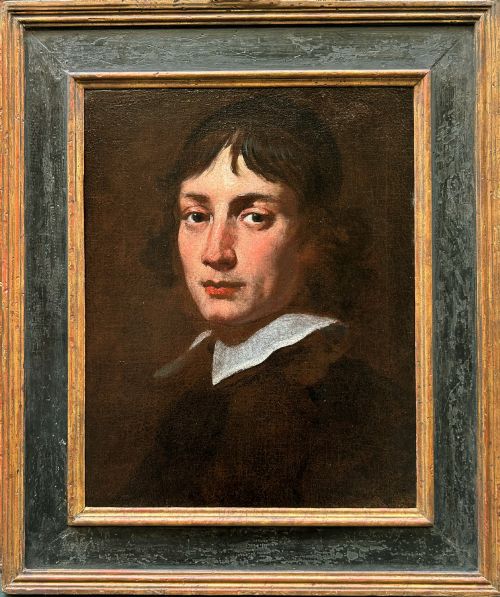
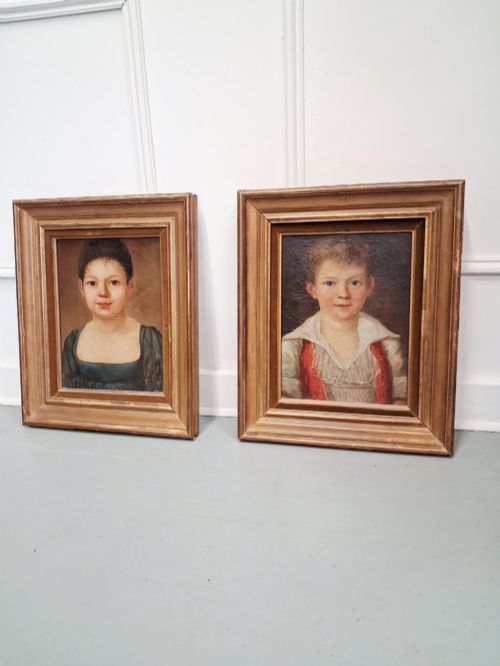
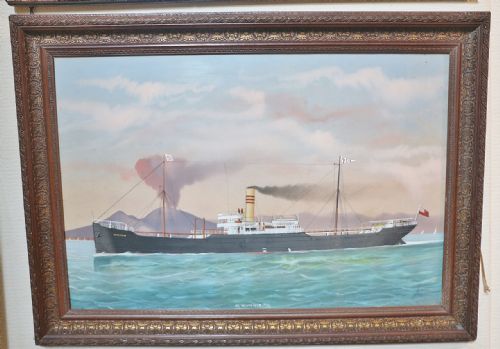
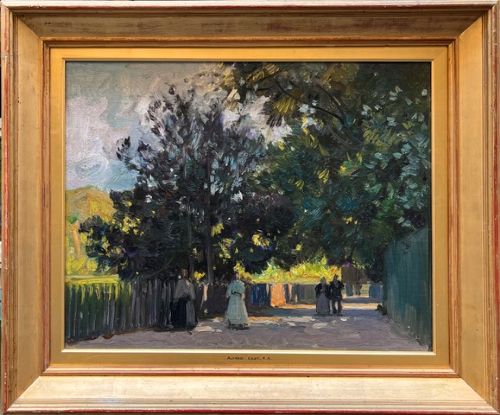
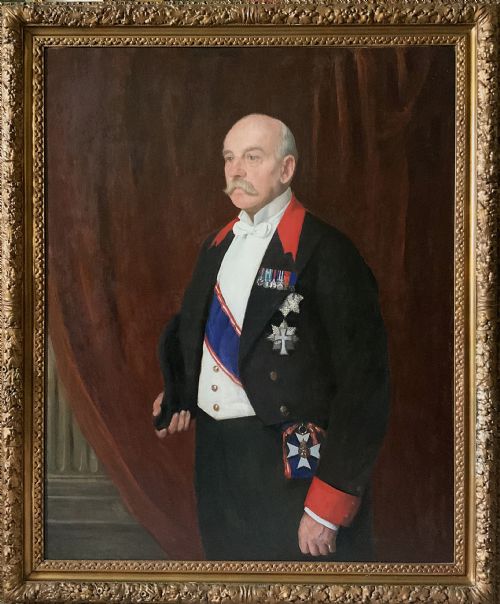
Gilt Wood Framed Canvas
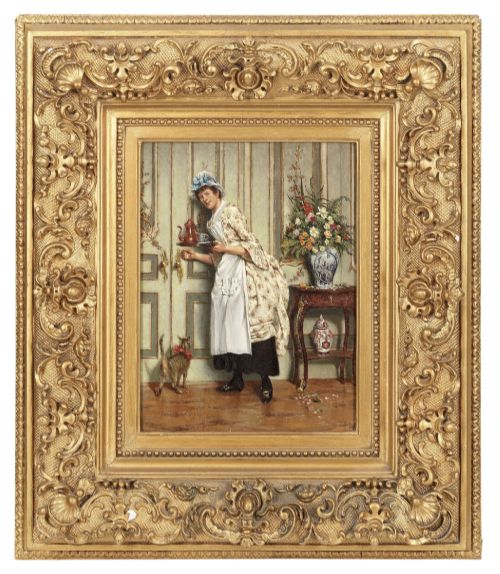
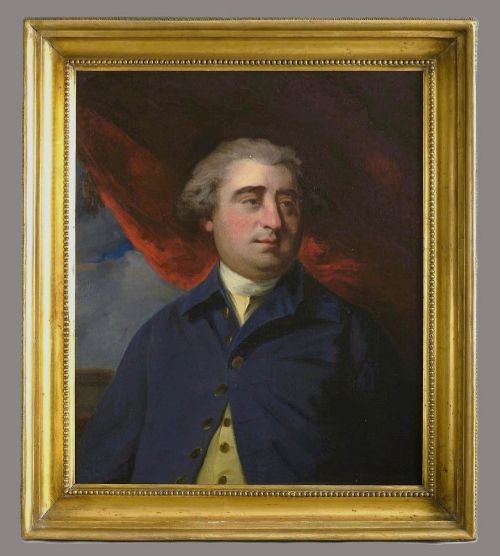
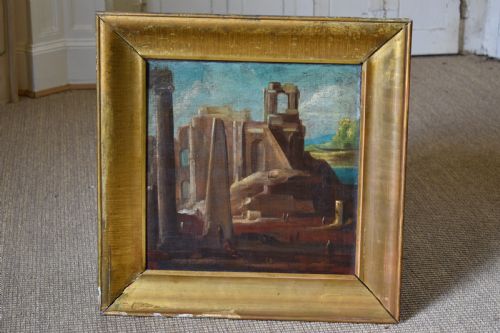
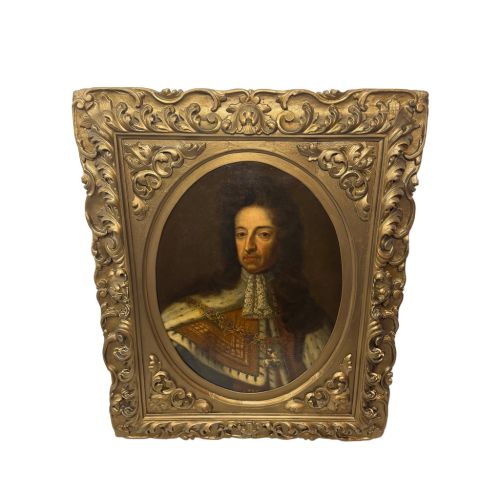
When you search for gilt wood framed canvas, you enter a world of oil paintings and portraits held in gilded surrounds.
Gilt Wood Framed Canvas
A gilt wood framed canvas brings together an oil painting on canvas and a carved wooden frame finished with gold leaf or gesso. You will encounter portraits, landscapes, and genre scenes spanning from the seventeenth century through the Victorian period and into the twentieth century.
The nineteenth century and the seventeenth century dominate the available selection, ranging from British and French academic works to Dutch Old Master pieces. These works include both intimate child portraits and large-scale military and pastoral canvases.
The frames themselves vary from deep, moulded Victorian constructions to grand Baroque surrounds and simple eighteenth-century profiles. Many pieces retain their original frames, preserving the historical pairing of canvas and wood.
Materials and construction
Painters applied oil pigments onto stretched woven canvas, often utilising wooden stretchers to maintain tension across the surface. Artisans prepared the timber frames by carving wood and applying layers of gesso before laying down fine gold leaf or gilt finish.
Moulders used intricate composition ornament pressed onto wooden moulding strips for ornate nineteenth-century frames. Earlier seventeenth-century and eighteenth-century examples feature hand-carved wooden profiles that highlight the natural grain beneath the gilding.
Cats, musketeers, and royal princes share wall space here, proving that historical artists painted whatever caught their eye.
Factors of quality
Quality rests in the fidelity of the brushwork and the anatomical proportion within the painted canvas, distinguishing master studio works from standard decorative output. Finer portraits display subtle handling of light, shadow, and expression that lesser decorative paintings lack.
The execution of the frame matters equally, with deep hand-carved wooden mouldings and intact original gilding holding greater distinction than later replacements or heavily restored surfaces.
Stephen Samuel Lewin·Sir Joshua Reynolds·Thomas Creswick·Toussaint Gelton·Guillaume Courtois·Sir Alfred East·Albin Mattenheimer·Sir Anthony Van Dyck·Alfred Arthur Brunel de Neuville·David Teniers·André Charles Voillemot·Ferdinand Victor Leon Roybet·Charles Haigh Wood·Constant Troyon
The Gilt Wood Framed Canvas Glossary
- Canvas
- A heavy woven fabric, usually linen or cotton, stretched across a wooden frame to serve as a support for oil paint. It provides the flexible foundation for the majority of the paintings found here.
- Gesso
- A plaster-like mixture applied to wood before gilding to create a smooth surface for gold leaf. Artisans used this to build up intricate relief patterns on picture frames.
- Giltwood
- Wood that has been covered with a thin layer of gold leaf or gold powder. This finish gives frames their characteristic metallic sheen and protective coating.
- Baroque
- An artistic style dating from the seventeenth and early eighteenth centuries, characterised by dramatic movement and deep, exuberant ornamentation. Frames from this period often feature bold, sculptural leaf motifs.
- Oleograph
- A mechanical colour lithograph printed on canvas to simulate an oil painting, common in the nineteenth century. It mimics the texture of genuine brushwork but relies on printing ink.
Gilt Wood Framed Canvas: Frequently Asked Questions
Are these paintings on original canvases?
Many retain their original stretched canvas and support structure from the period of creation.
Some historical pieces have undergone professional relining to stabilise the fabric over the centuries.
How do I identify the period of a frame?
Examine the construction corners, the depth of the wood carving, and the composition of the underlying gesso layers.
Victorian frames often display heavier moulded ornamentation, while seventeenth-century and eighteenth-century examples show hand-cut joinery.
Where should I hang an oil painting?
Position the canvas away from direct sunlight and strong heat sources to prevent the oil paint from cracking and the wood from warping.
Maintain a stable room temperature to protect both the stretched canvas and the delicate gilt wooden surround.