
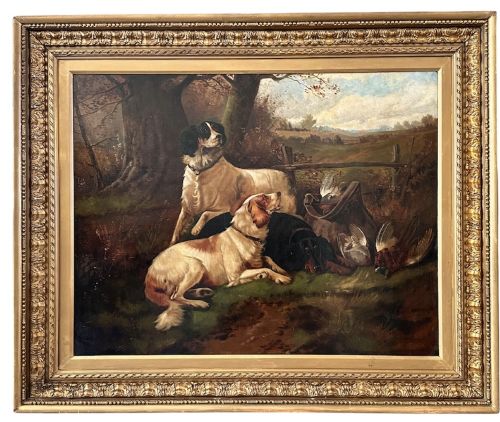


Antique Setter Painting
An antique setter painting captures the noble stillness and working spirit of the breed, prized by collectors of sporting art for its rich narrative of the field.
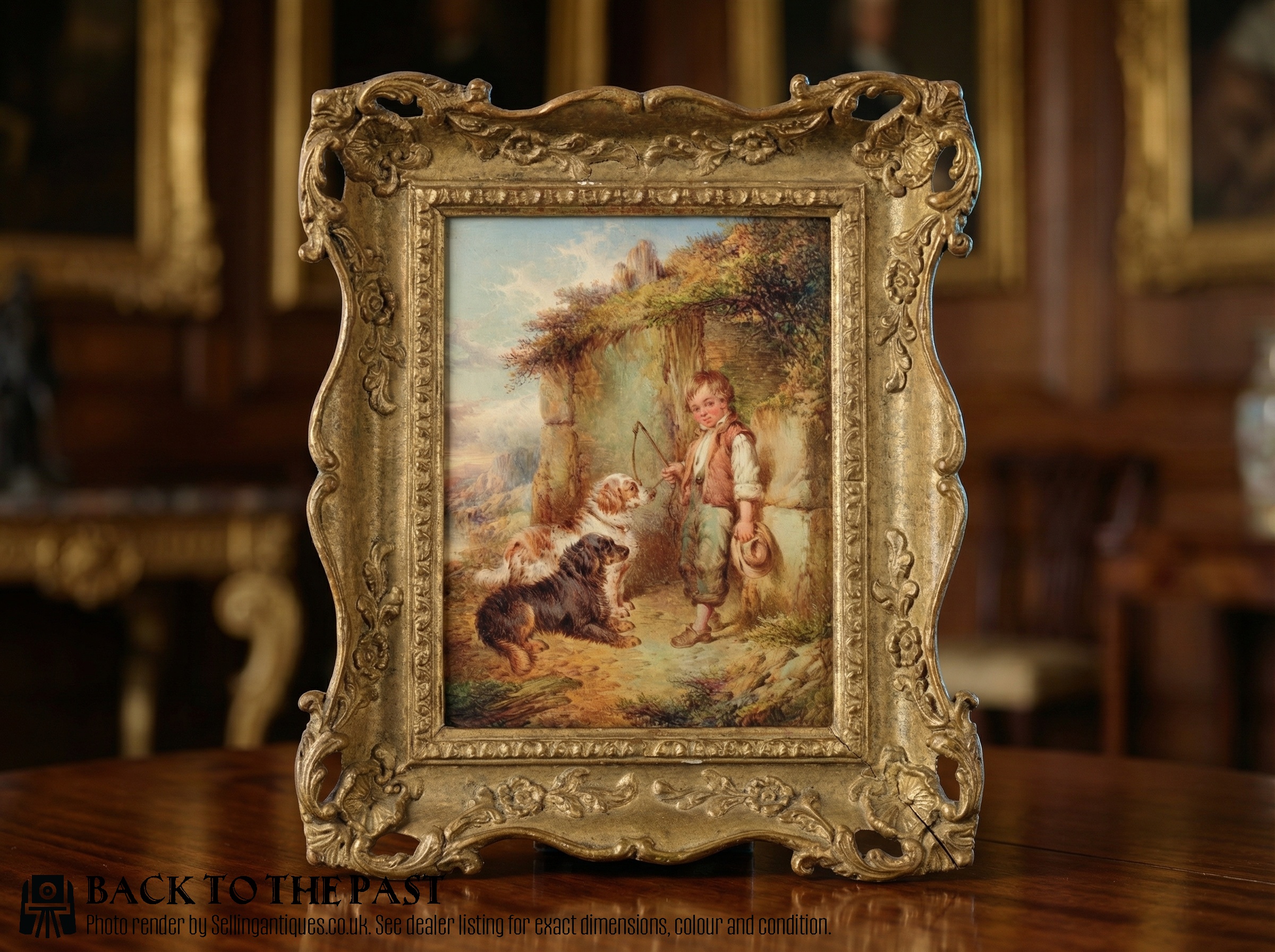
Antique Setter Painting
An antique setter painting typically depicts gun dogs within moorland landscapes or at rest with the day's bag, reflecting the sporting traditions of the nineteenth century. These works place the canine subject firmly at the centre of the composition, often highlighting the distinctive coat and focused stance of the setter.
The pieces available on this page encompass oil on canvas, oil on board, and watercolour paintings from the Victorian era. Alongside traditional flat art, the selection extends to related nineteenth-century animalier sculptures.
Collectors encounter works attributed to known nineteenth-century painters as well as paired sets that document the working partnership between hunter and hound. The styles range from Victorian sporting art and genre scenes to realist interpretations of sporting dogs.
Materials and methods
Artists of the period applied oil paint to stretched canvas or prepared wooden boards, building up rich layers of pigment to render the texture of the dog's coat and the moody tones of the moorland background. Watercolour versions on paper utilised fine washes and careful brushwork to capture the alert posture of working setter dogs.
Finished works were commonly housed in wooden frames, frequently finished with a gilt surface that complemented the warm earth tones of the nineteenth-century palette. Some sculptural representations from the same era utilised cold-painted bronze to render the animal in three dimensions.
Canine subjects include paired setters, gun dogs at rest with the day's bag, and working red setter portraits.
Distinctions in quality
The success of an antique setter painting rests on the artist's ability to render the anatomy and intense expression of the dog with convincing realism. Superior examples display a confident handling of brushwork in the animal's fur and a balanced composition that integrates the subject naturally into the landscape.
Framing and medium also influence the character of the piece, with original gilded wooden frames and well-preserved oil on canvas surfaces holding greater visual authority than faded or later-housed watercolours.
Colin Graeme Roe·Robert Cleminson·Henri Schouten·Jules Moigniez·Paul Jones
The Antique Setter Painting Glossary
- Oil on canvas
- Pigments bound in drying oil applied to a woven fabric stretched across a wooden frame. This primary medium of the nineteenth century allowed artists to achieve deep colour saturation and subtle tonal shifts.
- Oil on board
- Pigments applied directly to a rigid wooden panel rather than fabric. Painters often utilised this sturdy support for smaller outdoor studies and finished sporting scenes.
- Watercolour
- Pigments suspended in a water-based solution applied to paper. This medium produces translucent washes that lend a lighter, more immediate feel to animal studies.
- Animalier
- A nineteenth-century artistic movement dedicated to the realistic portrayal of animals. Practitioners of this style focused closely on the accurate musculature and behaviour of sporting dogs.
- Victorian sporting art
- A genre dedicated to hunting, shooting, and the animals associated with field sports. These works emphasise the working relationship between humans, dogs, and the landscape.
Antique Setter Painting: Frequently Asked Questions
What periods do these paintings date from?
The evidence shows works originating primarily in the nineteenth century and the Victorian era, extending up to the early twentieth century around nineteen ten and nineteen twenty-two.
These dates align with the height of British sporting art and the widespread appreciation for canine portraiture in domestic interiors.
How were these paintings displayed originally?
Victorian sporting art was typically housed in substantial wooden frames, often finished in gilt, designed to complement the dark wood furniture and rich wall colours of nineteenth-century homes.
Pairs and sets were frequently hung together to tell a broader narrative of the hunt and the working day.
Are all the works oil paintings?
While oil on canvas and oil on board predominate in the archive and current listings, the selection also includes watercolours on paper and cold-painted bronze sculptures.
Each medium offers a distinct visual texture while sharing the overarching subject of working gun dogs.
How do I identify the subject as a setter?
Artists of the period captured the characteristic feathered coat, low stance, and focused gaze particular to setters in moorland and hunting environments.
Titles and signatures, where present, further confirm the depiction of breeds such as English and Gordon setters.