





Oil Painting Boy Dogs
These oil painting boy dogs capture youth and canine companionship, spanning seventeenth-century portraiture to mid-twentieth-century provincial scenes.
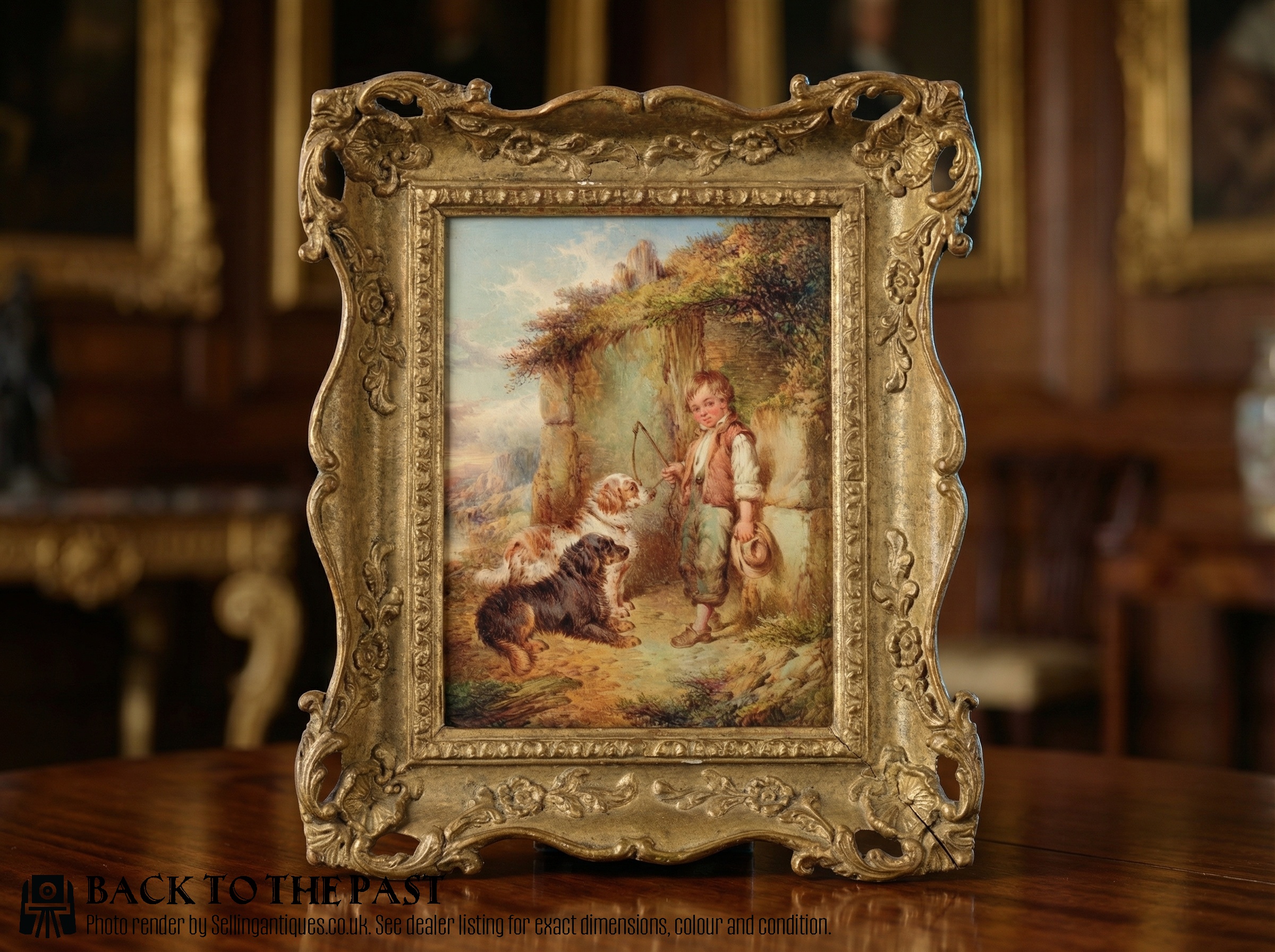
Oil Painting Boy Dogs
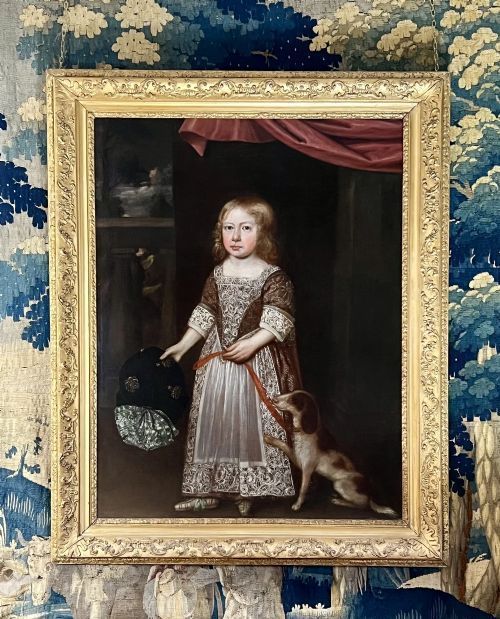
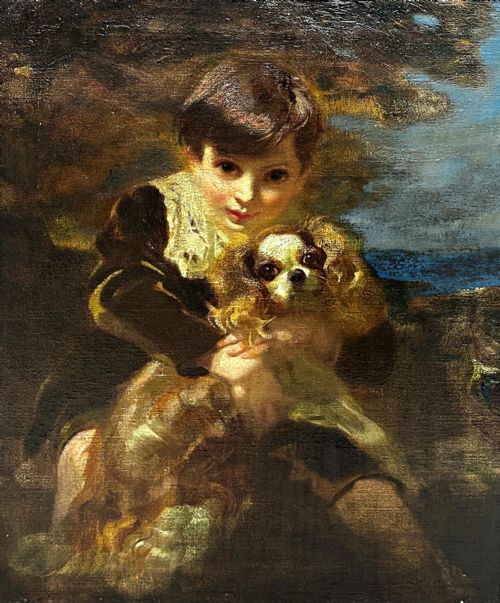
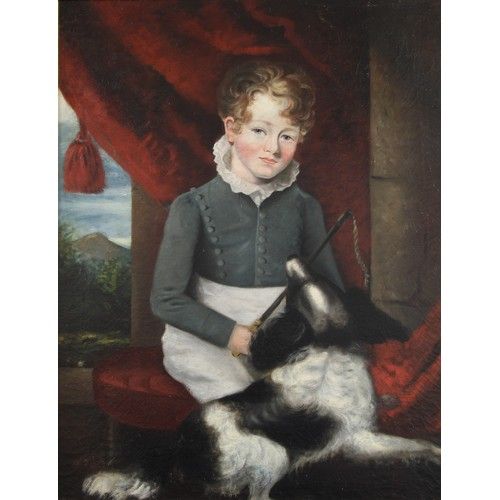
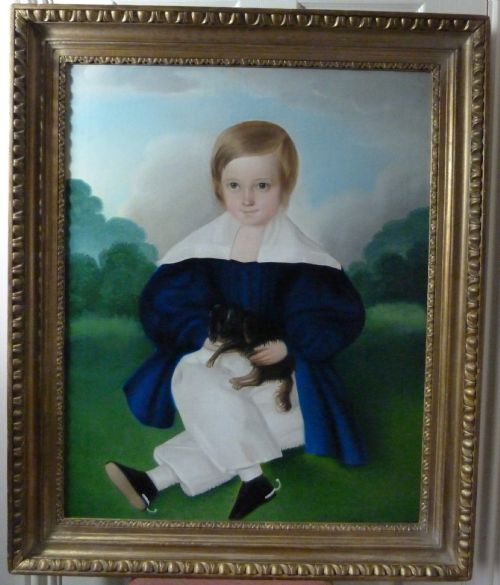
When you search for oil painting boy dogs, you encounter portraits and genre scenes that pair a young male figure with spaniels, gun dogs, or working breeds. The works range from seventeenth-century Northern European portraits to nineteenth-century English provincial depictions.
Most pieces on this page represent traditional portraiture, whether formal aristocratic commissions or simpler provincial works. Subjects appear alongside King Charles Spaniels, setters, or hunting dogs, reflecting changing social attitudes towards children and animals across centuries.
The material evidence shows oils on canvas housed in wood frames, often with giltwood and gilded wood surrounds. Dating stretches from the seventeen-hundreds through Victorian genre and sporting art into the twentieth century.
Materials and technique
These works utilise oil pigment applied to canvas supports, framed in wood, giltwood, or gilded wood. The physical structure relies on traditional stretched canvas and wooden strainer frames.
Technique varies from the controlled brushwork of seventeenth-century Northern European and English Baroque circles to the looser execution of Victorian provincial and twentieth-century schools.
Listings feature works spanning the seventeenth to the twentieth century, created in oil on canvas and housed in wooden frames.
Judging quality in these paintings
Quality rests on the handling of anatomy in both the boy and the dog, alongside the depth of the oil pigment. Stronger pieces reveal confident brushwork in the rendering of fabrics, facial expressions, and canine fur.
Condition of the canvas and frame matters significantly, as does the clarity of the provenance or attribution to specific circles and schools. Provincial works display a charming directness, whereas formal portraits demonstrate greater academic rigour.
Mary Beale·Thomas Beach·Frank Owen Salisbury·George Romney·W Fitz
The Oil Painting Boy Dogs Glossary
- Oil on canvas
- Pigment mixed with drying oil applied to a woven fabric support. This remains the primary medium across the centuries represented here.
- Giltwood
- Wood carved and covered with a thin layer of gold leaf. Many frames utilise this finish to complement the oil painting.
- Victorian genre
- Art depicting scenes from everyday life popular during the nineteenth century. These often show children interacting informally with pets.
- British Sporting Art
- Paintings focused on field sports, horses, and hounds. Works in this category frequently incorporate gun dogs alongside human subjects.
- English Baroque
- The dominant artistic style in England during the late seventeenth and early seventeenth centuries. Portraits from this period display rich drapery and formal composition.
Oil Painting Boy Dogs: Frequently Asked Questions
How do I date an oil painting of a boy and his dog?
Dating relies on the style of clothing, the breed of the dog, and the preparation of the canvas and frame. Seventeenth-century subjects often wear formal costume like Van Dyck dress, while nineteenth-century provincial pieces show simpler attire.
Examination of the stretcher bars and the craquelure in the oil pigment also helps establish the age of the canvas. Comparing the handling of the paint to known periods narrows the timeframe further.
Where were these paintings originally displayed?
Earlier aristocratic portraits hung in country house galleries and formal parlours to record family lineage. Provincial and later Victorian pieces decorated domestic interiors as sentimental or decorative art.
Many works remained in private collections for generations before entering the antique market. Their original contexts varied from grand estate commissions to modest rural homes.
How do I care for an antique oil painting?
Keep the canvas away from direct sunlight and dramatic shifts in temperature or humidity. Avoid touching the painted surface, as natural oils from skin can damage the pigment over time.
Dust the frame gently with a dry, soft brush. Leave any cleaning of the oil surface to a professional conservator to prevent stripping historic glazes.
What is the difference between provincial and formal portraits?
Formal portraits, such as those from the English Baroque period, were painted by trained artists for wealthy patrons. They emphasise status through elaborate clothing, props like falcons, and polished technique.
Provincial school paintings are simpler in execution, created by local artists for less affluent buyers. They prioritize directness and charm over academic precision.