



Gilt Triptych Mirror
A gilt triptych mirror brings architectural depth and reflective light to a room, offering divided panels set within gilded frames that catch the eye instantly.
Gilt Triptych Mirror
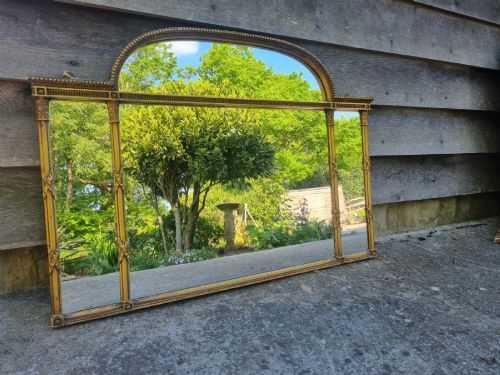
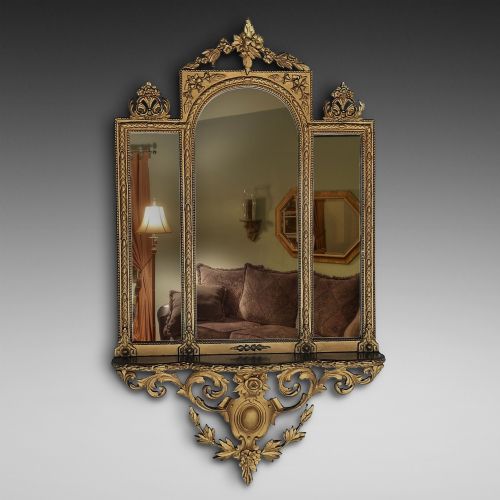
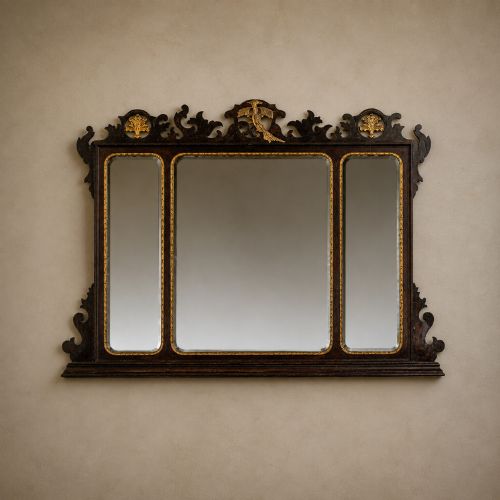
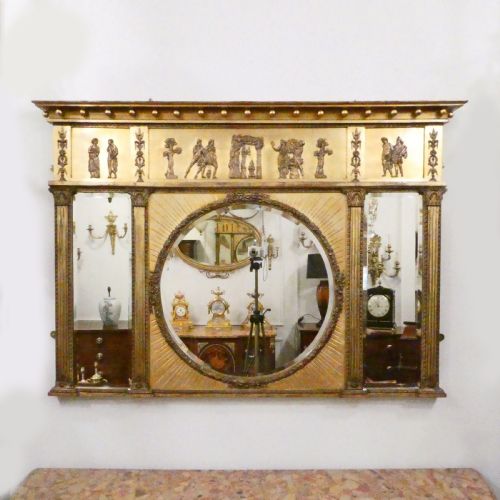
A gilt triptych mirror typically appears on this page as a large overmantel mirror designed to sit above a fireplace, or occasionally as a smaller folding dressing table mirror.
The pieces span the nineteenth century into the twentieth century, taking stylistic inspiration from the Regency and Victorian eras alongside Rococo Revival and Chippendale Revival designs.
Overmantel examples stretch horizontally to anchor a chimney breast, whilst the dressing table versions utilise folding side panels supported by hinges.
Materials and Techniques
Makers constructed the structural frames from timber such as mahogany, walnut, or ebonised wood, which served as the foundation for intricate surface ornamentation.
Gesso and composition applied over the wood allowed artisans to mould crisp decorative details like acanthus leaves, classical columns, or bird cresting.
The finishing layer relied upon gold leaf or applied gilding to achieve the bright metallic surface seen across the mirror glass panels.
The listings combine nineteenth-century Regency and Victorian pieces with later twentieth-century revivals, utilising giltwood, gesso, and glass.
Craftsmanship and Proportion
The distinction between tiers rests upon the crispness of the carved or moulded ornamentation, where sharp detailing in the gesso indicates careful hand-finishing.
Proportion and the integration of the three mirror plates dictate the architectural success of the piece, separating standard examples from more ambitious Regency and revival iterations.
Originality of the gilding and the silvering on the glass panels preserves the integrity of the antique surface over centuries of use.
The Gilt Triptych Mirror Glossary
- Giltwood
- Timber that has been coated with gold leaf. This method provides the warm metallic lustre characteristic of traditional frames.
- Gesso
- A plaster-like mixture applied to wood frames before gilding. Artisans carved and moulded this substance to create relief decoration.
- Triptych
- An object divided into three sections. In these mirrors, the main central glass plate is flanked by two smaller hinged or fixed panels.
- Overmantel
- A large mirror intended specifically for placement above a fireplace mantelpiece. These pieces often feature wide horizontal formats.
- Acanthus
- A classical decorative motif derived from Mediterranean foliage. Carvers utilised this leaf pattern extensively on Regency mirror frames.
Gilt Triptych Mirror: Frequently Asked Questions
How do I hang a heavy overmantel mirror safely?
Secure the mirror directly into wall studs using heavy-duty brackets that match the substantial weight of the timber and gesso frame.
Distribute the load evenly across multiple fixing points to ensure the piece remains stable against the wall surface.
Were these mirrors always used above fireplaces?
Whilst the majority of large triptych formats served as overmantel mirrors placed above hearths, smaller folding versions functioned as dressing table accessories.
客厅 and bedroom placement depended entirely on the scale and format of the specific three-panel construction.
How do I clean antique gilt frames safely?
Dust the gilded surfaces gently with a soft, dry brush to remove particles without disturbing the delicate gold leaf or composition moulding.
Avoid liquid cleaners entirely, as moisture can penetrate the gesso and cause the historic metallic finish to flake away.
What is the difference between Regency and Victorian styles here?
Regency pieces lean towards neoclassical restraint with clean architectural lines, column details, and restrained gilding.
Victorian interpretations often embrace revival movements like Rococo and Chippendale, introducing busier motifs such as bird crests and ornate shaped tops.