




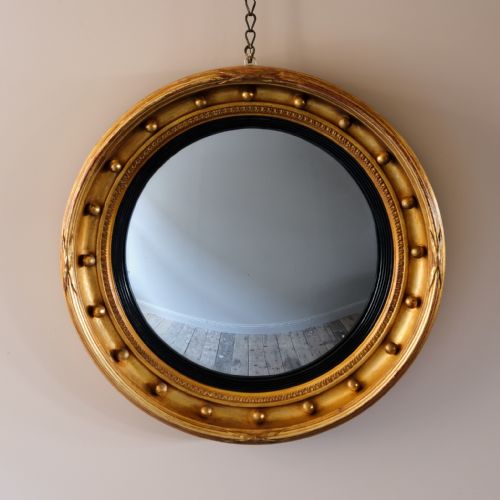


Gilt Slip Frame Mirror
These gilt slip frame mirror pieces combine reflective glass with gilded wooden frames, offering an ideal way to brighten dark corners and add period character.
Gilt Slip Frame Mirror
When you search for a gilt slip frame mirror, you encounter wall mirrors and overmantel mirrors spanning several centuries of design. The selection includes Regency and Georgian pieces alongside later revival styles from the nineteenth and twentieth centuries.
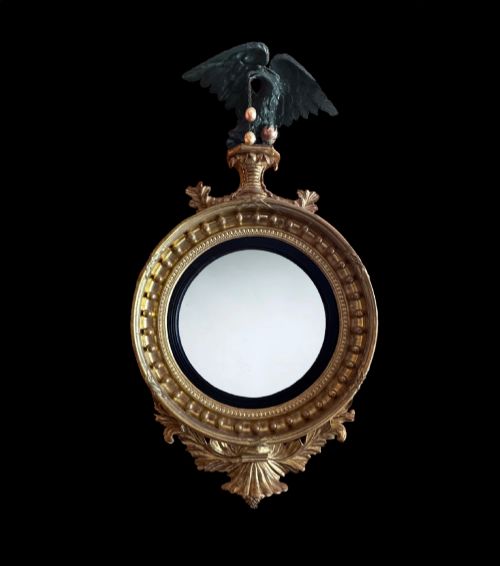
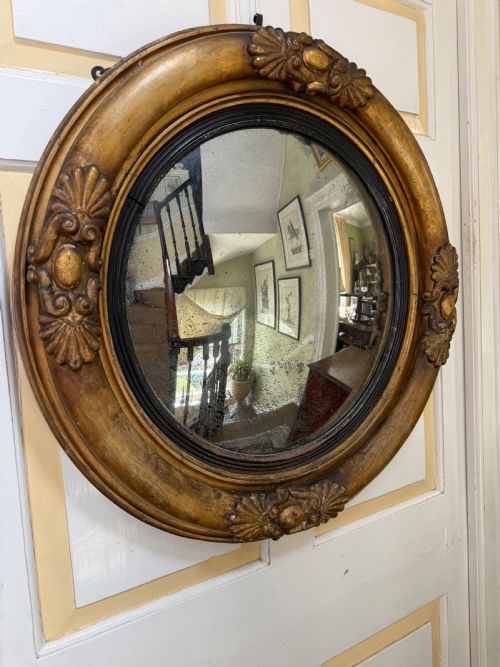
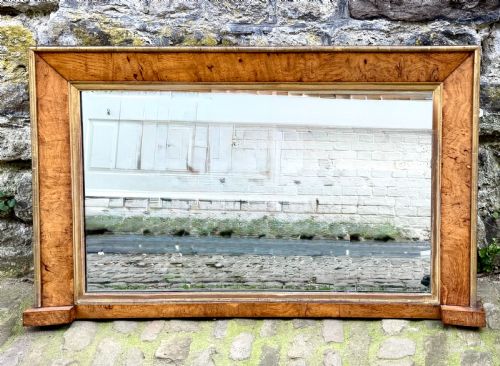
The most common forms on this page include convex wall mirrors in giltwood frames and rectangular overmantel pieces. Many incorporate mahogany, walnut, or ebonised wood alongside traditional gilt finishes.
How they were made
Maker construction relies on cabinet timbers such as mahogany, walnut, birds-eye maple, rosewood, and yew wood for the primary structure. Gesso and giltwood provide the decorative gilded surfaces seen on convex and wall plates.
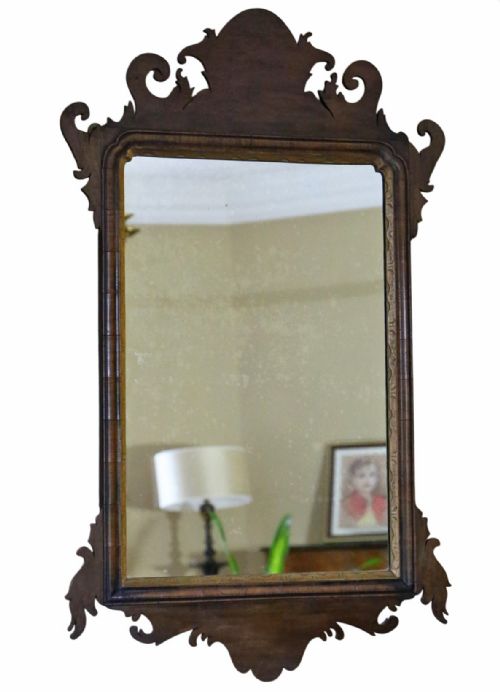
Fret-cut and fretwork techniques shape the wooden outlines of Georgian and revival wall mirrors. Vauxhall mirror plates and convex mirror glass are set within these moulded frames.
Materials recorded across the inventory include glass, giltwood, ebonised wood, mahogany, gesso, walnut, mirror glass, and yew wood.
What varies in quality
Quality differentiates simpler utility mirrors from grander decorative pieces through the crispness of the giltwood carving and the depth of the wood veneer. Fine examples display intricate fret cutting and balanced proportions.
The choice of secondary woods and the preservation of original mirror glass plates influence the overall character. Heavier scale proportions and refined gilding separate the top tier from standard wall mirrors.
The Gilt Slip Frame Mirror Glossary
- Giltwood
- Wood that has been coated with gold leaf or gold paint for decorative effect. This finish appears frequently across Regency and Victorian convex frames.
- Convex mirror
- A spherical mirror that produces a curved, wide-angle reflection of the room. These round plates are typically housed in gilt wood frames.
- Overmantel mirror
- A large horizontal mirror designed to sit above a fireplace mantel. These pieces often combine mahogany veneer and gilt decoration.
- Vauxhall mirror
- An early type of mirror plate featuring bevelled edges. These plates frequently appear in walnut frames from the Georgian period.
- Fretwork
- Openwork carving produced by piercing thin wood panels. This technique defines the decorative borders of many wall and pier mirrors.
Gilt Slip Frame Mirror: Frequently Asked Questions
Where should I hang an overmantel mirror?
An overmantel mirror is traditionally positioned directly above a fireplace mantelpiece to reflect light and fill vertical wall space. They suit principal reception rooms and dining spaces.
Because of their substantial proportions, these mirrors require secure wall fixings. They pair well with period interiors ranging from Georgian to Victorian styles.
How do I identify a Regency mirror?
Regency mirrors often feature giltwood frames, round convex plates, or classical revival design motifs. Makers during this period utilised rich gilding and bold circular forms.
Later revival pieces from the twentieth century imitated these specific Regency characteristics. Examining the wood construction and backing helps determine the exact period.
What woods were used in these frames?
Cabinet makers utilised mahogany, walnut, rosewood, birds-eye maple, and yew wood for the structural frames. Some pieces also incorporate ebonised wood for contrast.
Giltwood and gesso are applied over wooden bases to create the bright metallic finishes. These varied materials reflect the changing fashions from the eighteenth to the twentieth century.