


Edwardian Desktop Mirror
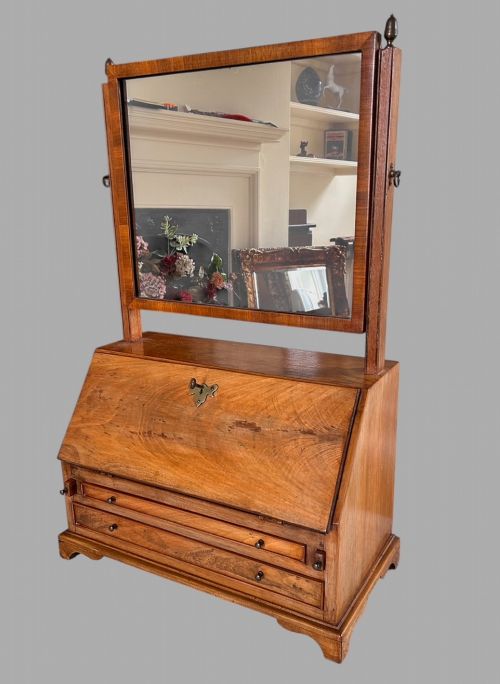
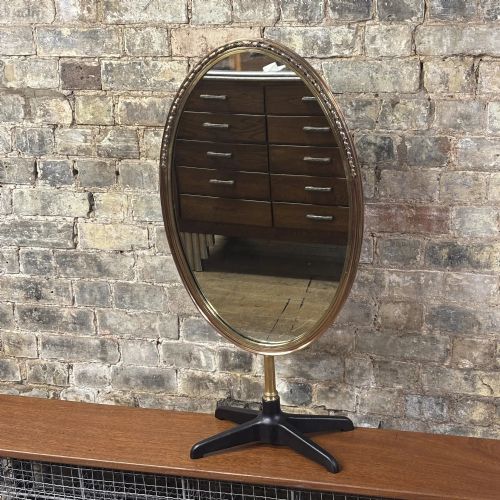
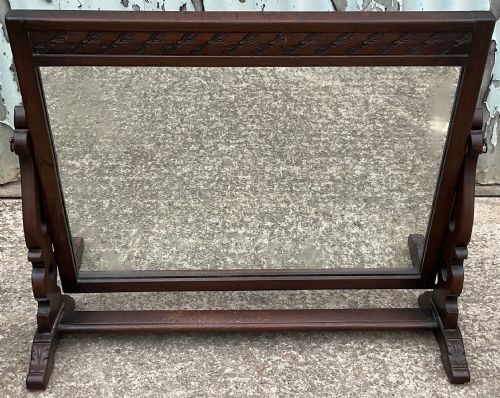
These edwardian desktop mirror examples offer practical charm and polished glass, designed to sit neatly on a chest or bureau.
Edwardian Desktop Mirror
An edwardian desktop mirror brings traditional grooming accessories into domestic spaces, sitting on top of dressing tables and chests. These pieces provide a functional reflective surface supported by adjustable frames and small wooden stands.
The versions most commonly met on this page include mahogany, oak, and satinwood dressing mirrors alongside compact tabletop bureaus. They span periods from the mid-nineteenth century through the early twentieth century, showing influences from Queen Anne and Victorian styles.
Makers designed these items for everyday personal use in bedrooms and dressing rooms. Their varied forms range from simple swing mirrors with single drawers to elaborate inlaid cabinets with multiple compartments.
How They Were Made
Cabinetmakers constructed these frames using solid hardwoods such as mahogany, walnut, oak, and satinwood. Many examples incorporate fine wood veneers and delicate string inlay to ornament the exterior surfaces.
Brass fittings, hinges, and screw mechanisms support the pivoting mirror plates, allowing users to adjust the angle of reflection. Back panels and drawer linings utilise secondary timbers, whilst the glass itself is held securely within rebated wooden rebates.
Carved details appear on select mahogany and oak frames, ranging from simple thumb-moulded edges to more elaborate foliate motifs. Surface finishes rely on traditional polish or wax applied directly to the timber grain.
Listings feature woods like mahogany, oak, walnut, and satinwood alongside brass fittings and glass.
What Varies in Quality
The choice of primary timber and the precision of the cabinetwork set finer examples apart from simpler utilitarian pieces. Selected grains of satinwood or figured mahogany with neat dovetail joints indicate superior workshop standards.
The integration of additional storage, such as three-drawer bases or fitted bureau compartments, demonstrates higher ambition in design. Integrated brass hardware and crisp carving further distinguish the standard of production.
Proportion and balance determine the visual success of the mirror frame in relation to its stand. Well-balanced pivoting arms and stable weighted bases ensure the piece functions smoothly over decades of use.
The Edwardian Desktop Mirror Glossary
- Toilet mirror
- A small movable mirror designed to sit upon a dressing table or chest of drawers. These items often feature a set of small drawers built into the base.
- Swing mirror
- A reflective plate mounted on pivots between two upright posts, allowing the glass to tilt. This mechanism forms the core of most traditional dressing mirrors.
- Satinwood
- A light-coloured, lustrous timber prized for its smooth texture and fine grain. Cabinetmakers used it extensively for decorative veneer work.
- Bureau mirror
- A combined desktop writing desk and mirror unit containing small internal compartments. These dual-purpose pieces maximise function on compact surfaces.
- Inlay
- A technique where pieces of contrasting wood or metal are inserted into recessed cavities to form decorative patterns on the surface.
Edwardian Desktop Mirror: Frequently Asked Questions
Where were these mirrors placed?
These items were traditionally positioned on top of dressing tables, chests of drawers, or writing desks within bedrooms and dressing rooms. Their compact footprints allowed them to provide a functional reflective surface without occupying floor space.
Users adjusted the swinging frames to catch the natural light from nearby windows during morning routines.
How do I date these mirrors?
Dating relies on observing the timber choices, construction methods, and stylistic influences present in the frame and base. Pieces incorporating heavy mahogany carvings often align with mid-nineteenth-century tastes, whilst lighter satinwood and simpler brass frames point towards later periods.
Internal drawer construction, such as hand-cut dovetails, also helps establish the era of manufacture.
What are bureau mirrors used for?
Bureau mirrors combine a small writing slope or compartment section with an adjustable mirror plate. They served a dual purpose for correspondence and personal grooming in smaller rooms.
The integrated drawers provided secure storage for small papers, inkwells, or personal trinkets.
How do the pivoting mechanisms work?
The glass frame is suspended between two vertical uprights using brass screw pins or threaded bolts. Tightening these pivots holds the mirror at the desired viewing angle.
Simpler designs rely on wooden pegs or friction hinges fitted into the supporting arms.