



Gilt Porcelain Tureen
These gilt porcelain tureen examples bring table service history to life, offering collectors both decorative presence and the weight of 19th century dining traditions.
Gilt Porcelain Tureen
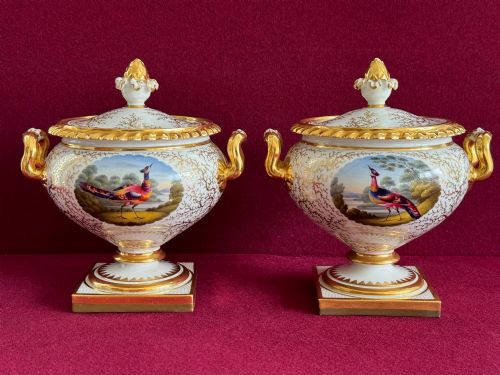
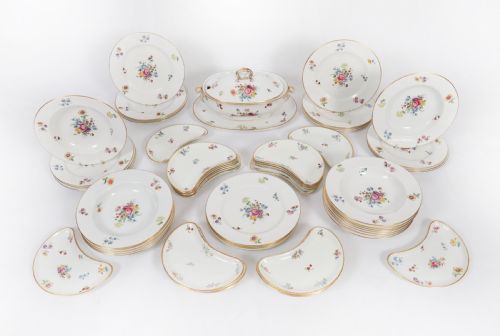
When you search for a gilt porcelain tureen, you examine covered serving vessels designed for soups, sauces, and entrées during formal meals. The examples on this page span the Regency, Victorian, and Edwardian periods, showcasing shapes from small sauce tureens to large soup vessels.
You are most likely to meet English factory pieces from makers such as Worcester, Spode, and Davenport, alongside continental European works. These items often appear either individually with stands or as surviving components of larger dinner and dessert services.
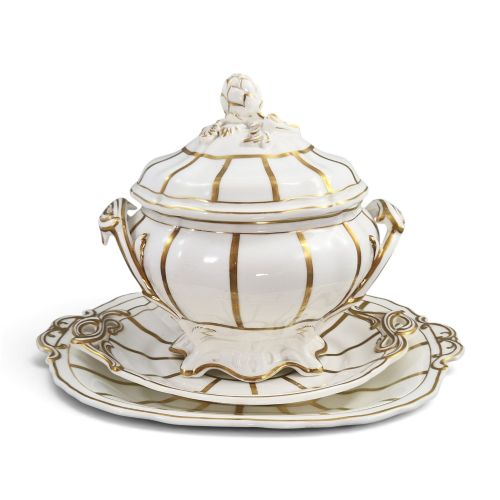
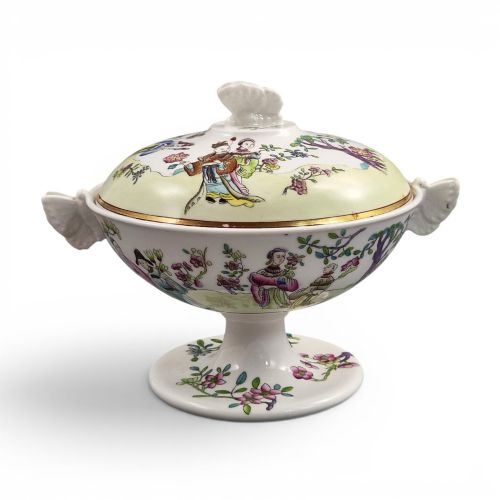
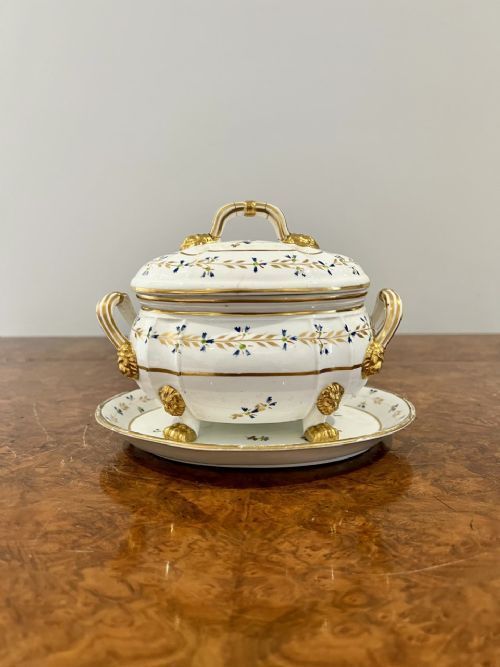
The forms range from pedestals with butterfly handles to classical French Rococo revival shapes adorned with heavy gold leaf. Such vessels served both practical dining functions and ornamental display roles on sideboard tables.
How they were made
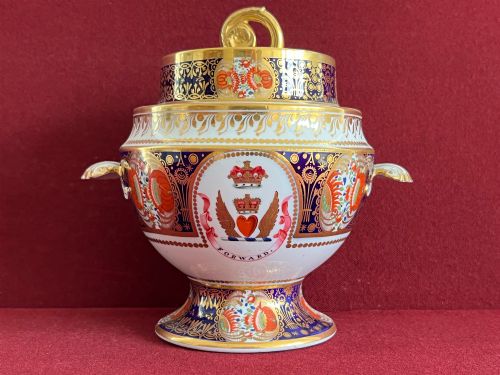
Potters shaped these vessels using fine porcelain, bone china, felspar porcelain, and ironstone before firing them in kilns. Artisans then applied hand-painted enamels and intricate gilding, utilising real gold leaf to highlight handles, rims, and borders.
Many factories combined moulded body forms with applied dimensional details, such as crests or butterfly handles, requiring precise temperature control during multiple kiln firings. The resulting pieces fused robust ceramic bodies with delicate, light-reflecting metallic decoration.
Some Victorian children clearly dined in style, given the survival of miniature toy dinner services complete with their own tiny gilded tureens.
What varies in quality
The distinction between ordinary and exceptional pieces rests on the crispness of the moulding and the weight of the gold application. Superior examples display hand-painted enamel details that remain sharp and registered accurately against the gilded borders.
Factory attribution and provenance also dictate the standing of a piece, with named makers like Flight, Barr and Barr commanding closer attention from collectors. Furthermore, the survival of matching stands, covers, and original gilding in undisturbed condition separates museum-grade specimens from routine domestic wares.
Davenport·Spode·Coalport·Crown Derby·Mintons·Flight Barr and Barr·Müller Volkstedt·Doulton·Mason's·Chamberlain Worcester
The Gilt Porcelain Tureen Glossary
- Felspar porcelain
- A specialised ceramic body patented by early 19th-century English potteries to improve durability and whiteness. It allowed manufacturers to throw thinner vessels while maintaining structural strength for heavy gilding.
- Gilding
- The application of gold leaf or gold powder to the ceramic surface. On these vessels, it serves to accentuate handles, rims, and hand-painted motifs.
- Sauce tureen
- A small covered vessel specifically proportioned for table sauces and gravies. These often sit upon an integral or matched ceramic stand.
- Imari
- A decorative style inspired by Japanese export wares, featuring iron red, underglaze blue, and generous gilding. English factories frequently adopted this palette on porcelain bodies during the Regency period.
- Pedestal bowl
- A vessel raised upon a central foot or base rather than resting flat on a surface. This form elevates the display of fruit or soup contents on the dining table.
Gilt Porcelain Tureen: Frequently Asked Questions
What is a gilt porcelain tureen used for?
These vessels held hot soups, gravies, or sauces during formal dining occasions, keeping contents warm beneath fitted ceramic covers. Servants brought them to the table as part of large multi-course service arrangements.
Today, collectors utilise them primarily as decorative centrepieces on sideboards, dining tables, or mantelpieces. Their sculptural forms and metallic accents add historic character to interior spaces without requiring active dining use.
How do I date a gilt porcelain tureen?
Dating relies heavily on factory backstamps, ceramic body composition, and stylistic clues like Regency classical lines or Victorian ornamentation. Examining the wear patterns on the gilding and the weight of the porcelain also helps determine age.
Many pieces span specific manufacturing windows between the late 18th and early 20th centuries. Comparing handle shapes and enamel palettes to documented factory patterns secures a more precise production era.
Are these tureens dishwasher safe?
These antique ceramics are not suitable for modern dishwashers due to their delicate hand-painted enamels and fragile gold leaf decoration. Aggressive detergents and heat will permanently damage the historic surfaces.
Owners should clean them gently by hand using lukewarm water and mild soap, drying them immediately with a soft cloth. Proper manual care preserves the fragile metallic lustre for future generations.
How do I display a tureen safely?
Display these vessels on stable, level surfaces away from heavy foot traffic or direct sunlight that might fade enamel colours over time. Placing them inside secure cabinets or on sturdy sideboards prevents accidental tipping.
If the piece includes a matching cover or stand, support the weight evenly across the base rather than lifting by handles alone. This protects fragile porcelain joints from unnecessary stress.