



Gilt Porcelain Punch Bowl
A gilt porcelain punch bowl brings weight and a rich palette to a table, combining hand-painted scenes with heavy metallic enrichment.

Gilt Porcelain Punch Bowl
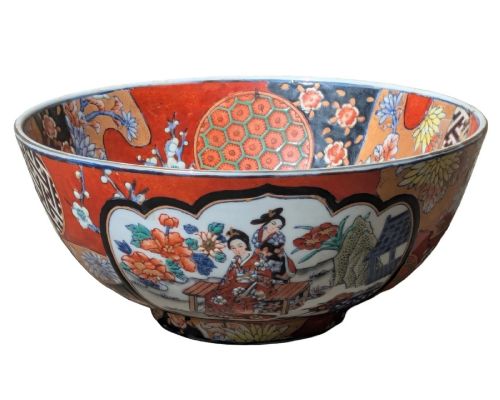
A gilt porcelain punch bowl is a large serving vessel designed for communal drinking, finished with gold leaf or gilding. The listings here span the nineteenth and early twentieth centuries, drawing on Japanese Imari, Chinese export, and European revival styles.
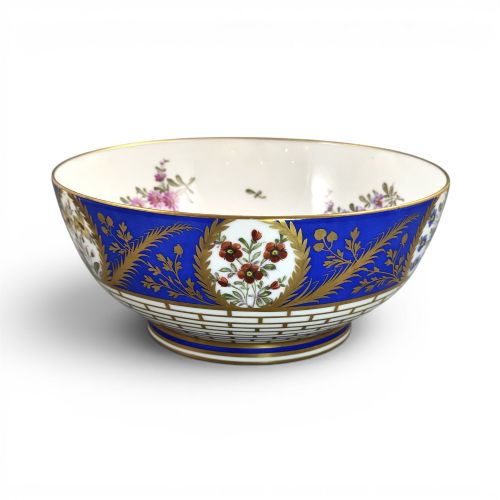
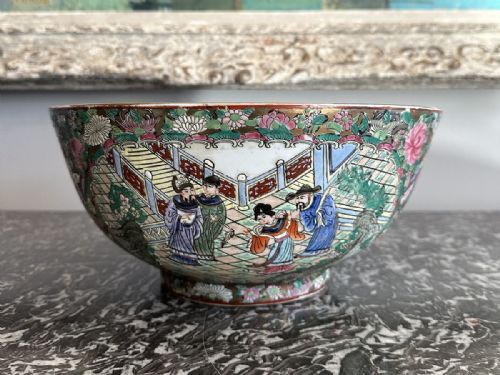
You will most commonly meet nineteenth-century Chinese Canton or Rose Medallion pieces, alongside Japanese Imari and Satsuma bowls. European makers like Samson of Paris also appear, imitating earlier eighteenth-century bodies with considerable skill.
Forms range from simple circular bowls to footed centrepiece vessels and even soup tureens. These pieces served both functional dining roles and decorative display purposes in period interiors.
How they were made
Makers shaped these bowls from porcelain and earthenware, applying complex overglaze enamels by hand. Artisans then added gold leaf and gilding to accentuate rims, panels, and motifs.
Some European interpretations utilised ormolu mounts to frame the ceramic body, combining cast bronze details with painted porcelain. Firing techniques varied widely between East Asian kilns and European factories such as Doulton Burslem and Wedgwood.
An American Eagle painted onto a porcelain bowl reminds us that punch was once a transatlantic diplomatic affair.
What varies in quality
The precision and density of the hand-painted enamel work separate standard decorative items from exceptional works. Fine examples display crisp detailing in figures and foliage, where every brushstroke maintains deliberate control across a large curved surface.
The application of gold leaf and the weight of the ceramic body also determine the standing of a piece. Substantial porcelain with deep, lustrous gilding indicates a higher standard of production by established makers and workshops.
Samson Paris·Doulton Burslem·Wedgwood
The Gilt Porcelain Punch Bowl Glossary
- Overglaze enamel
- Pigments fused onto the fired glaze surface in a secondary low-temperature kiln firing. This technique allows for bright, varied colour palettes that sit slightly raised above the white porcelain.
- Gilding
- The application of gold leaf or powdered gold to the ceramic surface. It highlights rims, handles, and painted panel borders.
- Famille Rose
- A palette of opaque pink and rose enamel colours introduced to Chinese ceramics in the eighteenth century. It remains a dominant feature on Canton export bowls.
- Imari
- A style of Japanese export porcelain featuring underglaze blue combined with iron red, green, and extensive gilding. The patterns are typically dense and geometric or floral.
- Ormolu
- Gilded bronze mounts applied to the edges and bases of European decorative vessels. This adds structural presence and decorative contrast to the porcelain.
Gilt Porcelain Punch Bowl: Frequently Asked Questions
How were these large bowls used?
These vessels were primarily created to hold and serve punch during large gatherings and formal dining events.
Over time, many transitioned into centrepieces for display on dining tables or sideboards when not in active use.
How do I distinguish Chinese export from Japanese pieces?
Chinese export pieces often feature Famille Rose palettes, Rose Medallion panels, and Mandarin figures painted in rich pinks and greens.
Japanese Imari and Satsuma bowls typically rely on iron red, dark cobalt blue, and heavily applied gold leaf arranged in intricate geometric or nature-inspired compositions.
What is the difference between nineteenth-century styles?
Nineteenth-century production includes traditional Asian export wares alongside European revival styles that copied earlier eighteenth-century aesthetics.
French workshops like Samson produced deliberate interpretations of English Chelsea-Derby patterns, bridging historical eras.
How should I clean and care for a gilt bowl?
Wash the ceramic gently by hand using lukewarm water and mild soap, avoiding abrasive sponges that can damage the surface enamel.
Take particular care around gilded rims and overglaze details, as harsh scrubbing will wear away the gold leaf over time.