



Gilt Porcelain Campana Vase
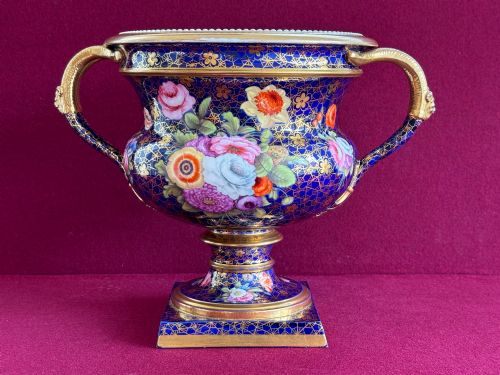
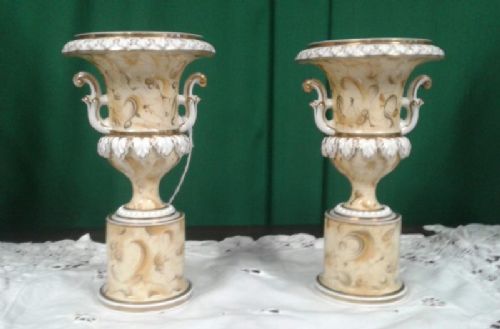
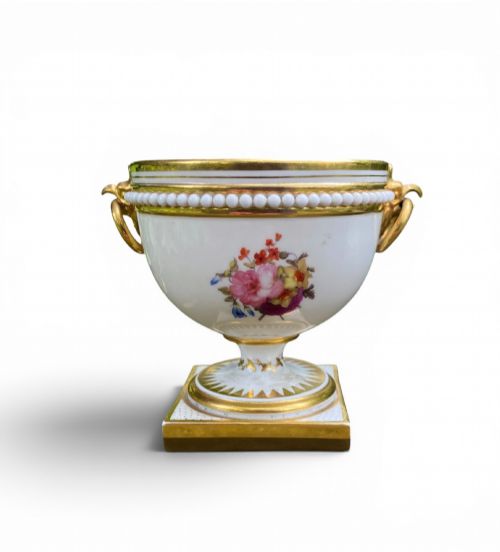
A gilt porcelain campana vase brings classical grandeur to a room, offering the bold neoclassical form and gleaming gilding that defined elite interiors.
Gilt Porcelain Campana Vase
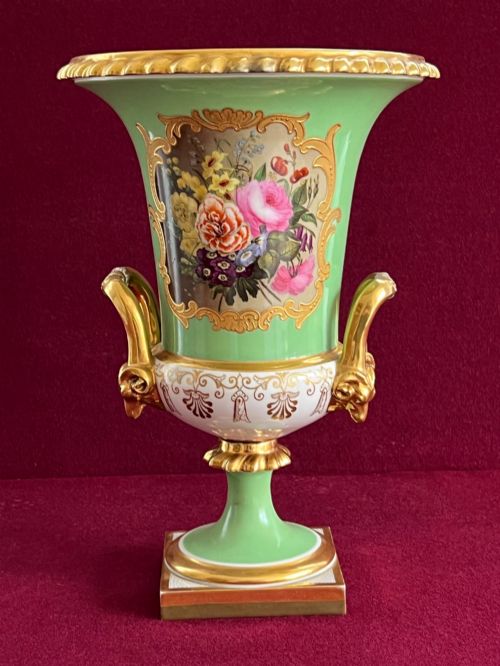
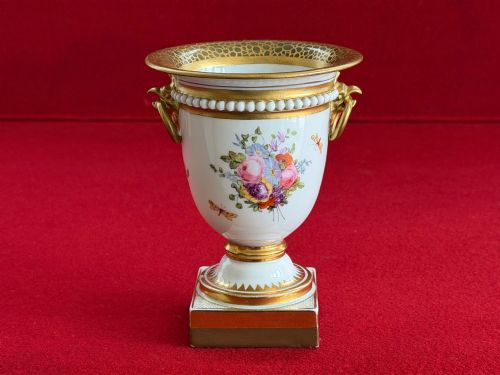
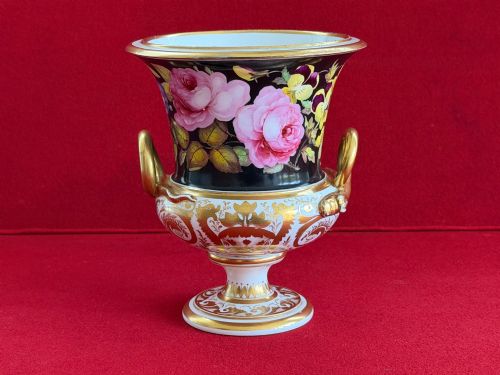
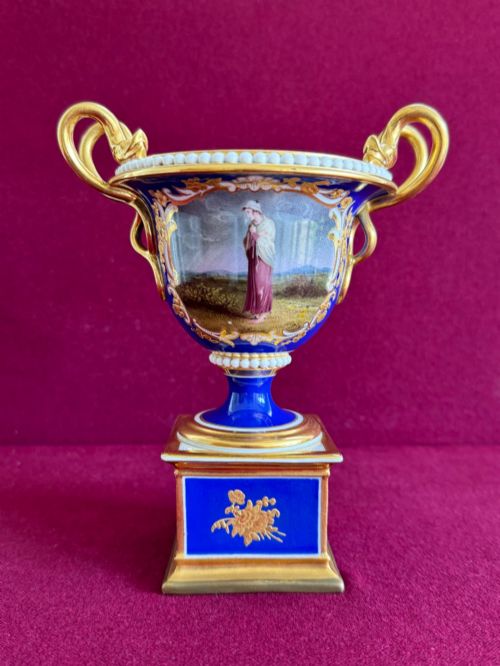
A gilt porcelain campana vase takes its distinct inverted-bell silhouette from classical antiquity, shaped with flared rims and often mounted on square plinths. These ornamental vessels appear across the Regency, Georgian, and Victorian periods, reflecting a lasting fascination with ancient forms.
The versions most commonly met on this page belong to the Regency era, produced by celebrated English factories such as Worcester and Spode. Alongside these, nineteenth-century French and English makers contributed pairs of decorative urns and topographical vases finished with rich gilding.
Makers adapted the ancient campana shape into varied sizes, from small cabinet pairs to substantial garniture pieces. The decorative vocabulary relies heavily on neoclassical motifs, hand-painted panels, and structured handles that elevate functional vessels into pure ornament.
How they were made
Potters shaped these vessels from hard-paste porcelain, throwing or moulding the clay before firing it at high temperatures to achieve a dense, durable body. The characteristic campana profile required careful balance to maintain the graceful sweep from the narrow base to the wide, flared rim.
Surfaces were enriched using applied gold leaf and liquid gilding techniques, often combined with hand-painted enamel reserves and topographical scenes. Firing the metallic oxides and gold leaf required precise kiln control to bond the precious materials permanently to the porcelain glaze.
Gilt Porcelain Campana Vase Retail Price Guide 2026
Typical asking prices for gilt porcelain campana vase among the pieces listed under this phrase on Sellingantiques today, from the lower quarter to the upper quarter. They describe what is for sale here now, not the wider market.
Some nineteenth-century factory painters hid miniature topographical views inside the bell of the vase, rewarding only the most observant viewer.
What varies in quality
Quality reveals itself in the crispness of the porcelain moulding and the weight of the physical form, where finer examples display sharp architectural details on the plinths and handles. Lesser pieces can suffer from sluggish or heavy-handed potting that softens the classical silhouette.
The application of gold leaf and enamel painting marks the primary division between standard production and masterwork pieces. Skilled hands achieved burnished highlights and intricate botanical or topographical details, whereas simpler examples rely on flat, unvarnished gilding.
Flight Barr And Barr·Thomas Lowe·Ridgeways·Coalport·Spode
The Gilt Porcelain Campana Vase Glossary
- Campana vase
- A vessel shaped like an inverted bell, derived from Roman garden urns and widely revived during the neoclassical period. Its flared rim and pedestal foot make it a staple of Regency and Victorian mantelpieces.
- Gilding
- The application of gold leaf or powdered gold to the porcelain surface to create decorative highlights. This technique required subsequent firing to ensure proper adhesion to the glaze.
- Hard-paste porcelain
- A durable ceramic composition fired at high temperatures, known for its dense body and bright white appearance. It served as the primary canvas for elite nineteenth-century decorative urns.
- Enamel
- A vitreous composition fused to the porcelain body through firing, used to add permanent colour and painted scenes. Enamel decoration allowed makers to introduce rich palettes alongside gold leaf.
- Plinth
- The square or rectangular base that supports the foot of the vase, providing stability and visual weight. Neoclassical examples often feature stepped or decorated plinths to enhance the architectural character.
Gilt Porcelain Campana Vase: Frequently Asked Questions
What is a campana vase?
A campana vase is an ornamental vessel shaped like an inverted bell, drawing direct inspiration from classical antiquity. Makers during the Regency and Victorian periods adopted this architectural silhouette for mantelpieces and grand interior displays.
The form is characterised by a wide flared rim, looped handles, and a pedestal base often resting on a square plinth. These vessels were primarily decorative rather than functional, designed to showcase fine porcelain manufacturing and rich gilding.
How do I date a gilt porcelain campana vase?
Dating these vases relies on examining the factory marks, the style of the gilding, and the specific neoclassical motifs used in the hand-painted decoration. Regency pieces often feature bright hand-painted topographical views and burnished gold highlights.
Victorian examples frequently display heavier moulded details and different base proportions compared to their Georgian and Regency predecessors. Comparing the paste quality and glaze characteristics helps pinpoint the period of manufacture.
Were these vases used for flowers?
Most campana vases of this scale were created strictly as decorative objects rather than functional containers for cut flowers. Their primary role was to adorn drawing rooms, side tables, and mantelpieces as part of matched pairs or garnitures.
The narrow necks and delicate painted or gilt surfaces made them impractical for everyday floral arrangements. Instead, they served to project classical taste and artistic patronage within elite homes.
How do I care for antique gilt porcelain?
Caring for gilt porcelain requires gentle handling, keeping the pieces away from direct sunlight and abrasive cleaning materials. Dusting should be done lightly with a soft, dry brush to protect the delicate gold leaf and enamel work.
Water and chemical cleaning agents must be avoided, as moisture can lift old adhesives or tarnish vulnerable gilded surfaces. Placing the vases on stable, level surfaces ensures the heavy porcelain bases remain secure.