



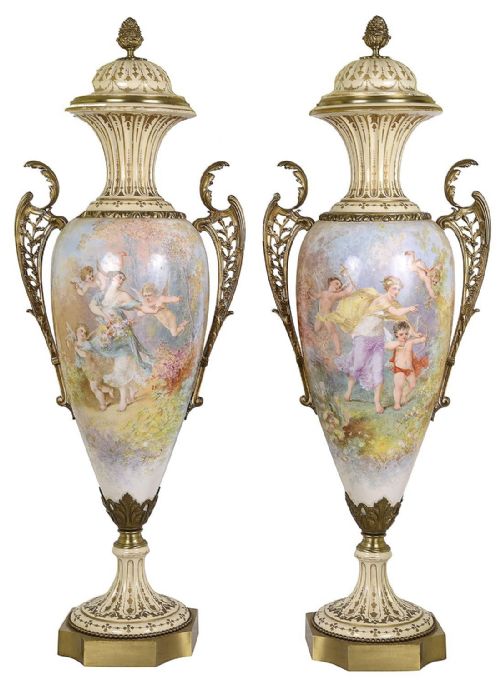


Gilt Pedestal Vase
A gilt pedestal vase brings grand classical proportion and rich metallic surface to a room, drawing the eye straight to its elevated form.
Gilt Pedestal Vase
When you search for a gilt pedestal vase, you encounter decorative vessels raised on a footed base, most frequently originating from the nineteenth century in various European and Asian traditions. These pieces combine sculptural presence with ornamental function, often taking the form of campana shapes, urns, and lidded vessels.
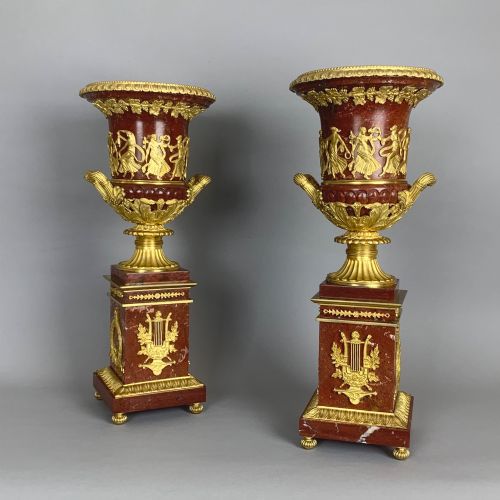
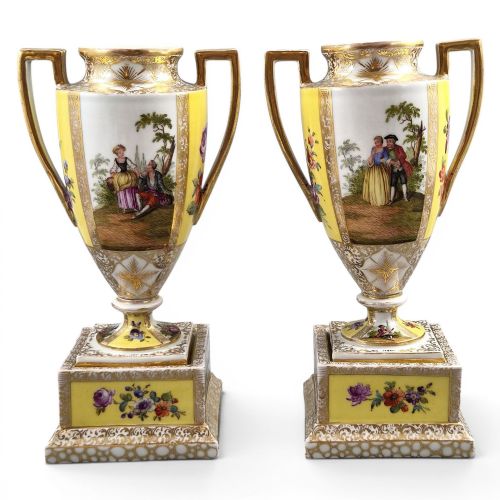
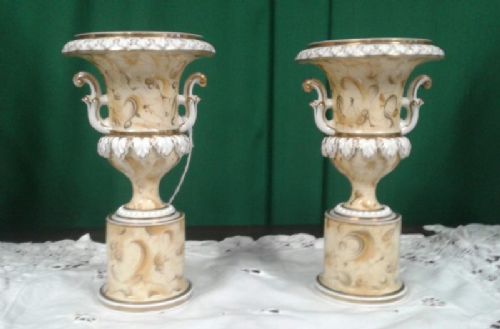
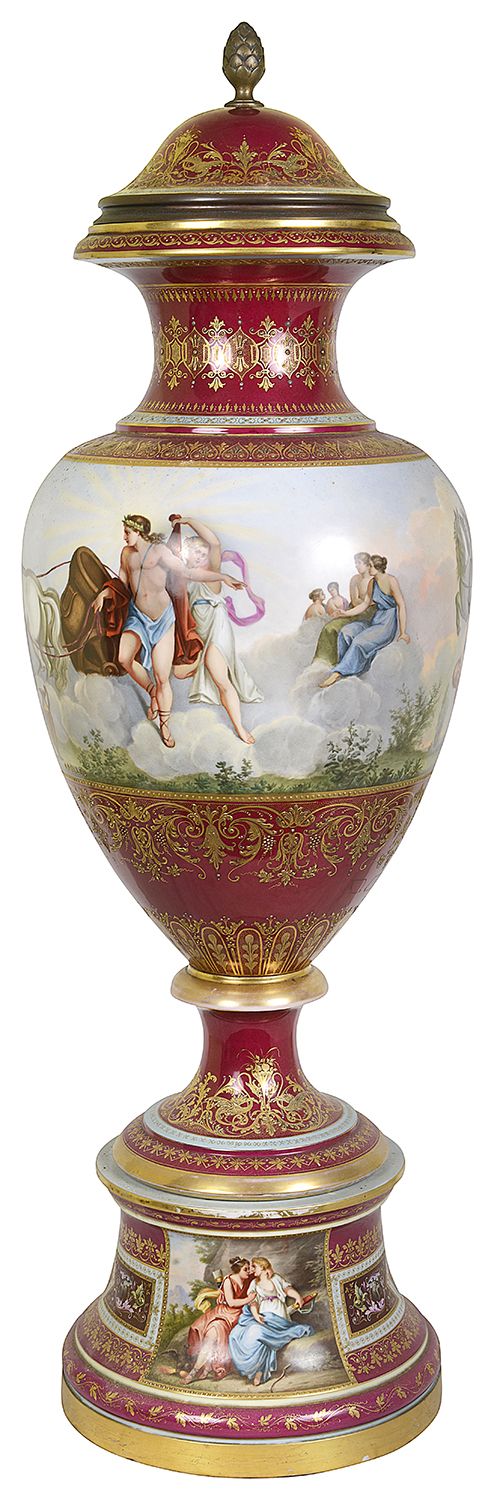
The selections available here lean heavily towards nineteenth-century porcelain and bronze creations, spanning Victorian, French Empire, and Neoclassical styles. You will find pairs and garnitures designed for mantelpieces and side tables, alongside monumental floor vases and table urns.
Porcelain bodies predominate, decorated with enamel and gold leaf or mounted in ormolu, alongside marble and glass examples. They reflect periods of revivalism where makers drew directly upon classical antiquity and French court aesthetics.
How they were made
The construction of these pieces relies on hard-paste porcelain or cast bronze shaped into classical vessel forms. Makers applied gold leaf, gilt, and ormolu mounts to accentuate handles, rims, and pedestals.
Enamel painting and gilding were fired onto ceramic bodies, while bronze components were cast and gilt-finished to create high-contrast surfaces. Glass and marble variants required specialist cutting, turning, and metal mounting techniques.
Some towering temple vases reach a staggering eighty-six inches high, demanding more ceiling clearance than most domestic grand pianos.
What varies in quality
Quality rests in the crispness of the casting and the precision of the hand-painted and gilt decoration. Finer pieces display finely detailed ormolu mounts and delicate brushwork on porcelain surfaces rather than mechanical transfer prints.
The weight of the materials, the depth of the gilding, and the harmony of the proportions separate standard decorative items from exceptional cabinet pieces.
Helena Wolfsohn Dresden·Meissen Porcelain·Royal Worcester·Ridgeways
The Gilt Pedestal Vase Glossary
- Campana
- A bell-shaped vessel with a flared rim and a footed base, commonly associated with classical antiquity. These forms were widely revived during the nineteenth century.
- Ormolu
- Finely ground high-carat gold applied to a bronze base using a mercury amalgamation process, or later through electroplating. It provides a rich, warm metallic finish.
- Garniture
- A set of three or more matching decorative vases or urns designed to be displayed together on a mantelpiece or cabinet.
- Cassolette
- A decorative vase or urn featuring a pierced lid, originally designed to hold perfumes or incense. They often double as solid lidded urns in nineteenth-century interiors.
- Hard-Paste Porcelain
- A durable ceramic material fired at very high temperatures, composed of kaolin and petuntse. It forms the body of many fine European urns.
Gilt Pedestal Vase: Frequently Asked Questions
What is a pedestal vase used for?
These vessels were primarily created for display on mantelpieces, sideboards, and pedestals as focal points in formal rooms.
They served to demonstrate household taste and refinement, often arranged as pairs or three-piece garniture sets.
How do I identify French Empire style?
French Empire pieces typically feature strict classical symmetry, heavy ormolu mounts, and motifs drawn from ancient Rome and Greece.
Look for architectural proportions, martial emblems, and deep porcelain colours such as cobalt blue or royal yellow.
Are these vases meant for flowers?
Most of these decorative urns and pedestal vases are intended for ornamental display rather than holding water and fresh stems.
Lidded versions and fragile porcelain pieces function purely as sculptural objects within an interior scheme.
How can I tell the period of a gilt urn?
Dating relies on stylistic markers, such as the heavy revivalism of Victorian pieces or the cleaner classical lines of early nineteenth-century work.
Maker marks, material composition, and mounting techniques also help narrow down the decade of manufacture.