



Classical Urn Lid
A classical urn lid tops vessels shaped after antiquity, bringing architectural order and sculptural finials to decorative displays.
Classical Urn Lid
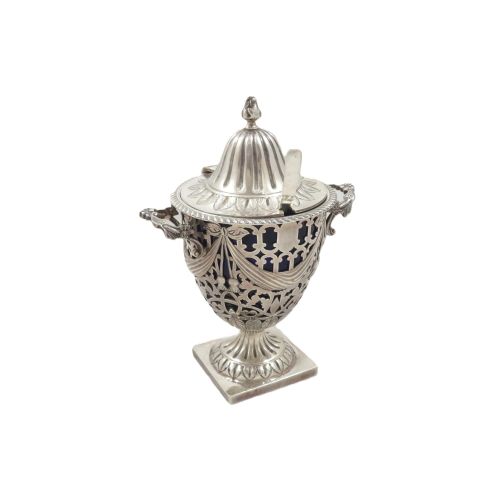
When you search for a classical urn lid, you are examining removable covers designed for ornamental vessels, lidded vases, and sugar baskets.
The pieces on this page span from the eighteenth century through the Edwardian era, predominantly featuring porcelain, bronze, marble, and terracotta forms.
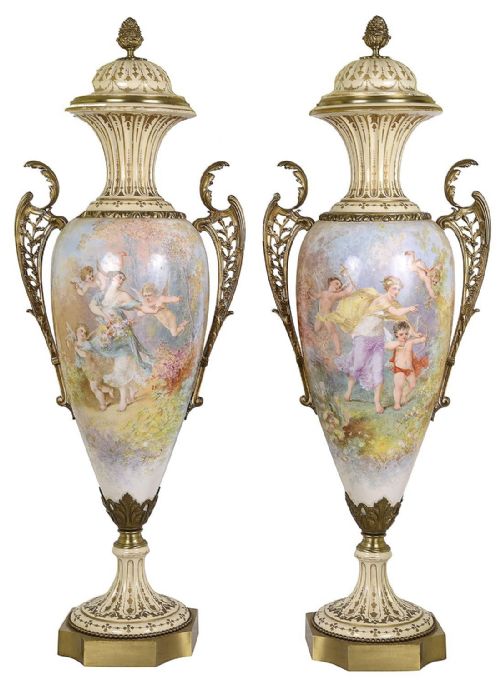
You will encounter matching pairs and garnitures originating from French, Italian, and English workshops, often styled in the neoclassical or revival taste.
Materials and construction
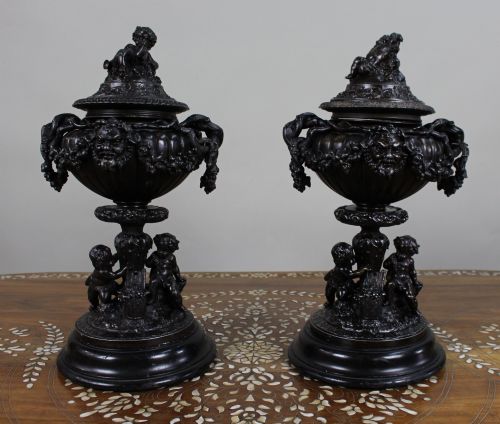
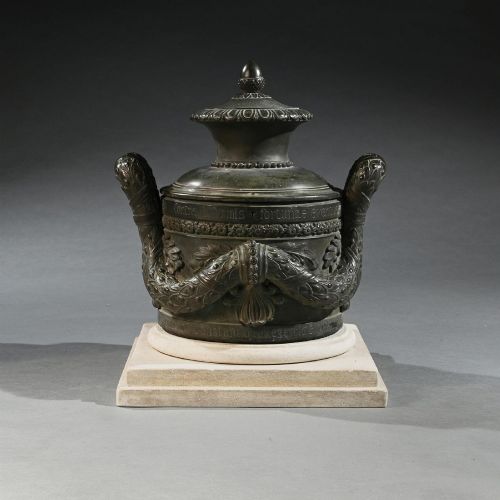
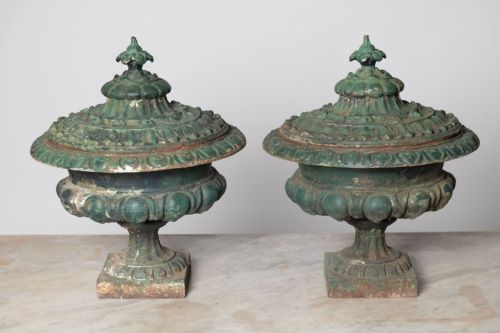
Metal vessels combine cast bronze or ormolu mounts with patinated surfaces, sometimes integrating marble bases and applied figural details.
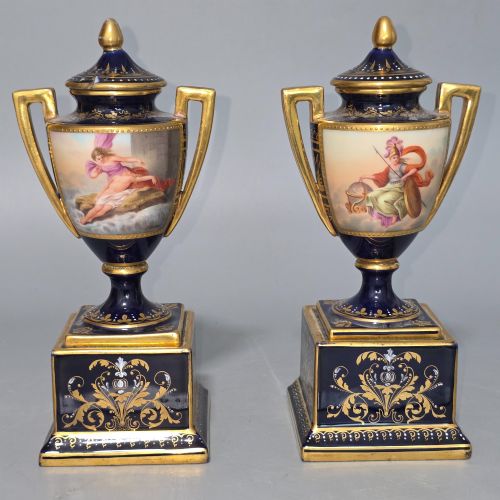
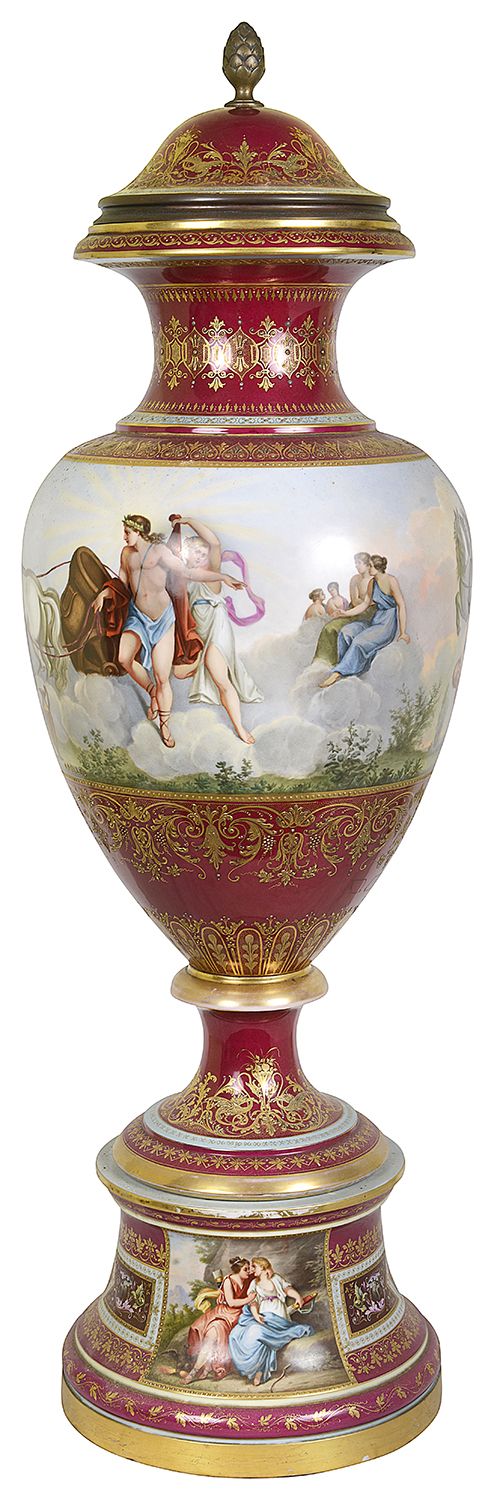
Ceramic examples utilise hard-paste porcelain, majolica, or terracotta, decorated with hand-painted scenes, gilding, and precise firing techniques.
Wooden and ivory pieces rely on turned construction, integrating brass finials or metal mounts to complete the profile.
Some nineteenth-century wooden urns feature brass pineapple finials, serving as traditional symbols of hospitality atop classical campana bodies.
Distinctions in quality
Superior examples display crispness in cast metal chasing or precision in hand-painted porcelain detail, showing the artisan's control over the medium.
The harmony between the vessel and its removable cover determines visual integrity, where balanced proportions and matching materials indicate a cohesive original pair.
George Nathan and Ridley Hayes·Auguste Cain·F. Koller·Herend
The Classical Urn Lid Glossary
- Campana
- A bell-shaped vessel form derived from ancient pottery models. It provides the classic silhouette for many lidded garden and decorative urns.
- Ormolu
- Gilt bronze mounted onto decorative objects, particularly popular in French nineteenth-century works. It provides rich metallic highlights to porcelain and marble bodies.
- Garniture
- A set of three or more matching decorative vases or urns designed to display together on a mantelpiece or sideboard.
- Finial
- The decorative knob or sculptural element sitting at the very top of a lid. It often takes the form of a pineapple, flame, or figural motif.
Classical Urn Lid: Frequently Asked Questions
Are these lids removable?
Yes, these covers lift off the main vessel body, though some historical pieces include locking mechanisms or secure seating flanges.
Buyers should handle them carefully by the finial to protect the edges of the ceramic or metal.
How do I identify a neoclassical style?
Neoclassical pieces draw direct inspiration from Greek and Roman antiquities, featuring symmetrical lines, architectural motifs, and restrained ornamentation.
Look for decorative elements such as swags, fluting, and classical portrait medallions.
What is a Grand Tour souvenir?
Grand Tour objects were portable artworks purchased by wealthy travellers visiting European cultural centres during the nineteenth century.
These pieces often replicate famous classical monuments or antiquities in bronze, alabaster, or marble.
How should I display a garniture?
A garniture typically consists of a central larger urn flanked by two matching smaller vessels arranged across a surface.
They create a balanced focal point on mantels, sideboards, or large display cabinets.