
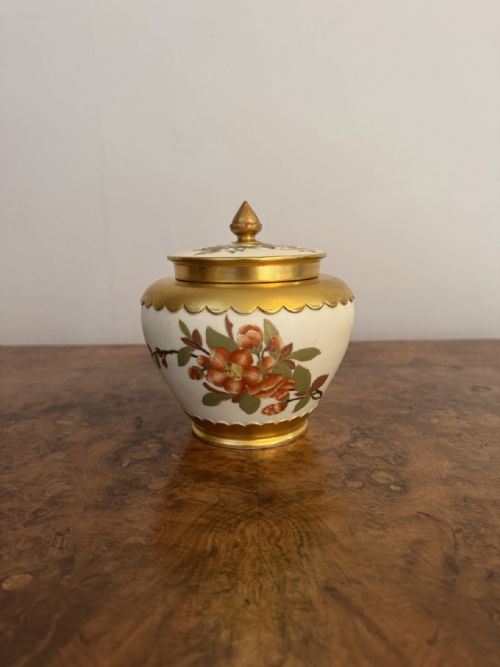


Antique Porcelain Potpourri
These antique porcelain potpourri containers bring pierced covers and scented dry petals into the room, holding the taste of earlier centuries in ceramic form.
Antique Porcelain Potpourri
When you search for antique porcelain potpourri, you encounter lidded vases, urns, bowls, and ginger jars designed to hold aromatic mixtures of dried flowers and spices. These vessels date across the eighteenth, nineteenth, and twentieth centuries, spanning periods from the Georgian era through to Victorian and Edwardian manufacturing.
The most common examples on this page are lidded vases and urns featuring pierced or reticulated covers that allowed fragrance to diffuse into the parlour. English factories such as Royal Worcester, Derby, and Chamberlain Worcester dominate the selection, alongside continental makers like Dresden, Meissen-style workshops, and Sitzendorf.
Forms range from small chamberlain pommanders and pastille burners to large blush ivory urns and ironstone jars with crown covers. Makers utilised traditional shapes derived from Rococo and Regency styles, often mounting the porcelain bodies on pedestals or pairing them with gilt bronze mounts.
Materials and methods
The pieces listed on this page are formed from porcelain, ceramic, and ironstone bodies, shaped into lidded vessels and fired at high temperatures. Makers applied enamel paint and hand-brushing directly to the ceramic surfaces, depicting floral scenes, fruit, and birds.
Decoration relied heavily on gold leaf and gilding to highlight handles, rims, and pierced covers. Ironstone examples utilised blue transfer printing techniques to build up intricate patterns beneath the glaze.
Continental workshops incorporated gilt bronze mounts and cobalt blue grounds with Meissen-style marks. Perforations on the lids were pierced by hand into the soft clay prior to firing to ensure the finished potpourri jar functioned as intended.
Listings span the eighteenth, nineteenth, and twentieth centuries, incorporating materials from standard porcelain and ceramic to ironstone, enamel, and gilt bronze.
Judging quality in potpourri vessels
Quality rests upon the crispness of the porcelain moulding and the precision of the pierced work on the lidded covers. Finely pierced lattice patterns and cleanly defined crown covers indicate superior workshop standards.
Hand-painted decoration creates a clear division across the range. Pieces featuring detailed botanical or fruit painting executed by named artists stand apart from simpler transfer-printed items.
The integration of secondary materials such as gilt bronze mounts and heavy gilding alters the character of the vessel. The weight of the ironstone or porcelain body and the preservation of the original matching cover dictate the standing of each piece.
Royal Worcester·Derby·Chamberlain Worcester·Spode·Masons Ironstone·Dresden·Meissen·Wolfsohn·Sitzendorf
The Antique Porcelain Potpourri Glossary
- Potpourri pot
- A lidded vessel with a perforated cover designed to hold a mixture of dried petals and spices. The piercings release the scent into a room.
- Pastille burner
- A small ceramic container used for burning scented pastilles. These objects date frequently to the Regency period.
- Ironstone
- A heavy, durable ceramic perfected in the nineteenth century. It combined earthenware pottery with porcelain qualities.
- Blush ivory
- A soft cream-coloured porcelain ground developed by Royal Worcester. It featured delicate tinted floral decoration.
- Gilt bronze
- An alloy treated with gold leaf or mercury gilding to imitate solid gold. It appears on French and continental mounts.
Antique Porcelain Potpourri: Frequently Asked Questions
What is an antique porcelain potpourri jar?
An antique porcelain potpourri jar is a lidded container created to hold fragrant dried plant material. The pierced lid allows the scent to escape gradually.
These vessels were produced in various forms including urns, ginger jars, and bowls across multiple nineteenth-century styles.
How were potpourri vessels used in period homes?
Period homes used these vessels to freshen indoor air by placing dried flowers treated with essential oils inside the container. The pierced covers distributed the aroma across drawing rooms and parlours.
Over time, many pieces became purely decorative objects displayed on mantelpieces and pedestals.
How do I identify a Victorian potpourri vase?
Victorian potpourri vases often display Rococo Revival influences, heavy gilding, and rich enamel painting on porcelain bodies. Makers such as Royal Worcester produced notable examples during this era.
Look for manufacturer marks on the base alongside characteristic period colour palettes and glaze treatments.
What is the difference between ironstone and porcelain?
Ironstone is a dense, robust ceramic material developed to resist chipping, while porcelain is a finer, more translucent ceramic fired at higher temperatures.
Both materials were utilised for potpourri containers, with ironstone frequently featuring blue transfer printing.