
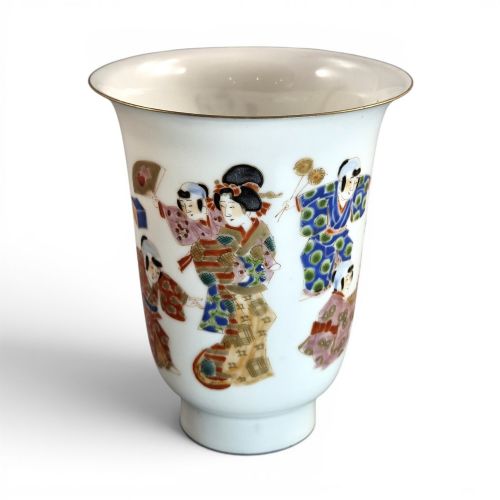


Gilt Painted Japanese Vase
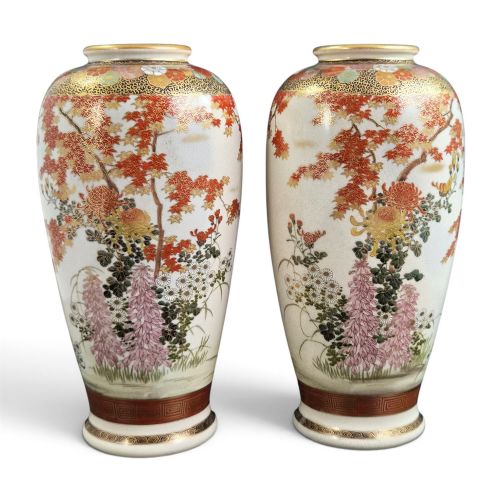
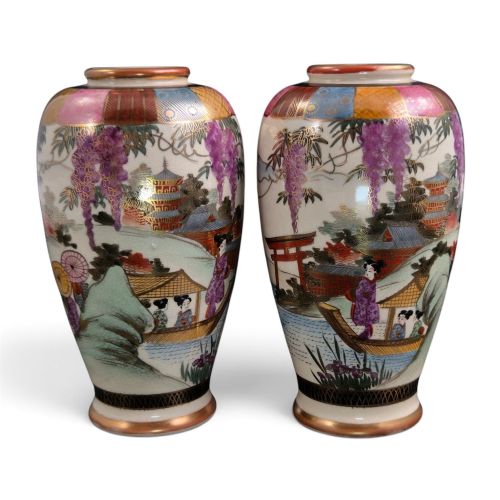
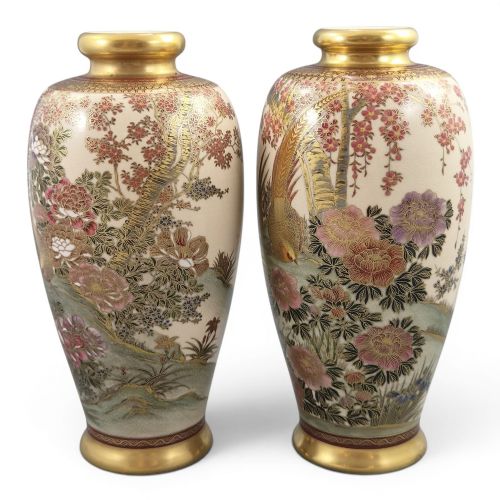
These gilt painted japanese vase examples bring together intricate earthenware, porcelain and gold leaf work from the Meiji period and beyond.
Gilt Painted Japanese Vase
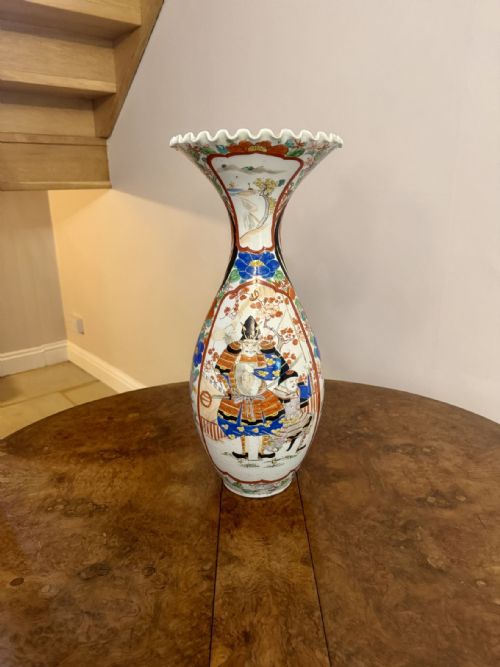
A gilt painted japanese vase covers a range of ceramic forms including Satsuma earthenware, Kutani porcelain and Imari wares produced from the nineteenth century into the twentieth century. These pieces appear in forms such as traditional bottle vases, lidded vessels, koros and table lamps.
The majority of pieces encountered on this page belong to the Meiji and Taisho periods, alongside Edwardian adaptations. Makers utilised earthenware and porcelain bodies decorated with detailed enamel and gold leaf.
Buyers also encounter larger floor vases, jardiniere bowls and miniature vessels alongside pairs designed for display on mantelpieces or cabinets. The forms span centuries of ceramic production in Japan, with notable output from Kyoto and Kobe workshops.
How They Were Made
Potters shaped earthenware and porcelain bodies on the wheel or in moulds before applying base glazes. Earthenware vessels frequently received a fine crackle glaze that accepted subsequent enamel colours.
Artisans applied polychrome enamels and gold leaf by hand to build up complex figural processions, floral sprays and landscape scenes. Kiln firings fixed the pigments before final gilding highlights were added to the surface.
Shi-Shi lions keep a watchful eye over ceramic incense burners, standing ready to guard the household from stray sparks.
What Varies in Quality
The distinction between standard commercial output and exhibition quality lies in the precision of the brushwork and the density of the gilding. Master workshops employed skilled painters who rendered facial expressions and botanical details with exceptional clarity.
The weight and finish of the ceramic body also indicate standard, alongside the crispness of maker seals and signatures stamped or painted on the base. Superior pieces maintain vibrant enamel colours and intact gold leaf across intricate surfaces.
Maruni Kobe·Manpei·Hichozan Shinpo·Kinkōzan·Chosei·Seiko-en Chokei·Hakusan·Hododa·Kinkozan·Fukagawa
The Gilt Painted Japanese Vase Glossary
- Satsuma
- Earthenware pottery originating from Satsuma province featuring a characteristic ivory crackle glaze decorated with enamels and gold. It became widely exported during the Meiji period.
- Imari
- Japanese porcelain produced in Arita, typically decorated in underglaze blue and iron red with added gold highlights. These pieces were exported in large quantities to Europe from the seventeenth century onwards.
- Kutani
- Japanese porcelain or pottery recognised by its bold palette, often dominated by greens, blues, yellows and purples alongside gold detailing. Workshops operated primarily in Ishikawa prefecture.
- Meiji Period
- The era of Japanese history running from 1868 to 1912, characterised by the opening of trade with the West and a surge in decorative arts production for export.
- Koro
- A traditional Japanese incense burner, frequently fitted with a pierced cover and supported on small feet. Examples appear in Satsuma ceramic forms with lion finials.
Gilt Painted Japanese Vase: Frequently Asked Questions
How do I identify Satsuma ware?
Satsuma ware is recognised by its cream-coloured earthenware body covered in a fine network of crackled glaze. The surfaces are heavily decorated with enamels and gold leaf depicting figures, flowers and landscapes.
Many pieces carry artist signatures or workshop marks on the base, particularly from Kyoto or Kobe producers active during the Meiji period.
Are these vases waterproof?
Most antique decorative vases and incense burners are intended for display rather than holding water. Earthenware pieces like Satsuma have porous bodies that can absorb moisture and damage the historic enamel and gilding.
If you wish to display fresh stems, use a discrete glass liner inside the vessel to protect the ceramic body from water contact.
What is the difference between Imari and Kutani?
Imari porcelain traditionally relies on a palette of underglaze blue, iron red and rich gold leaf arranged in geometric and floral panels. The body is hard-paste porcelain produced in Arita.
Kutani wares feature a much wider and bolder use of green, yellow and purple enamels over white porcelain or earthenware, often focusing on figurative scenes and nature.
How should I clean my vase?
Dust the surface gently with a soft, dry brush to remove particles without disturbing the delicate gold leaf. Avoid liquid cleaners, chemical sprays or abrasive cloths which can strip the enamel decorations.
Keep the piece out of direct sunlight to prevent the pigments and gilding from fading over time.