

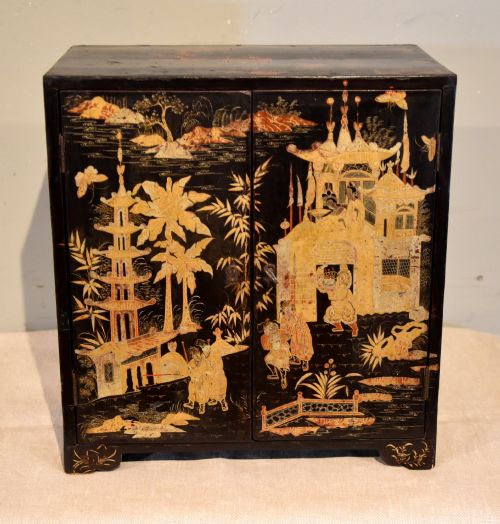
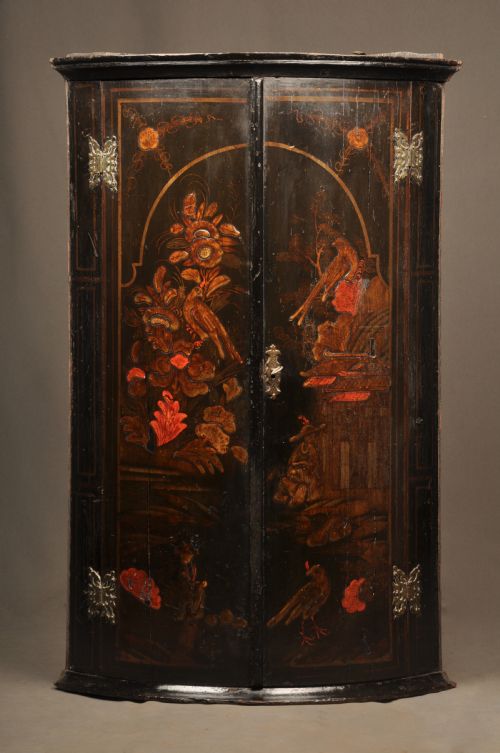
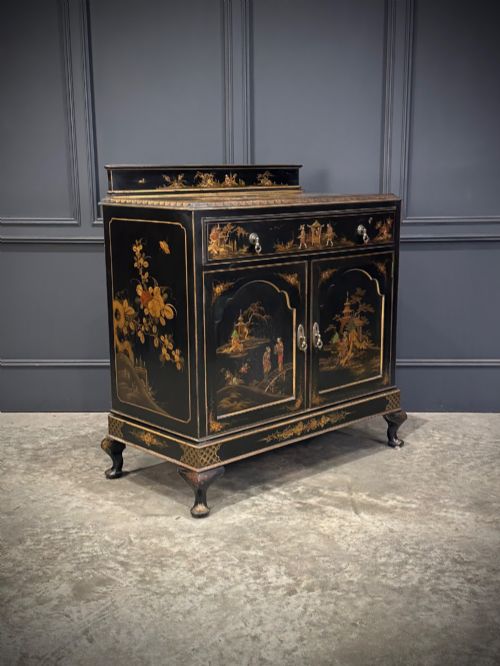
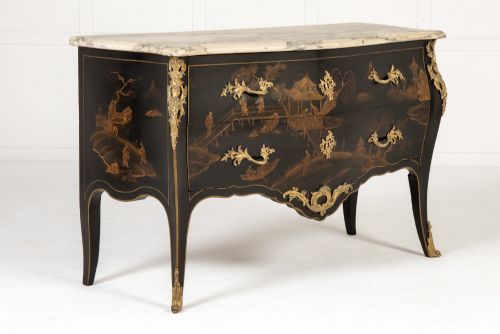


Gilt Japanned Cabinet
A gilt japanned cabinet brings bold lacquerwork and raised gilding into a room, offering both display and storage with distinct historical presence.
Gilt Japanned Cabinet
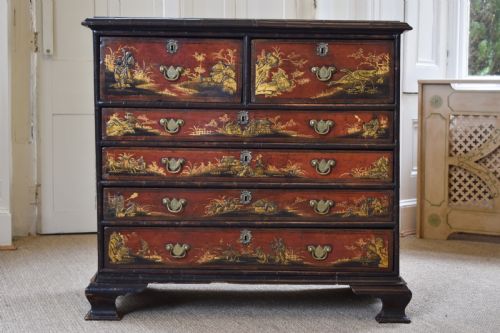
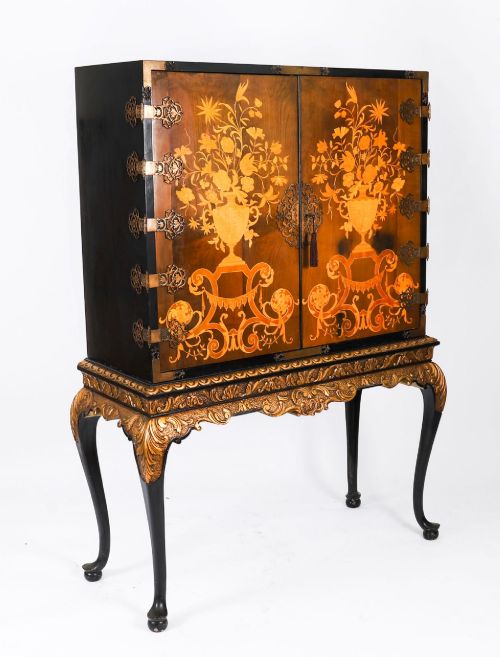
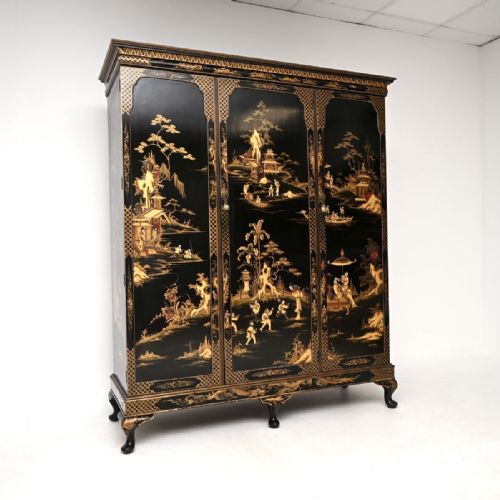
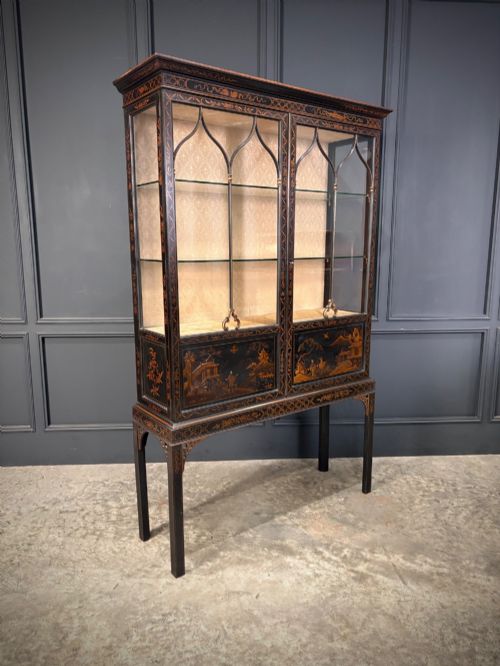
When searching for a gilt japanned cabinet, buyers encounter a range of forms including corner cupboards, side cabinets, bureau bookcases, and cabinets on stands. These pieces display decorative finishes that imitate Asian lacquerwork, a technique highly desired across several European style revivals.
The versions most commonly met on this page span the eighteenth and nineteenth centuries, alongside twentieth-century revivals. Examples range from compact corner cupboards to substantial bureau bookcases and cocktail cabinets.
Makers drew upon styles such as Queen Anne, William and Mary, Regency Chinoiserie, and French Rococo Revival. Each object type carries distinct proportions, from the architectural lines of a bureau bookcase to the curved front of a commode.
How they were made
Makers constructed these cabinets using timber such as pine and general wood carcases, preparing the surfaces to receive layers of lacquer. Skilled artisans then applied successive coats of varnish and pigment to build a deep, reflective ground.
Gold leaf and brass hardware provide the characteristic metallic contrast on these pieces. Craftsmen used raised gesso work beneath the gold leaf to create dimensional figures, landscapes, and architectural motifs in the Chinoiserie taste.
Gilt Japanned Cabinet Retail Price Guide 2026
Typical asking prices for gilt japanned cabinet among the pieces listed under this phrase on Sellingantiques today, from the lower quarter to the upper quarter. They describe what is for sale here now, not the wider market.
Some cocktail cabinets hide their colourful lacquered interiors behind stern exterior doors, waiting to pour a dry martini.
What varies in quality
The sophistication of the painted and gilt decoration dictates the visual success of a piece. Finer examples feature intricate, hand-drawn figures and landscapes with crisp relief work, whereas simpler items rely on more repetitive stencilled motifs.
The quality of the underlying cabinetmaking and the depth of the lacquer finish separate standard pieces from exceptional ones. Heavier construction, well-figured timber carcases, and original brass mountings contribute significantly to a cabinet's standing.
The Gilt Japanned Cabinet Glossary
- Japanning
- European imitation of East Asian lacquerwork, created by building up layers of varnish and resin on a timber base. This finish is then heated and polished to achieve a hard gloss.
- Chinoiserie
- European artistic style reflecting Chinese and East Asian motifs, popular in furniture and interior decoration. Designers interpreted exotic scenes through Western compositional habits.
- Bureau bookcase
- Combination furniture piece featuring a sloping writing flap above drawers, surmounted by a set of shelving enclosed by doors. These units served as functional writing and storage centres.
- Cabinet on stand
- Elevated storage furniture consisting of a main cabinet body supported by a separate table frame or base. This form lifts the decorated surface closer to eye level.
- Gesso
- Plaster-based preparation mixture applied to wood surfaces to form a smooth ground for gilding and painting. Artisans modelled this material in relief before applying gold leaf.
Gilt Japanned Cabinet: Frequently Asked Questions
What is a gilt japanned cabinet?
A gilt japanned cabinet is a piece of storage furniture finished with European lacquer and decorated with raised gold designs in the Chinoiserie style. These cabinets combine utility with elaborate decorative surfaces.
Such pieces range from corner cupboards to large bureau bookcases, originating across the eighteenth, nineteenth, and early twentieth centuries.
How do I style a japanned cabinet?
These cabinets work well as focal points in reception rooms or hallways, where their reflective lacquer and gilt details catch natural light. Pairing them with neutral walls allows the intricate surface decoration to stand out.
They also function effectively as cocktail cabinets or display units, bridging historic craftsmanship with modern interior uses.
How do I date a japanned cabinet?
Dating relies on examining the cabinet's construction timber, hardware, and the specific style of the Chinoiserie decoration. Eighteenth-century pieces often display hand-carved stands and distinct carcase joinery.
Later Victorian and twentieth-century revivals typically incorporate machine-sawn timbers and different formulations of lacquer and brass hinges.
Were these cabinets made in England?
While many pieces originated in British workshops following eighteenth-century and Regency styles, continental European makers also produced similar lacquered furniture. Venetian and French interpretations often featured distinct Rococo curves and alternative colour palettes.
Examining the structural wood and regional construction methods helps determine the likely place of manufacture.