

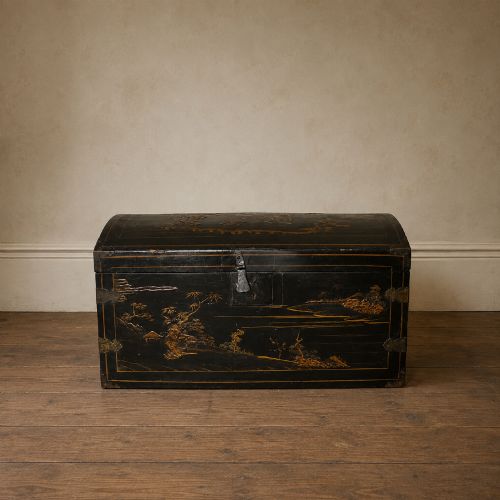
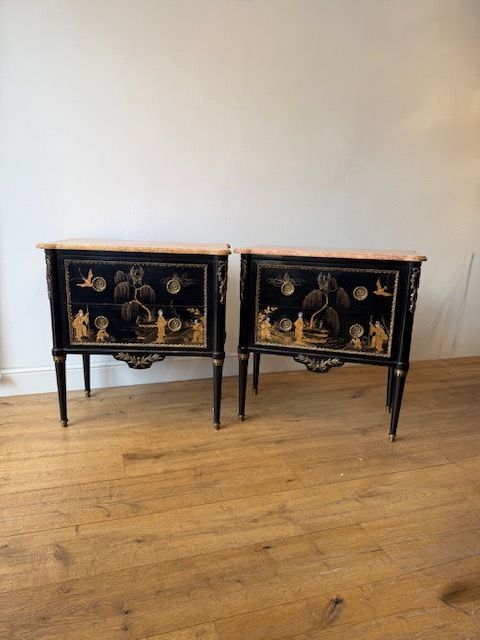


Black Gold Lacquer Chest
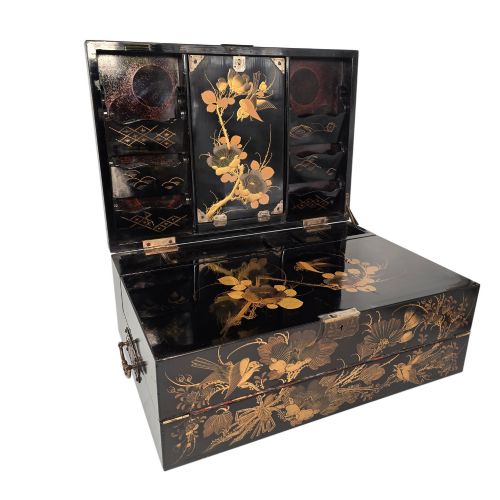
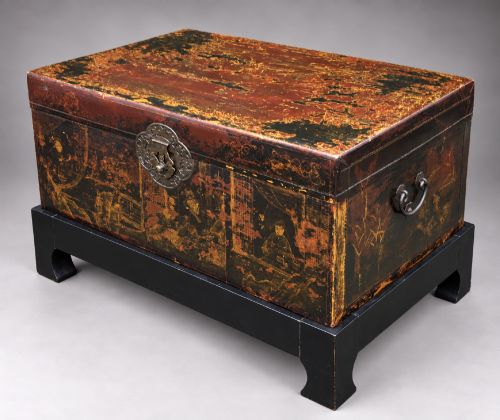
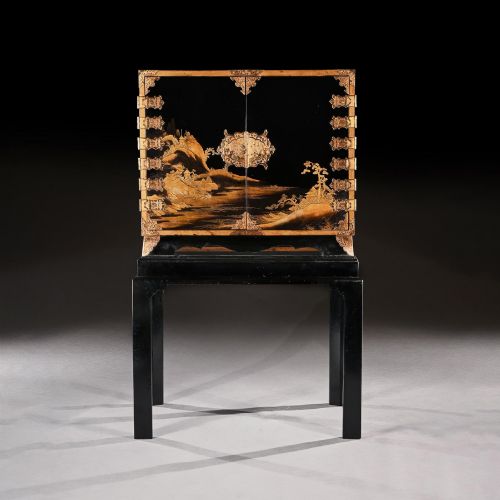
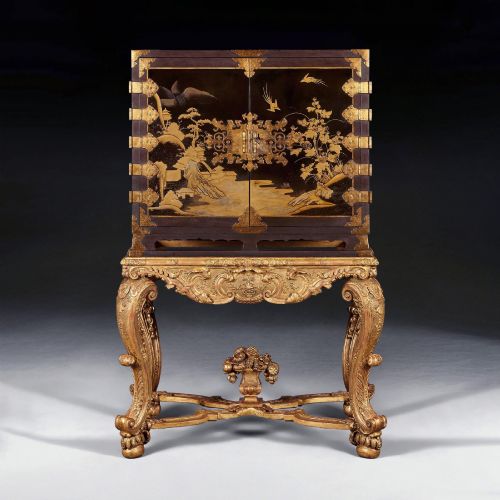
These black gold lacquer chests range from compact table cabinets to grand pieces on stands, bringing deep dark surfaces and gilded scenes into a room.
Black Gold Lacquer Chest
A black gold lacquer chest brings together deep dark finishes and gilded decoration, spanning forms from blanket boxes to table cabinets on stands. When searching for a black gold lacquer chest, a buyer encounters works from diverse origins including Chinese export workshops, Japanese Meiji and Edo periods, and Regency English penwork pieces.
The selection on this page centres heavily upon table cabinets, tea caddies, and larger trunks or coffers raised upon stands. Many pieces date from the nineteenth and early twentieth centuries, alongside earlier seventeenth and eighteenth-century examples showing Chinoiserie and Japanese export styles.
How they were made
These items are constructed from wood and lacquered wood, finished with layers of black lacquer that provide a smooth dark ground. Artisans applied gold leaf and gilding to build up intricate pictorial scenes, figures, and foliage.
Some English and Regency examples utilise penwork techniques on wood surfaces to simulate exotic lacquer finishes. Brass mounts, bone details, and metal fittings frequently secure corners, lids, and drawers.
Black Gold Lacquer Chest Retail Price Guide 2026
Typical asking prices for black gold lacquer chest among the pieces listed under this phrase on Sellingantiques today, from the lower quarter to the upper quarter. They describe what is for sale here now, not the wider market.
Some miniature tea caddies from the Regency period required tiny lockable compartments to keep precious leaves safe from light-fingered staff.
What varies in quality
The distinction between tiers rests upon the depth of the lacquer surface and the crispness of the gilded decoration. Fine examples display rich layering that catches the light, whereas lesser pieces show flatter, simpler painted surfaces without the same dimension.
Construction details also separate the output, seen in the joinery of table cabinets and the integration of stands, whether original French giltwood Regence frames or later supporting structures.
The Black Gold Lacquer Chest Glossary
- Chinoiserie
- European artistic style reflecting Chinese motifs and decorative scenes. This aesthetic heavily influenced eighteenth and nineteenth-century cabinet makers working in black lacquer.
- Kodansu
- A small Japanese portable cabinet fitted with internal drawers. These miniature chests often feature elaborate black and gold lacquer work.
- Penwork
- A decorative technique using fine ink lines on wood to simulate engraved or lacquered designs. Regency makers utilised this method on tea caddies and small cabinets.
- Giltwood
- Wood that has been treated with gold leaf or a gold-coloured finish. It frequently forms the opulent stands for seventeenth-century cabinets.
Black Gold Lacquer Chest: Frequently Asked Questions
Where were these black lacquer chests made?
The pieces originate from various regions including China, Japan, and England. Chinese export workshops and Japanese Edo or Meiji periods produced many of the lacquered cabinets and trunks seen here.
At the same time, English makers during the Regency period created penwork items inspired by these Eastern designs.
What is the difference between a table cabinet and a chest on stand?
A table cabinet is designed to sit directly upon a desk or surface, housing small internal drawers for papers or valuables. Cabinets on stands incorporate a dedicated supporting frame beneath the main storage body.
These stands elevate the piece and often feature contrasting materials like giltwood or carved wood.
How do I care for a lacquered wood surface?
Lacquered surfaces require gentle treatment to preserve the delicate gold leaf and dark finish. Keep pieces away from direct sunlight and excessive humidity to prevent the wood underneath from shifting.
Dust lightly with a soft, dry cloth and avoid chemical cleaners entirely.
How do I identify a Regency penwork piece?
Regency penwork items utilise inked line drawings on a light or dark wooden ground to mimic the look of imported lacquer. These pieces often take the form of tea caddies or small collectors cabinets.
Close inspection reveals fine ink work rather than layered lacquer and gold leaf.