



18th Century Lacquer Cabinet
An 18th century lacquer cabinet brings striking Chinoiserie ornament and rich surface depth into a room, offering both versatile storage and dramatic visual presence.
18th Century Lacquer Cabinet
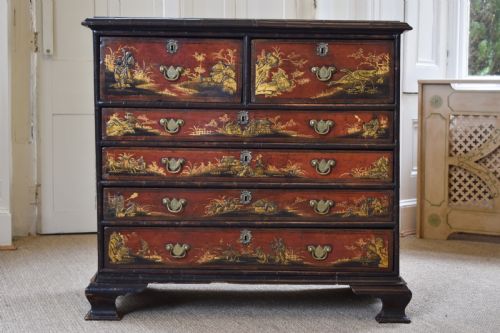
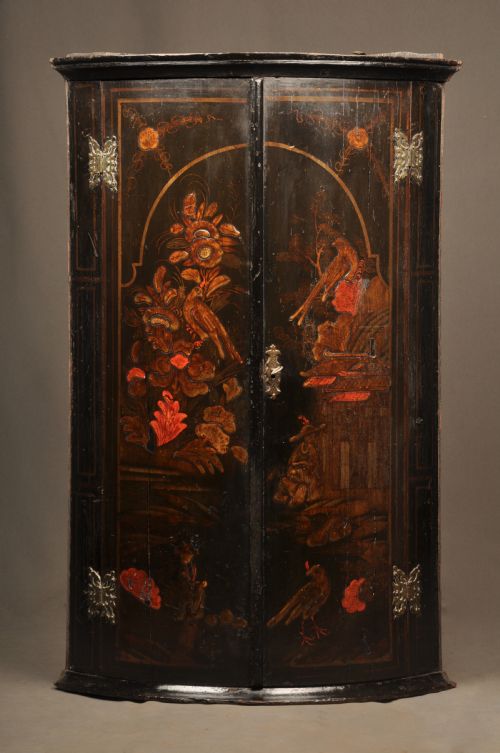
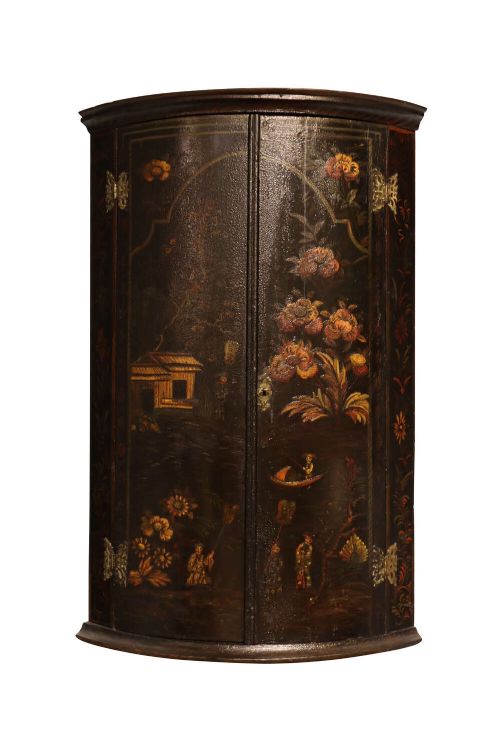
When you search for an 18th century lacquer cabinet, you encounter a range of forms designed to display and conceal possessions with distinctive decorative flair. The selection spans corner cupboards and wall-hanging units to substantial bureau bookcases, chests on stands, and specialised cabinets on stands.
Most examples date directly to the Georgian era or employ later revivals from the Victorian and Edwardian periods, utilising stylistic influences such as Queen Anne and Venetian Rococo. These pieces frequently feature detailed figurative scenes, landscapes, and floral motifs derived from Asian export art adapted by European workshops.
How they were made
The construction of these pieces relies on timber carcasses built from wood and pine, prepared to receive multiple layers of lacquer and paint. Artisans applied successive coats of varnish and pigment to build up a smooth, durable surface capable of holding intricate decoration.
Gilt and gold leaf were then meticulously applied to create raised metallic highlights, figures, and borders characteristic of Chinoiserie and Japanned finishes. Brass hardware such as hinges, escutcheons, and drop handles completed the furniture, securing doors and drawers while adding functional contrast to the dark or coloured ground.
18th Century Lacquer Cabinet Retail Price Guide 2026
Typical asking prices for 18th century lacquer cabinet among the pieces listed under this phrase on Sellingantiques today, from the lower quarter to the upper quarter. They describe what is for sale here now, not the wider market.
Listings feature pieces spanning the 18th century, 1800, 1860, and the Edwardian era, incorporating materials such as brass, gold leaf, pine, and lacquer.
What varies in quality
The sophistication of the surface decoration largely dictates the distinction between standard and exceptional pieces. Superior examples exhibit fine, detailed brushwork and meticulously raised gold leaf that creates depth and clarity within the figurative scenes.
The integrity of the underlying timber framework and the preservation of the original lacquer finish also heavily influence the character of the piece. Cabinets that retain their untouched surfaces and period brass mountings demonstrate greater historical continuity than those with extensive later repainting.
The 18th Century Lacquer Cabinet Glossary
- Chinoiserie
- European decorative style reflecting Chinese artistic influences, popular throughout the Georgian period. It is characterised by whimsical figures, pagodas, and landscapes rendered in gold and colour.
- Japanned
- European imitation of East Asian lacquerwork, created through layers of varnish and polished paint. The technique was widely utilised on cabinets, chests, and bureaux.
- Bureau Bookcase
- A dual-purpose piece combining a sloping writing desk compartment below with shelving enclosed by doors above. These tall forms provide substantial storage and display capacity.
- Cabinet on Stand
- A case piece raised on a separate supporting framework or table base. This elevation lightens the visual mass of heavy storage furniture.
18th Century Lacquer Cabinet: Frequently Asked Questions
Where should I place a corner cabinet?
Corner cupboards and corner cabinets fit neatly into unused room junctions, transforming awkward angles into display areas.
They work effectively in dining rooms or hallways where floor space is limited but vertical presence is desired.
How do I care for lacquer surfaces?
Lacquer surfaces require gentle dusting with a soft, dry cloth and protection from direct sunlight and excessive heat. Avoid using chemical polishes or water, which can damage the delicate varnished finish and gold leaf.
Maintaining a stable indoor climate prevents the underlying timber from expanding and cracking the hardened coating.
What is a bureau on stand?
A bureau on stand combines a portable or fitted writing desk with an elevated supporting table base. This form offers a compact workspace while maintaining an open, airy silhouette beneath.
Such pieces often incorporate internal drawers and pigeonholes for correspondence and valuables.
How do I distinguish period styles?
Queen Anne and early Georgian pieces display curved lines and cabriole influences, while later 18th century examples often feature straighter structural proportions. Examining the joinery, hardware types, and lacquer composition helps clarify the likely period of manufacture.
Later Victorian interpretations from periods like 1860 or Edwardian revivals frequently employ brighter pigments and machine-sawn timbers.