

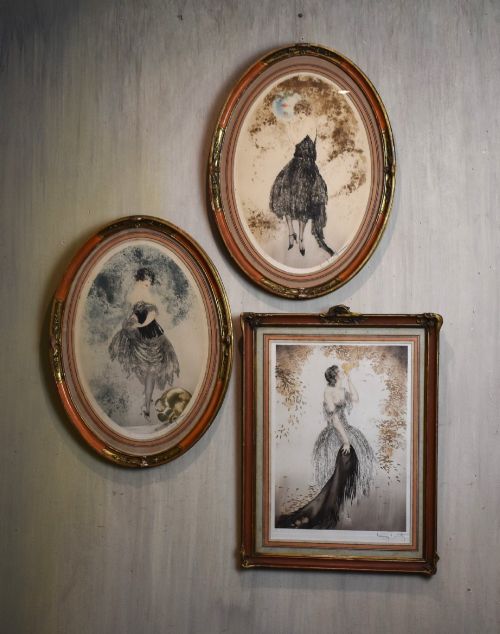
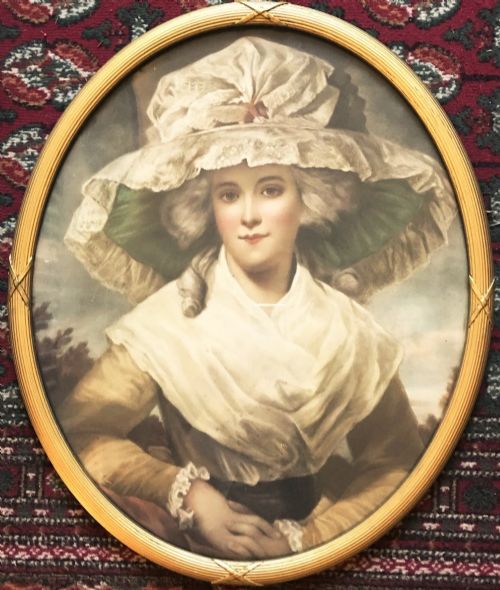
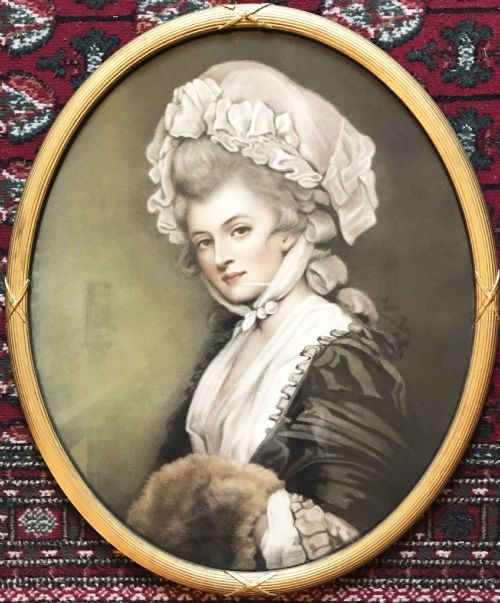


Gilt Framed Oval Prints
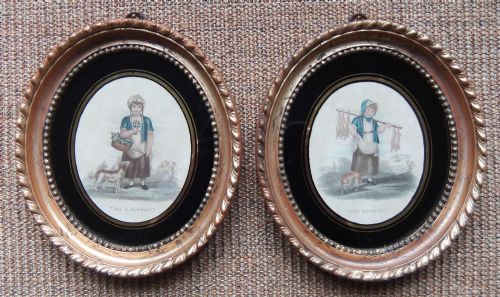
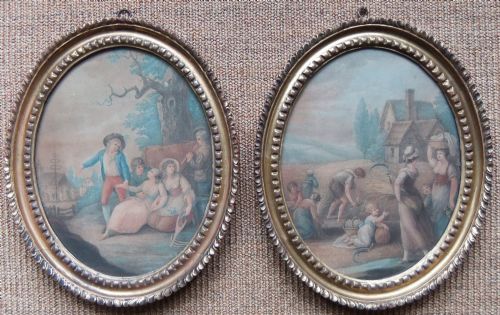
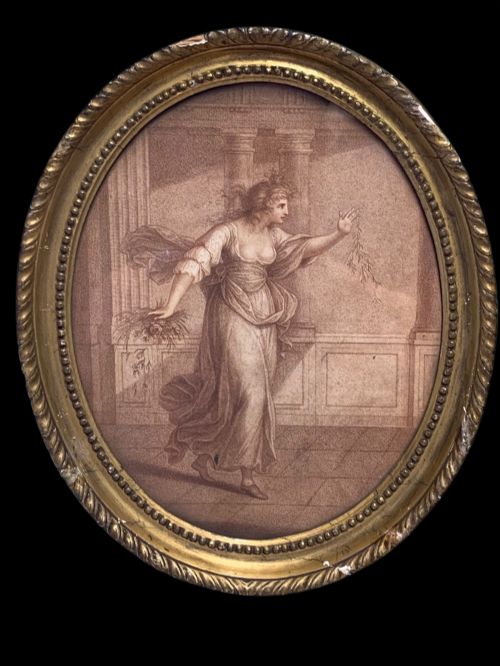
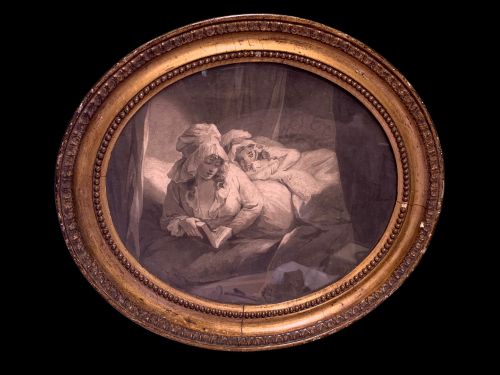
These gilt framed oval prints bring curved lines and gold leaf directly to a wall, offering portraits and botanical subjects from centuries past.
Gilt Framed Oval Prints
Gilt framed oval prints combine curved enclosures with paper works, engravings, and watercolours produced across the eighteenth and nineteenth centuries. Buyers searching for gilt framed oval prints encounter portrait miniatures, romantic scenes, and sets of natural history subjects such as birds and butterflies.
The selections span Georgian, Regency, and Victorian periods, often preserved behind glass in wood mouldings finished with gold leaf or gesso. These pieces range from solitary framed portraits to matched pairs and larger sets intended for balanced wall placement.
Materials and construction
Makers formed the picture surrounds using wood, ebonised wood, and giltwood, applying layers of gesso before gilding the curved mouldings. Glazing protected the delicate paper surfaces of stipple engravings, etchings, and hand-coloured prints housed within.
Internal elements frequently incorporate paper, silk, and velvet as backing or mount materials for portrait paintings and botanical illustrations. Artisans secured these components within dome-fronted or flat glass mounts designed to shield the artworks from atmospheric damage.
Gilt Framed Oval Prints Retail Price Guide 2026
Typical asking prices for gilt framed oval prints among the pieces listed under this phrase on Sellingantiques today, from the lower quarter to the upper quarter. They describe what is for sale here now, not the wider market.
Several sets capture the delicate wings of Victorian butterflies and waterfowl, proving that earlier generations were utterly obsessed with feathered and scaled taxonomy.
Variations in quality
Quality rests upon the crispness of the original impression, whether stipple engraving, etching, or mezzotint, alongside the depth and hand-carving of the surrounding timber frame. Higher-grade examples retain original gilding and undamaged gesso ornament rather than modern restorations.
The harmony between the artwork and its period mount dictates desirability, with matched pairs and sets commanding greater attention than single survival pieces. Intricate details in the framing, such as ornate moulded decoration or original dome-fronted glass, elevate the overall character.
S & J Fuller·Louis Icart·Sir Thomas Lawrence·Hans Holbein·Bartolozzi
The Gilt Framed Oval Prints Glossary
- Stipple engraving
- A printmaking technique using dots to create tonal gradations and soft shadows rather than continuous lines. This method was widely used for eighteenth and nineteenth-century portraits.
- Giltwood
- Timber that has been coated with a thin layer of gold leaf or gold paint. It provides the bright, reflective finish seen on traditional picture frames.
- Gesso
- A plaster-like mixture applied to wood frames to create a smooth surface for gilding and moulding. Artisans carved intricate details into this layer.
- Mezzotint
- A printmaking process of the intaglio family where the plate is roughened to achieve rich dark tones and subtle shading. It produces velvety textures suited to portraiture.
Gilt Framed Oval Prints: Frequently Asked Questions
How do I hang heavy gilt frames?
Use picture hooks rated for the specific weight of the wood and gesso assembly, fixed securely into wall studs or proper masonry anchors. Avoid relying on simple adhesive strips for heavier pieces.
Ensure the hanging wire or rings at the back are secure and tightly fastened to the wooden structure before placing the piece on the wall.
Where should I place these prints?
Position them in rooms with stable humidity and away from direct sunlight to protect the paper, silk, and gold leaf from fading. Hallways, studies, and drawing rooms suit their traditional character.
Group pairs and sets together to create balanced wall displays, or let a single larger portrait serve as a focal point above a mantelpiece.
Are the frames original to the prints?
Many retain their period frames from the eighteenth, nineteenth, or early twentieth centuries, particularly when listed as having period or matching surrounds. Examine the backing boards and joinery for signs of period construction.
Some pieces have been paired with complementary frames over time, making it sensible to check the fit and alignment between the artwork and the rebate.