
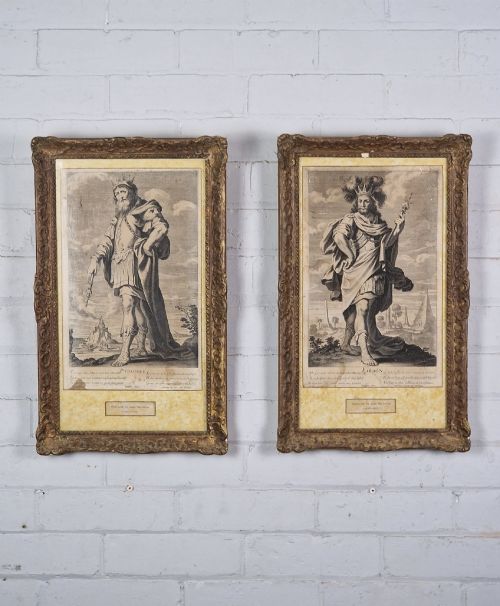
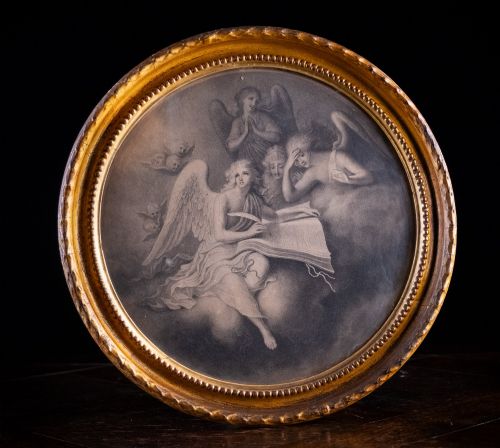
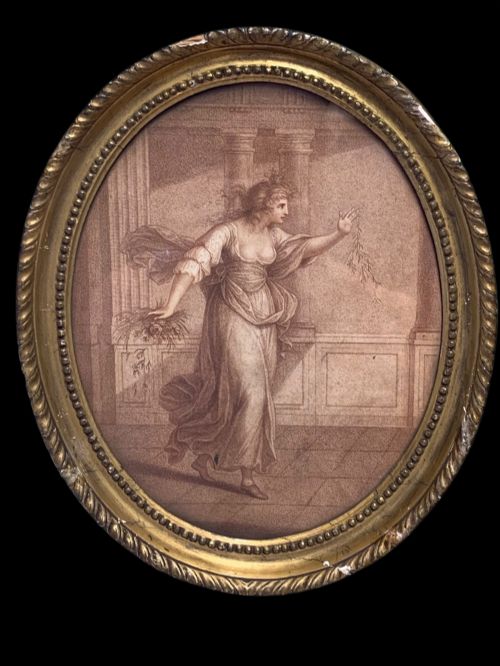
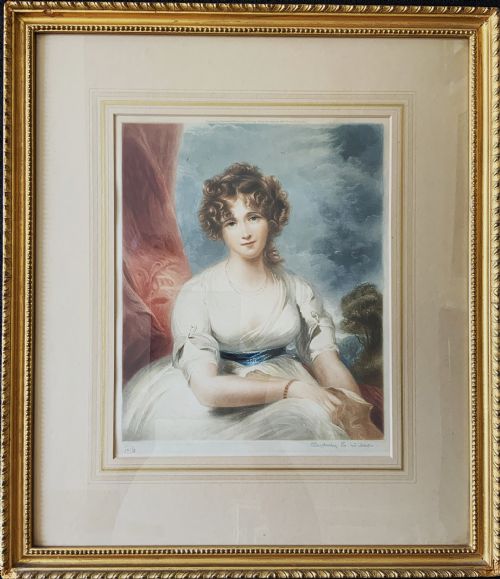


Gold Leaf Framed Engraving
These gold leaf framed engraving pieces combine delicate works on paper with bright metallic borders, offering a refined wall display.
Gold Leaf Framed Engraving
A gold leaf framed engraving pairs a detailed print on paper with a gilded wooden surround, spanning periods from the eighteenth century through the nineteenth century. These works encompass classical subjects, natural history illustrations by makers such as Edward Lear, and allegorical scenes.
The most common examples on this page date from the nineteenth century and the Georgian era, often featuring delicate stipple or line techniques behind protective glass. Many pieces arrive as matched pairs or small series, such as the Cries of London or works after George Morland.
The frames themselves display distinct period styles including Neoclassical, Regency, and French Baroque forms, executed in giltwood or gilt. The prints depict diverse subjects ranging from classical mythology and architectural studies to detailed botanical and avian portraits.
Materials and construction
These works rely on traditional paper substrates bearing ink impressions from engraved, stipple, or mezzotint plates. The prints are mounted behind glass to protect the delicate surface from dust and atmospheric moisture.
The surrounding frames utilise wood, finished with layers of gold leaf, giltwood, or gilt to create a bright metallic border. Joinery and moulding techniques reflect the prevailing cabinet-making standards of the Georgian and Victorian periods.
Listings feature paper, glass, wood, and gold leaf materials across 19th Century, Georgian, and 1800 periods.
Evaluating quality
Quality rests upon the crispness of the ink impression on the paper and the depth of detail in the engraving work. Finer plates yield sharper lines and richer tonal gradations in subjects like classical figures or natural history studies.
The finish of the gold leaf frame contributes significantly to the overall presence of the piece, with hand-gilded wooden mouldings showing superior craftsmanship compared to simpler treatments. The preservation of the paper, free from heavy foxing or fading, further elevates the standard of the artwork.
Jean Mariette·Sydney Wilson·Edward Lear·Adam Buck·Henry Corbould·Edward Burrows
The Gold Leaf Framed Engraving Glossary
- Engraving
- A printmaking technique where an artist cuts a design into a metal plate with a burin. The resulting incisions hold the ink for transfer onto paper under pressure.
- Stipple engraving
- A method of creating prints by dotting the plate rather than cutting continuous lines. This technique allows for subtle tonal variations, particularly effective in flesh tones and drapery.
- Mezzotint
- A tonal printmaking process where the metal plate is roughened evenly to produce dark areas, then scraped and burnished to create highlights. It yields rich, velvety darks and smooth gradients.
- Giltwood
- Wood that has been coated with a thin layer of gold leaf or powder. It provides a bright, reflective surface characteristic of formal picture frames.
- Artist proof
- An impression of a print taken before the final edition is produced, intended for the creator's own use or review. These often carry higher value among collectors.
Gold Leaf Framed Engraving: Frequently Asked Questions
How should I clean a gold leaf frame?
Dust the gilded wooden moulding gently with a dry, soft brush to remove surface particles without disturbing the delicate metallic leaf.
Avoid using liquid cleaners or commercial polishes, as moisture and chemicals can permanently damage the historic gilt finish.
Are these engravings hand coloured?
Certain nineteenth-century prints feature delicate hand-applied watercolour washes over the ink lines to enhance birds, botanical subjects, or costume details.
Close inspection under magnification reveals the brushwork and subtle variations typical of period application by hand.
How do I date a Georgian engraving?
Examine the paper quality, the style of the plate mark indentation, and any inscribed publication lines naming the artist and publisher near the lower margin.
Typographical styles in the titles and the framing construction often provide additional clues to confirm the production era.
Can I hang these in direct sunlight?
Direct sunlight causes paper to yellow and fades the dark ink lines of engravings and the pigments in coloured prints over time.
Position these artworks away from south-facing windows or utilise museum-grade UV-filtering glass to protect the paper.