

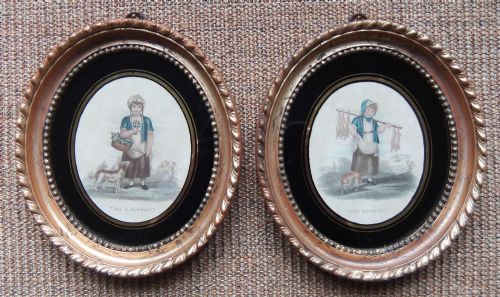
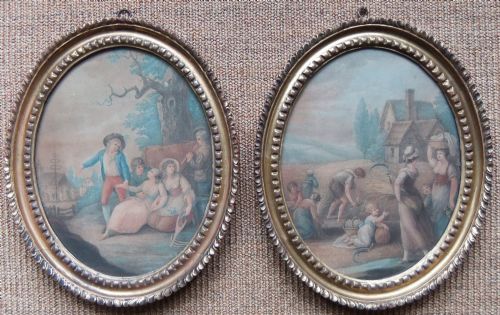
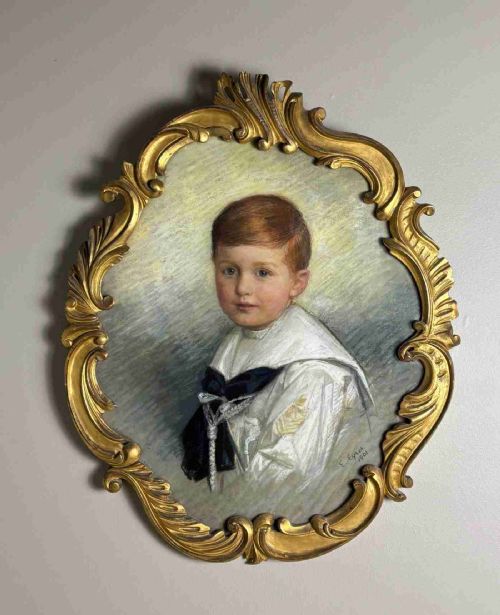
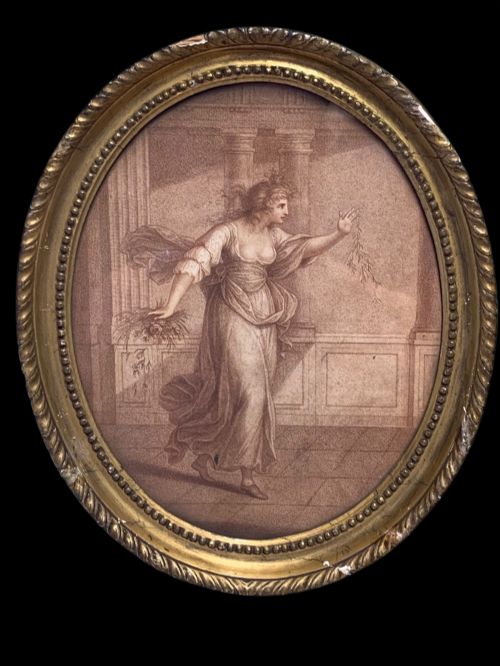


Gold Leaf Oval Picture Frames
Gold leaf oval picture frames bring focus and warmth to portraits, drawings and mirrors through curved lines and bright metallic surfaces.
Gold Leaf Oval Picture Frames
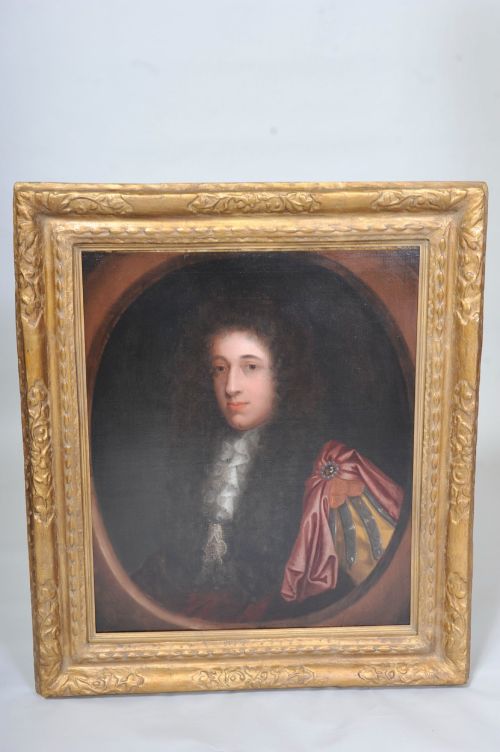
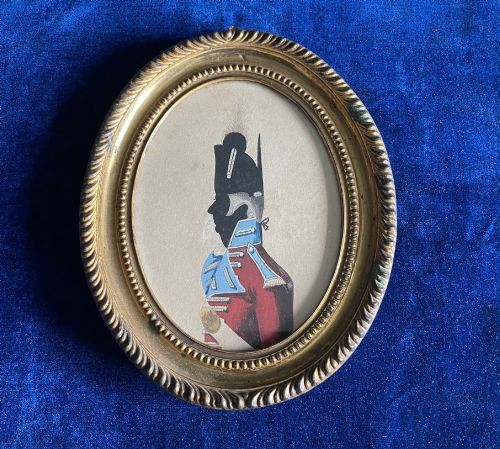
Gold leaf oval picture frames enclose portraits, prints and mirrors in curved wooden surrounds coated with fine metallic leaf. The selections on this page span from the seventeenth century through the Georgian, Victorian and Edwardian periods, taking forms such as wall mirrors, portrait miniatures and framed artworks.
Most examples house eighteenth or nineteenth-century works, including stipple engravings, charcoal drawings, silk embroideries and pastel paintings. Buyers encounter both single frames and matched pairs designed to balance symmetrical room layouts.
Materials and Construction
Carved wood provides the structural base for these pieces, often shaped into intricate moulded profiles or ornate decorative motifs. Gesso, a mixture of plaster and glue, is applied to the wooden foundation to create a smooth surface suitable for fine detail and relief carving.
Gold leaf is then laid over a preparatory bole layer, reflecting light across the curved perimeter. Glazed versions incorporate protective glass panes, sometimes dome-fronted, placed before paper, watercolour or print mediums.
Gold Leaf Oval Picture Frames Retail Price Guide 2026
Typical asking prices for gold leaf oval picture frames among the pieces listed under this phrase on Sellingantiques today, from the lower quarter to the upper quarter. They describe what is for sale here now, not the wider market.
Several listings preserve the quiet gaze of bearded elders, silk-embroidered ladies, and even a general from the Tower of London.
The Spectrum of Quality
The distinction between ordinary and exceptional frames lies in the depth and crispness of the carved ornamentation on the wood and gesso. Skilled hands shape foliage, scrolls and beaded borders with distinct edges that catch the light cleanly.
The application of the metal leaf also reveals the maker's hand, where smooth, even coverage contrasts with coarse or heavily repaired surfaces. Original glass, backboards and untouched gilding retain the historical integrity prized by collectors.
The Gold Leaf Oval Picture Frames Glossary
- Giltwood
- Wood that has been coated with gold leaf or gold paint. This finish creates a bright, reflective surface characteristic of formal decorative arts.
- Gesso
- A plaster-like material applied to wooden frames as a base for gilding. It allows artisans to carve intricate relief details before applying gold leaf.
- Stipple engraving
- A printmaking technique using dots to create tonal gradations and figures. These works frequently appear inside period oval enclosures.
- Mezzotint
- A printmaking process of the intaglio family allowing half-tints to be produced. Such prints often share wall space with gilded oval mirrors.
- Portrait miniature
- A small-scale painting or portrait executed with fine detail. They frequently utilise small oval frames made of gilt metal or carved wood.
Gold Leaf Oval Picture Frames: Frequently Asked Questions
How do I hang a heavy oval frame?
Heavy carved frames require secure wall anchors and suitable picture wire attached firmly to the structural wood at the back. Ensure the hanging hardware matches the weight of the timber and glass.
Position the frame at eye level where surrounding light can catch the reflective metallic surface. Avoid damp walls that might affect the wooden base and gesso.
Can I change the artwork inside?
Many historical frames contain original backing boards, glass and historical contents that form part of their documented character. Altering these elements can disturb fragile papers and historical fixings.
Keep existing prints and drawings intact within their surrounds to preserve historical context. Consult a professional framer if conservation mounting is required for delicate works on paper.
How do I clean gold leaf frames?
Dust the carved surfaces gently with a soft, dry brush to remove particles without disturbing the delicate metallic leaf. Avoid liquid cleaners, chemical solvents and abrasive cloths.
Moisture can penetrate cracks in the gesso and cause the wood beneath to swell or warp. Regular, gentle dusting is sufficient for maintaining the surface.
What periods do these frames represent?
The inventory encompasses styles from the seventeenth century through Georgian, Regency, Victorian and Edwardian eras. Each period demonstrates distinct carving depths, moulding profiles and ornamental vocabulary.
Italian Baroque and French designs offer heavy, ornate decoration, while Georgian and Regency examples favour more restrained classical lines. Matching the frame period to the artwork enhances historical harmony.