
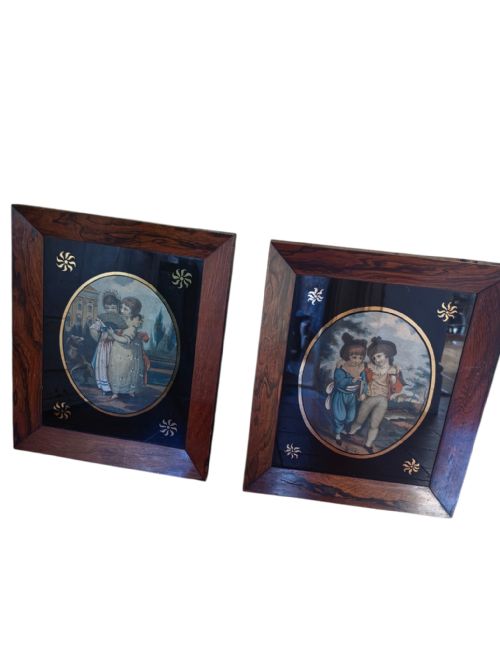
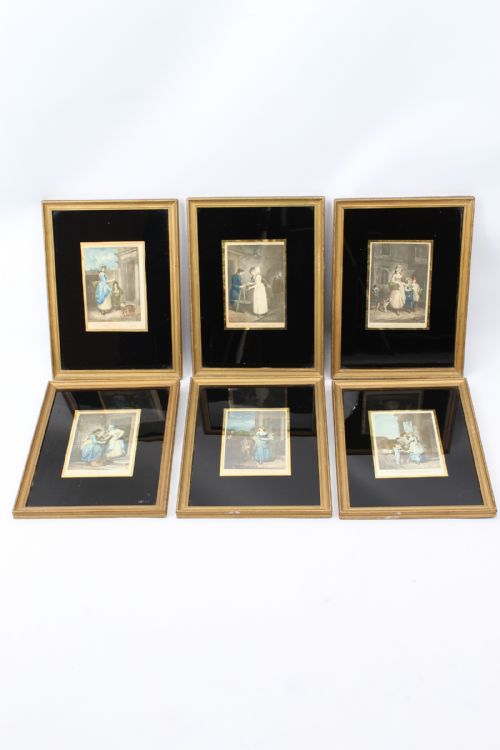


Eglomise Framed Prints
These eglomise framed prints bring together historic reverse glass techniques and period paper subjects to anchor a wall with genuine depth.
Eglomise Framed Prints
Eglomise framed prints incorporate reverse glass painting and engraving methods alongside paper elements, spanning periods from the Georgian era through to the nineteenth century and the nineteen-twenties. Buyers searching for these works encounter framed art and wall pieces that utilise glass and pigment surfaces set within wood or giltwood surrounds.
The selection here encompasses individual portraits, equestrian sporting art, neoclassical subjects, and multi-part sets. Examples range from eighteenth-century Kauffman style ladies to Regency engravings and twentieth-century reproductions, reflecting diverse stylistic influences including French Empire and Victorian tastes.
How they were made
Maker techniques rely on applying paint and pigment directly to the reverse side of glass plates, allowing the image to be viewed clearly from the front. This method often combines paper prints with hand-painted details beneath the glass surface.
Frames utilise timber supports in rosewood, wood, and giltwood profiles to protect the delicate glass panels and secure the artwork for wall display.
Children, gentleman hunters, and birds nesting share wall space with grand classical deities.
What varies in quality
Distinction across the range rests on the precision of the reverse painting and the crispness of the underlying engravings or prints. Finer examples show controlled brushwork and well-preserved pigment adherence beneath the glass.
The quality of the surrounding frame, particularly rosewood or giltwood mouldings, dictates the overall presence and period harmony of the piece.
The Eglomise Framed Prints Glossary
- Eglomise
- Gilding or painting on the reverse side of glass. This technique produces a reflective, glossy finish that protects the decoration from surface wear.
- Reverse glass print
- An image applied or transferred to the back of a glass panel. Viewers observe the composition through the transparent material.
- Giltwood
- Wood carved and coated with gold leaf or metallic gilt powder. It provides a bright, reflective border popular in Regency and neoclassical framing.
- Neoclassical
- A style drawing inspiration from classical antiquity. It appears frequently in eighteenth and nineteenth-century decorative arts and portraits.
Eglomise Framed Prints: Frequently Asked Questions
What are eglomise framed prints?
These works combine reverse glass painting techniques with historical paper prints or engravings. They are mounted behind glass panels and housed in period frames.
The technique creates a distinct glossy surface that sets them apart from standard paper framing. Pieces in this category span several centuries of decorative history.
How were reverse glass pieces used?
Historic households hung these framed works on walls to display portraits, sporting scenes, and allegorical subjects. The reflective glass surface caught candle and natural light in period rooms.
Their decorative format made them suitable for parlours and living spaces across the Georgian and Regency eras.
How do I live with them?
Display these works on interior walls away from direct sunlight to protect the pigments and paper elements behind the glass. Stable room temperatures prevent moisture accumulation within the frame.
Use gentle, non-abrasive cleaning methods on the exterior glass surface while avoiding moisture near the edges where the reverse painting sits.
How do I tell periods apart?
Examine the framing materials and the artistic style of the subject matter, such as neoclassical motifs or Regency attire. Georgian and Regency pieces often feature specific engraving styles and timber mouldings distinct from later nineteenth-century work.
Materials like rosewood frames and specific pigment tones also offer clues to the approximate date of manufacture.