
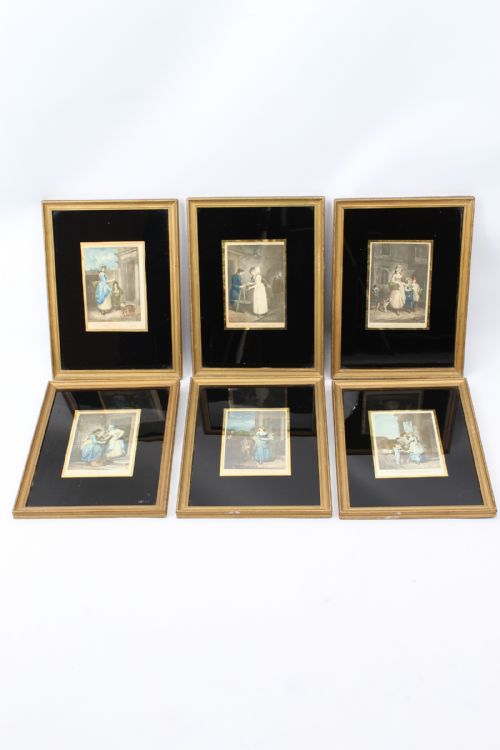
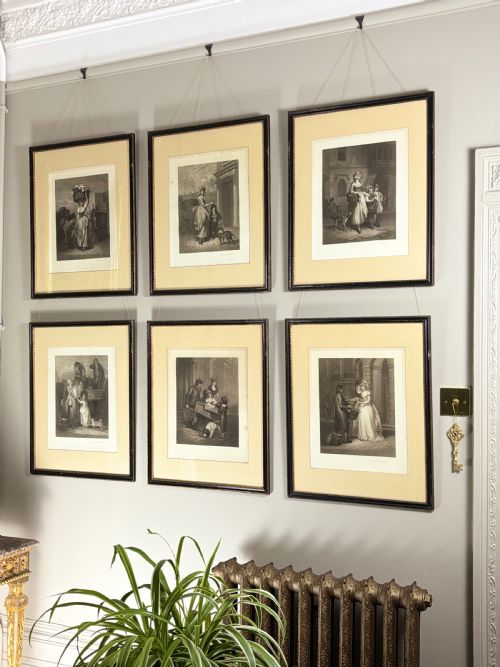


Set of Six Prints
A set of six prints offers a complete visual narrative for the wall, bringing together matching imagery from Georgian, Victorian, and later periods.
Set of Six Prints
A set of six prints provides a unified series of works designed to be hung together, creating balance and symmetry on a wall. When searching for a set of six prints, buyers encounter diverse subjects ranging from natural history and topography to theatrical scenes and classical portraits.
The selections span multiple eras, including eighteenth-century engravings, Regency theatrical pieces, and mid-twentieth-century bird imagery. Frames and mountings vary widely, with some pieces preserved in original wood, giltwood, or burr walnut housings, while others remain unframed paper sheets.
Origin and medium differ significantly across the selection. Works appear in formats such as mezzotints, aquatints, lithographs, watercolours, and tinsel prints, originating from British, French, and Italian sources.
What varies in quality
Quality in these collections rests on the clarity of the impression and the precision of the original printing technique, whether mezzotint, engraving, or lithography. Sharp lines and well-preserved ink density distinguish the finer examples from softer, worn impressions.
The integrity of the paper support and the vibrancy of any applied hand colouring or metallic foil also influence the overall standard. Additionally, the craftsmanship of the surrounding frame, particularly where period giltwood or burr walnut is employed, contributes to the piece's standing.
Set of Six Prints Retail Price Guide 2026
Typical asking prices for set of six prints among the pieces listed under this phrase on Sellingantiques today, from the lower quarter to the upper quarter. They describe what is for sale here now, not the wider market.
Several sets capture nineteenth-century theatrical enthusiasm by gluing actual scraps of tinsel and fabric directly onto the printed actors.
Thomas G Appleton·Simon François Ravenet·Victor Adam·F Petitjean
The Set of Six Prints Glossary
- Mezzotint
- A printmaking process where the copper plate is roughened to achieve rich tonal gradations and deep darks. This technique allows for subtle shifts in light and shadow.
- Aquatint
- An etching method that uses powdered resin to create tonal areas resembling watercolours. It is frequently employed to produce atmospheric landscape views.
- Lithograph
- A planographic printing process based on the repulsion of oil and water on a stone or metal plate. Artists use this method to capture fluid, drawn lines.
- Giltwood
- Wood that has been coated with a thin layer of gold leaf or gilt powder. This finish is commonly found on traditional picture frames.
- Tinsel print
- A nineteenth-century theatrical print embellished with pieces of tinsel, fabric, and foil. These decorative works depict popular actors in character roles.
Set of Six Prints: Frequently Asked Questions
How should I hang a set of six prints?
Arranging six matching works typically involves a balanced grid of two rows of three, or a linear sequence along a hallway or above a piece of furniture. Keeping consistent spacing between the frames maintains the visual harmony of the series.
Consider the lighting in the room to protect paper and ink from direct sunlight. Using appropriate wall fixings ensures the weight of wood or giltwood frames is safely supported.
Are these prints usually framed?
The presentation varies across different periods and subjects. Many items come already housed in period frames made of wood, burr walnut, or giltwood, often protected behind glass.
Other examples, particularly twentieth-century bird and botanical series, are supplied unframed on paper. This allows the buyer to select custom framing that suits their interior.
What subjects are most common?
The available subjects cover a broad thematic range including natural history, topography, sport, and theatrical history. Bird studies, hunting scenes, and architectural landmarks appear frequently across the different eras.
Portraiture and classical narrative scenes also feature prominently in eighteenth and nineteenth-century examples. Each theme offers a distinct visual character suited to different rooms.
How do I care for antique prints?
Protecting works on paper requires keeping them away from damp environments and direct exposure to strong light. Maintaining stable indoor temperatures prevents the paper support from warping or becoming brittle.
If the piece is framed under glass, clean the exterior gently without spraying liquid directly onto the frame or mount. Period frames benefit from occasional dusting with a soft dry cloth.