

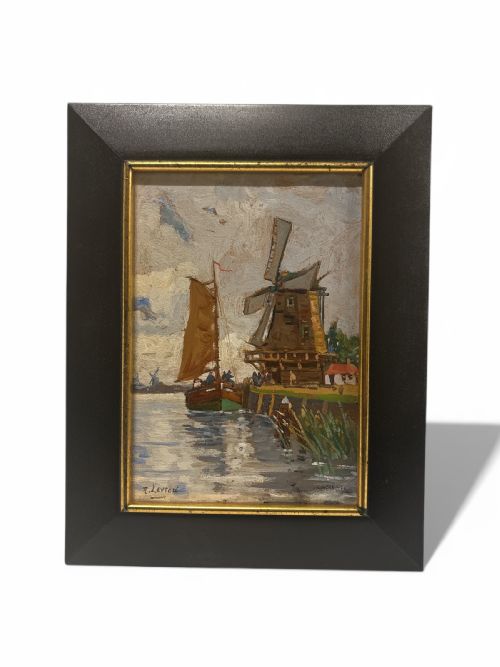


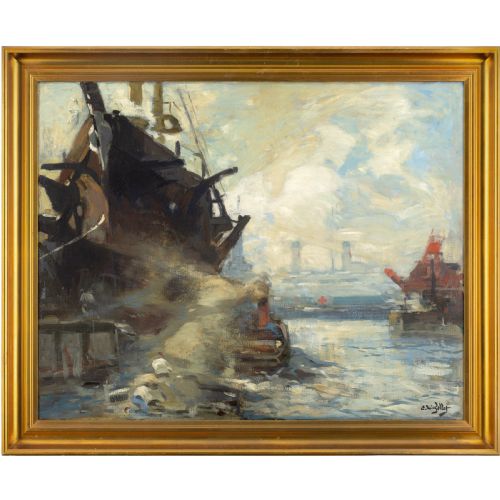
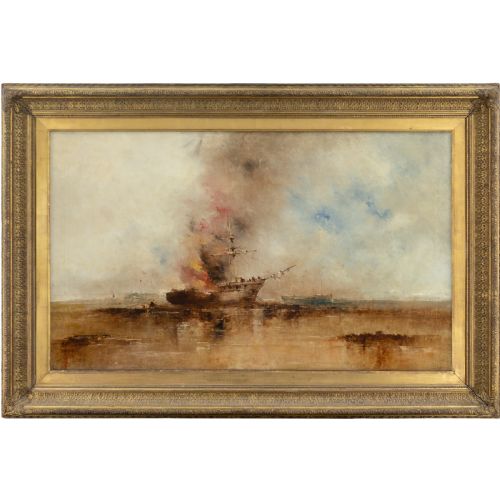
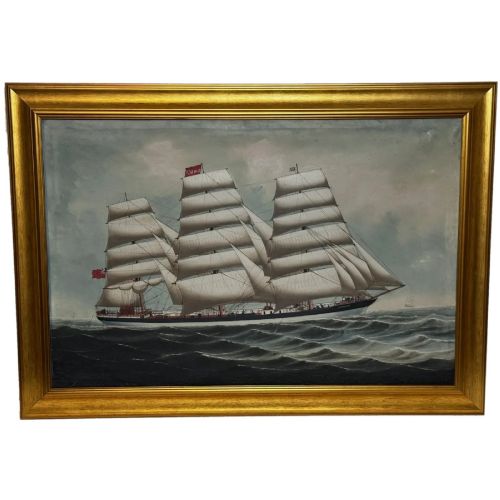
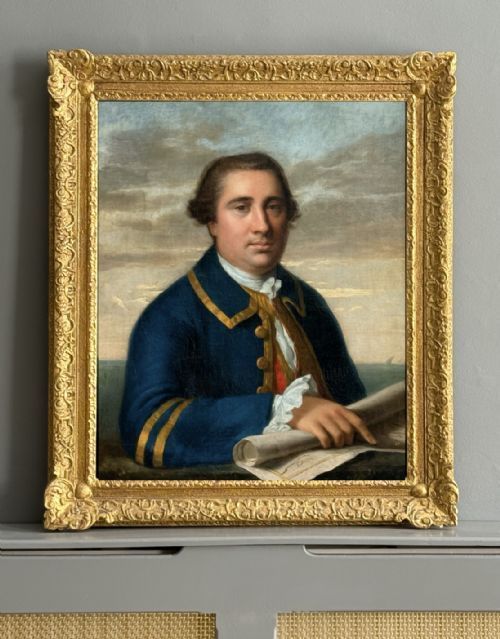
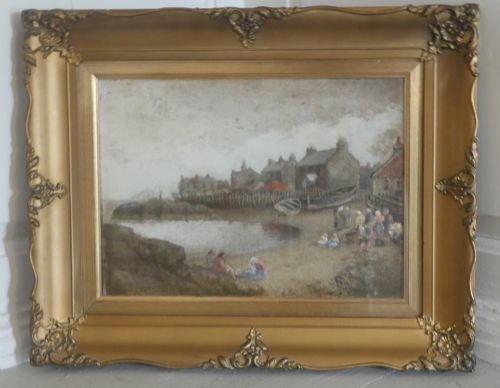
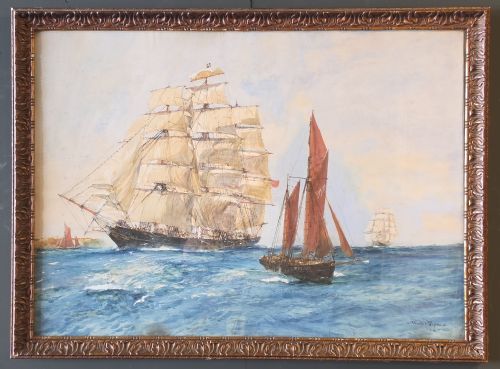
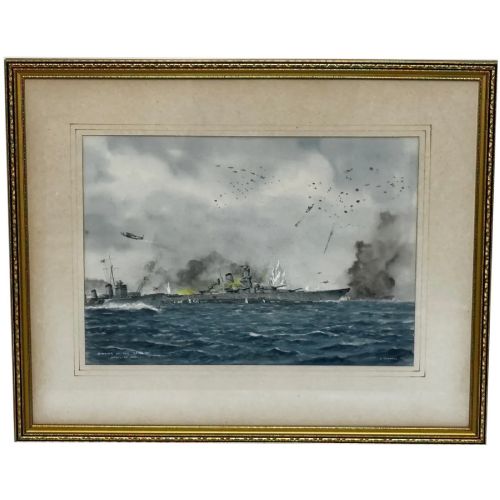

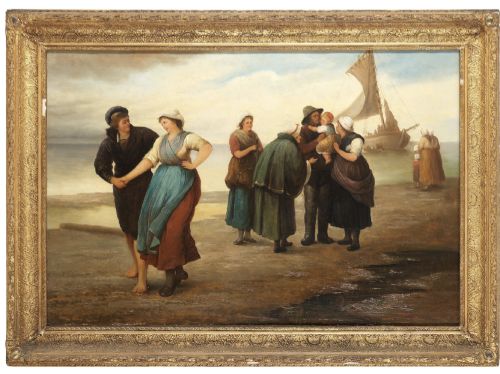
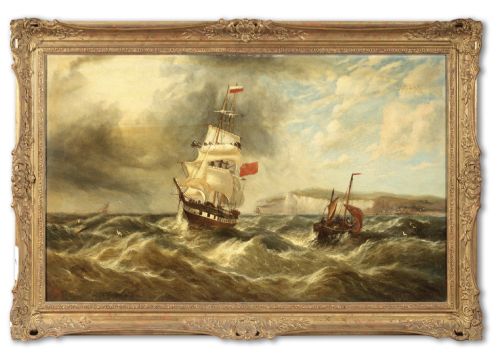
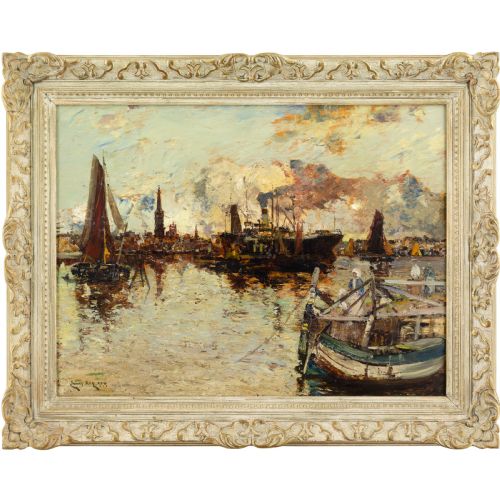
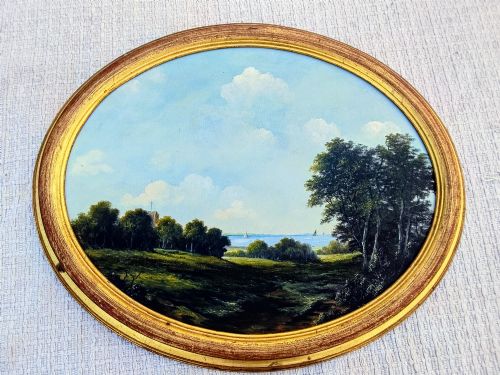
Gilt Framed Maritime Painting
Gilt framed maritime painting works as a classic wall piece that brings open water, historic vessels and coastal light straight into a room.
Gilt Framed Maritime Painting
A gilt framed maritime painting captures ships, harbours, and open water through various periods from the seventeenth century to the mid-twentieth century. These works appear in forms such as oil on canvas, oil on panel, board, and watercolour paintings.
The selections range from early nineteenth-century studies of the Thames and dramatic storms involving Dutch boats to Edwardian steamships and tranquil coastal inlets. Buyers commonly encounter Victorian marine art alongside twentieth-century depictions of ports and lagoons.
Framing typically involves gilt wood surrounds that complement the marine subject matter, sometimes appearing within trumeau mirrors or paired compositions. The pieces document naval engagements, merchant shipping, and quiet fishing harbours.
How They Were Made
Artists painted primarily with oil paint or watercolour upon canvas, panel, board, or paper, often building texture to render heavy seas or smooth skies. Canvases were stretched and secured within wooden supports before receiving layers of pigment.
Frames consist of gilt wood, which provides a bright metallic boundary around the composition through applied gold leaf or metallic paint over a wooden base. Glass protects fragile watercolours on paper, while oil paintings on canvas or panel remain open to the air.
Listings feature works from the eighteenth, nineteenth, and twentieth centuries, utilising oil, watercolour, canvas, and gilt wood.
What Varies in Quality
Quality rests upon the artist's command of light, movement, and atmosphere, separating hurried decorative works from deeply observed maritime scenes. Masterful handling of rough waters, rigging details, and changing coastal skies distinguishes the finest paintings.
The execution of the surrounding gilt wood frame also contributes, with hand-carved mouldings and original gilding holding greater presence than later replacements. The stability of the underlying canvas or panel and the preservation of the pigment layer dictate the overall integrity of the piece.
James Hardy·R Leyton·Eugène-Louis Gillot·William McAlpine·Reginald Arthur Borstel·Lemuel Francis Abbott·Edward Mills·Charles Edward Dixon·Eric Tufnell·William Banks Fortescue·John Rose Miles·James Kay·Francis Moltino·Bernard Benedict Hemy·Thomas Creswick·Lucy Pratt·Willem Bos·F Corpuz·John Wilson Carmichael·Abraham Cooper·Joseph Farquharson·John Moore of Ipswich
The Gilt Framed Maritime Painting Glossary
- Gilt wood
- Wood coated with gold leaf or a metallic substitute to create a bright, reflective frame. This finish adds visual weight and warmth to marine artwork.
- Oil on canvas
- Pigment mixed with drying oils applied to a stretched woven fabric support. This technique allows for rich texture and deep colour blending.
- Watercolour painting
- Pigments suspended in a water-soluble vehicle applied to paper. It offers translucent washes that suit atmospheric seascapes and coastal light.
- Panel painting
- Art executed on a flat piece of wood rather than fabric. It provides a rigid surface often favoured by earlier artists.
- Trumeau mirror
- An antique wall mirror featuring a painted panel set above the glass plate. Maritime scenes frequently occupy this upper panel.
Gilt Framed Maritime Painting: Frequently Asked Questions
What subjects do these paintings show?
The works depict galleons, merchant ships, naval battles, steamships, and various coastal harbours in calm or stormy weather.
Scenes range from specific locations like the Venetian lagoon and Malta to generic coastal paths and open seas.
How do I hang a heavy gilt frame?
Heavy wooden frames require secure wall fixings, such as screws driven directly into wall studs or appropriate masonry plugs.
Picture wire must be checked for strength before hanging to ensure the weight distributes evenly.
Can I identify the age of the frame?
Frame construction techniques, corner joints, and the composition of the gesso beneath the gilding indicate the period of manufacture.
Original frames often show wear and craquelure that match the age of the canvas inside.
How do I care for an oil painting?
Oil paintings benefit from stable indoor humidity away from direct sunlight and sudden temperature changes.
Dust should be removed gently with a soft, dry brush without applying moisture or cleaning agents.