



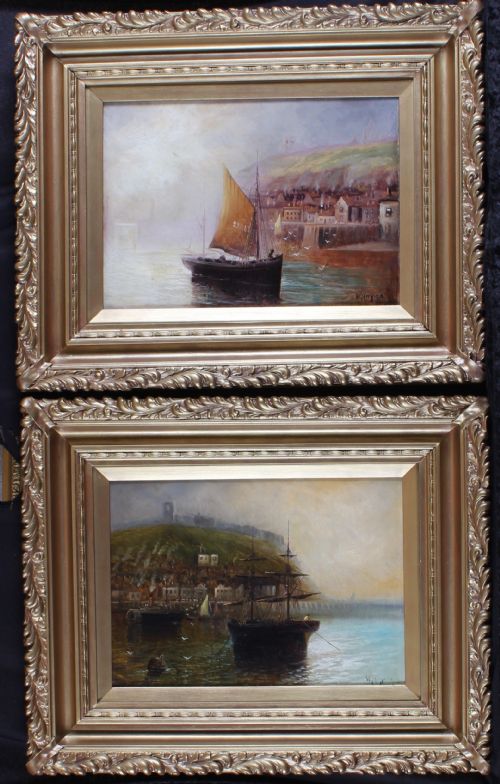


Pair 19th Century Seascapes
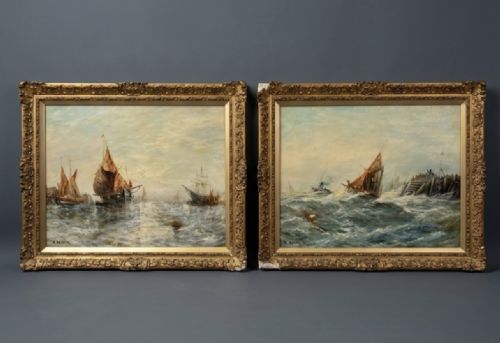
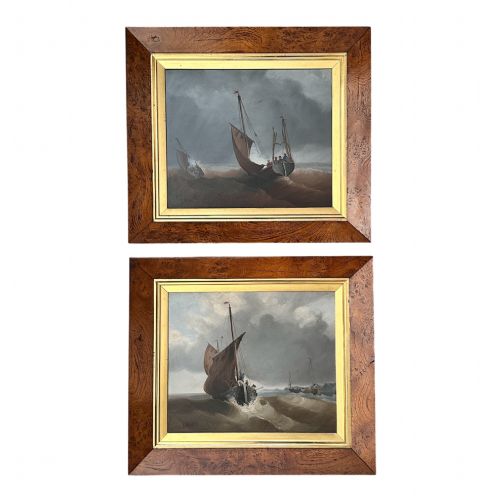
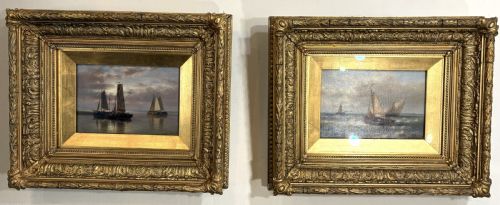
These pair 19th century seascapes capture maritime activity and coastal weather on canvas and board, offering balanced display potential for collectors of marine art.
Pair 19th Century Seascapes
A pair 19th century seascapes consists of matching or complementary marine paintings created during the Victorian era or around the turn of the twentieth century. These works frequently depict fishing boats, shipping vessels, and coastal views from locations such as Scarborough, Portsmouth, and the Thames.
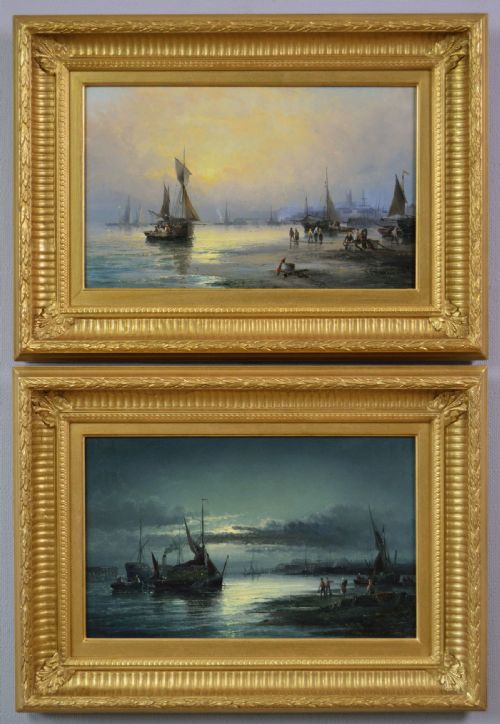
The format typically pairs two canvas or board paintings designed to hang together, often sharing a common subject matter like calm waters and rough seas or daytime and moonlight. Artists frequently utilised matching gilt frames to unify the duo for domestic display.
What varies in quality
The distinction between standard works and superior examples rests in the handling of light, atmospheric perspective, and maritime detail by named artists. Masterful brushwork captures the movement of water and rigging with precision.
Original frames matching the period and condition of the paintings elevate the overall integrity of the pair. The preservation of the canvas and the clarity of the signature further influence the standing of the work.
Sailors and landlubbers alike can gaze upon moonlit Scarborough without getting seasick or paying port taxes.
John Moore of Ipswich·Abraham Hulk I·Gustave De Bréanski·Pieter Cornelis Dommersen·Adrian Van Porten·Thomas Bush Hardy·Ebeneezer Colls·Hubert Thornley·John James Wilson·Walter Meegan·Francis Moltino·Walter Williams
The Pair 19th Century Seascapes Glossary
- Canvas
- A heavy woven fabric stretched across a wooden frame to serve as a painting surface. It provides flexible durability for oil pigments.
- Giltwood
- Wood that has been coated with gold leaf or a gold-coloured metallic finish. This material creates the bright, reflective borders common in period frames.
- Gesso
- A plaster-like mixture applied to wood or canvas as a base for paint or gilding. It creates a smooth surface for detailed moulding on frames.
- Marine Art
- Artistic works that focus on or draw their main inspiration from the sea. This genre encompasses ships, coastal views, and naval battles.
- Board
- A rigid wooden or pasteboard panel used as an alternative to stretched fabric. Artists frequently utilised board for smaller oil studies.
Pair 19th Century Seascapes: Frequently Asked Questions
What subjects appear in these seascapes?
The paintings depict maritime scenes involving fishing boats, shipping traffic, and coastal landmarks such as harbours and rivers. Common motifs include sailing vessels navigating choppy waters or moored near shorelines.
Specific locations recorded in the titles range from Scarborough and Portsmouth Harbour to the River Medway and the Thames in London.
Were these paintings made as pairs originally?
Many examples were conceived by the artist as companion pieces, sharing matching dimensions, subjects, and framing. They often explore contrasting lighting conditions, such as daytime coastal views paired with moonlit scenes.
Matching frames and complementary compositions help maintain the visual balance intended for domestic display.
How do I hang a pair?
Pairs look best hung side by side at eye level with consistent spacing between the frames. Aligning the centre points ensures the balanced composition reads clearly on the wall.
Consider natural light sources in the room to avoid glare reflecting off the varnished oil surfaces and gilt frames.
How do I identify the period?
Stylistic indicators include the clothing of figures on boats, the types of watercraft depicted, and the construction methods of the stretchers and frames. Victorian marine art often displays specific atmospheric techniques popular during the nineteenth century.
Signatures, dates, and inscriptions on the reverse of the canvas or board offer direct evidence of the creation time.