




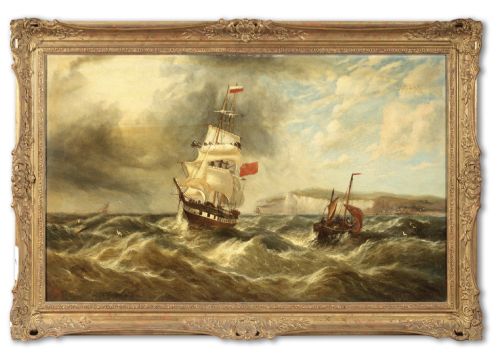
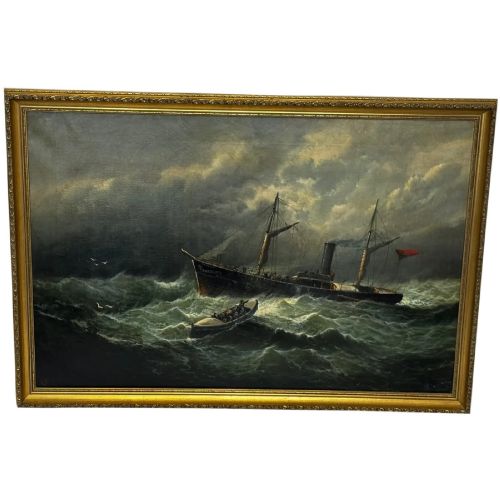
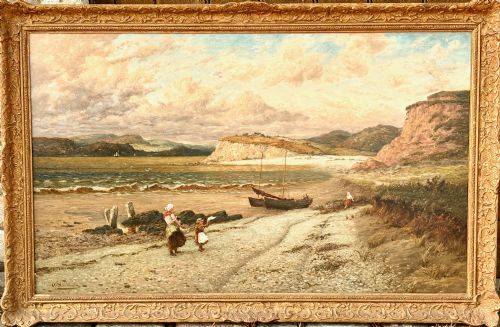

19th Century Maritime Seascape
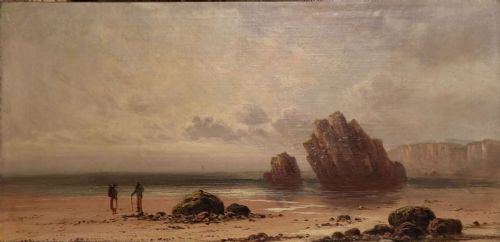
When you search for a 19th century maritime seascape, you are looking at coastal views and open-water scenes that capture the power and commerce of the sea.
19th Century Maritime Seascape
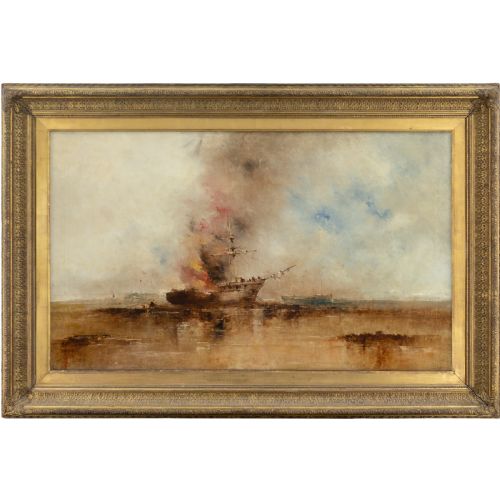
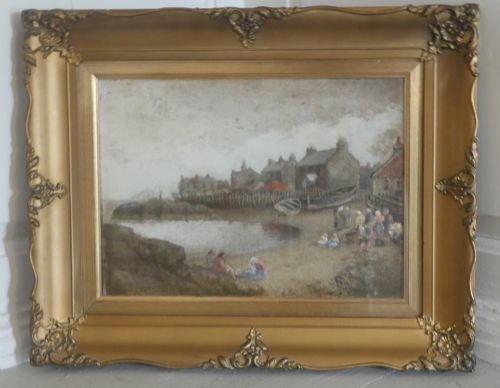
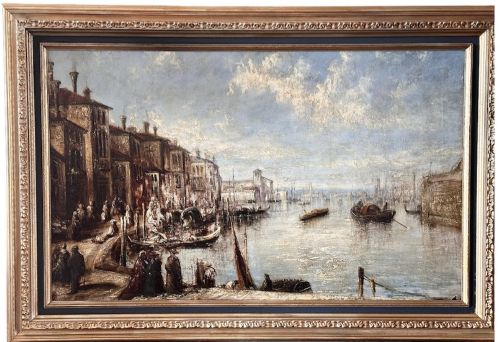
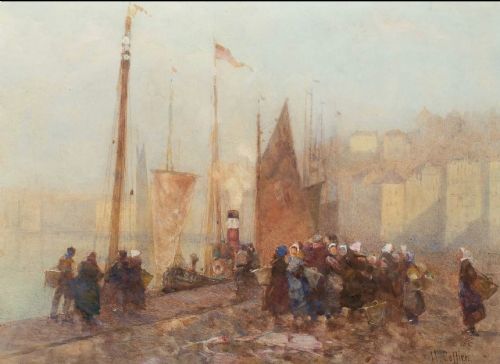
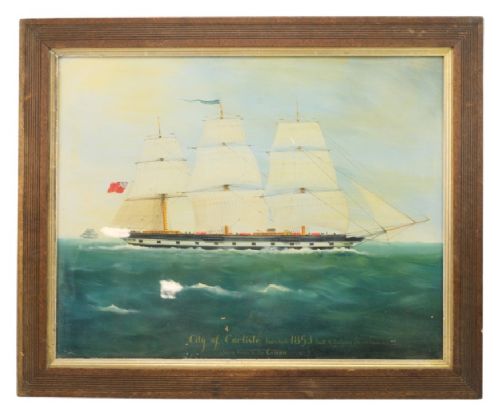
A 19th century maritime seascape typically depicts harbour scenes, coastal villages, and ships navigating choppy or calm waters. You will frequently encounter works that focus on British ports, fishing boats, and naval vessels recorded during the Victorian era.
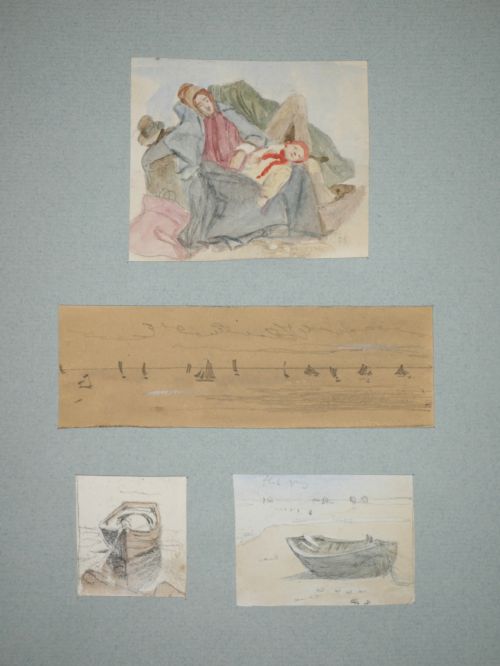
The physical formats range from large framed oil paintings on canvas and board to delicate watercolours on paper. Many retain their original gilt wood frames, which complement the maritime subject matter.
How They Were Made
Artists of this period primarily utilised oil paint on canvas or panel, building up rich textures to render water, sky, and vessel rigging. Alternatively, many applied watercolour directly onto paper to capture the changing light along the coast.
Support materials commonly included stretched canvas, wood panels, and heavy paper, often housed within ornate gilt wood frames designed to showcase the artwork.
Listings feature works executed in oil on canvas, oil on board, and watercolour on paper, alongside gilt wood frames.
What Varies in Quality
Quality depends on the artist's ability to render atmospheric conditions, maritime architecture, and the movement of water convincingly. Stronger works demonstrate a secure grasp of perspective and light, particularly in complex harbour or stormy sea settings.
The condition of the medium - whether oil or watercolour - and the preservation of the original gilt wood frame influence the overall integrity of the piece.
James Orrock·James Smetham·William McAlpine·Edward Mills·William Banks Fortescue·John Rose Miles·William Broome·Thomas William Morley·Francis Moltino·Hector Caffieri·Bernard Benedict Hemy·Thomas Creswick·John Wilson Carmichael·Lai Fong·Joseph Farquharson·John Moore of Ipswich·William Matthison·Nicholas Condy·William Henry Williamson·John Holland·George Stanfield Walters·Abraham Hulk I·Henry Barlow Carter·William Frederick Settle·Charles William Wyllie
The 19th Century Maritime Seascape Glossary
- Oil on Canvas
- A painting technique where pigmented oil paint is applied to a woven fabric support stretched over a wooden frame. This method allows for rich blending and deep colour saturation.
- Watercolour
- A paint consisting of water-soluble pigments applied to paper. It is prized for its luminous transparency and ability to capture coastal light quickly.
- Gilt Wood
- Wood that has been coated with a thin layer of gold leaf or gold paint. Frames utilising this finish were standard for displaying fine art during the period.
- Seascape
- A work of art depicting the sea, coastal views, or maritime activities. These scenes often focus on weather, shipping, and coastal topography.
19th Century Maritime Seascape: Frequently Asked Questions
What subjects appear in these seascapes?
These works primarily show ships, harbour entrances, coastal towns, and open coastal waters under various weather conditions. Common motifs include fishing fleets, merchant vessels, and naval ships.
Many pieces document specific British and international locations, offering a record of maritime trade and coastal life during the nineteenth century.
How do I care for a watercolour seascape?
Watercolour works on paper require protection from direct sunlight to prevent the pigments and paper support from fading over time. Keeping them in stable environmental conditions away from excess moisture is essential.
Framing behind glass with acid-free mounts helps preserve the paper and the integrity of the original medium.
Are these paintings usually framed?
Many pieces retain their period frames, frequently constructed from gilt wood designed to complement the artwork. These frames are often contemporary to the painting itself.
Checking whether a frame is original adds context to how the artwork has been preserved since the nineteenth century.
How are oil paintings on canvas constructed?
These works consist of oil paint applied to woven canvas stretched across a wooden stretcher frame. The medium allows for textured brushwork, particularly effective when depicting rough seas and clouds.
Over time, the canvas and paint layer may show natural craquelure, which is typical for nineteenth-century oil paintings.