

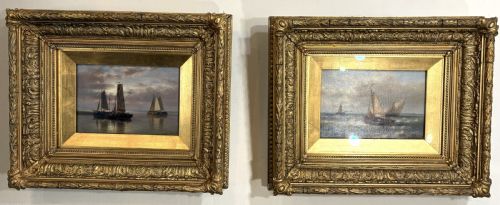


Gilded Frame Seascape Painting
A gilded frame seascape painting brings the motion of the open water and the weight of maritime history directly onto a living room wall.
Gilded Frame Seascape Painting
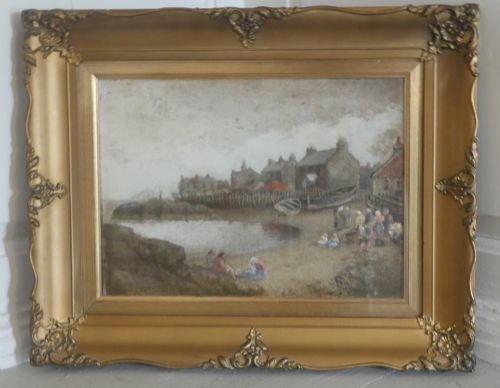
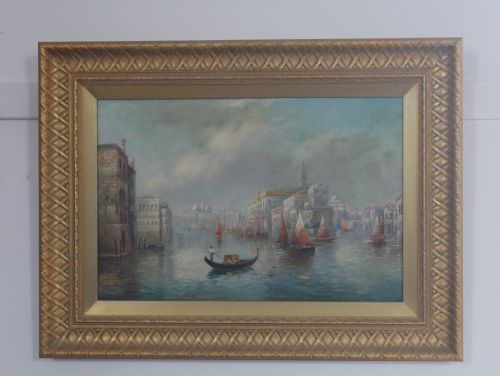
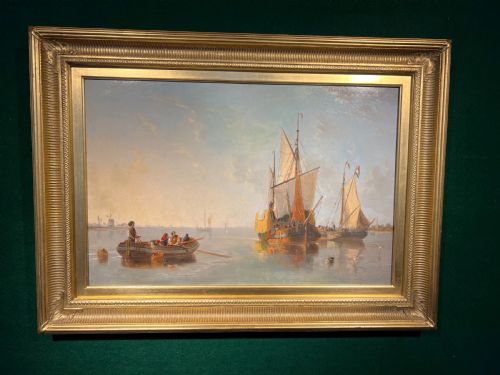
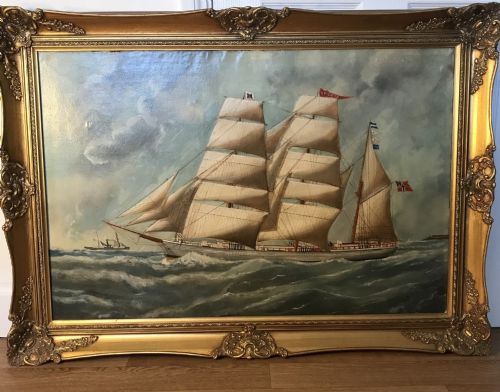
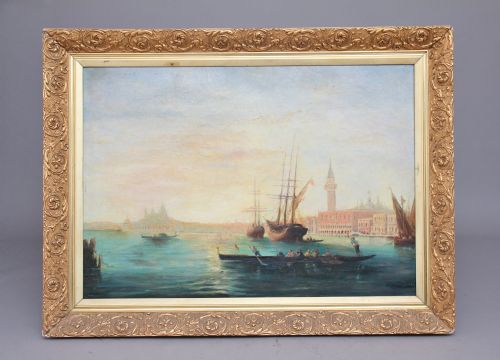
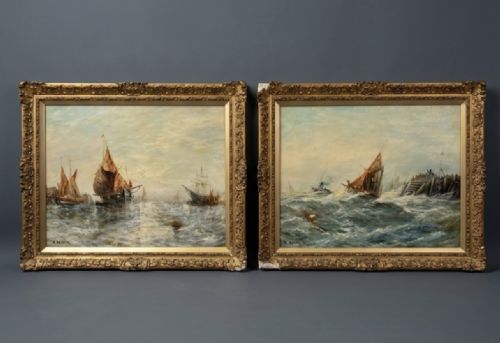
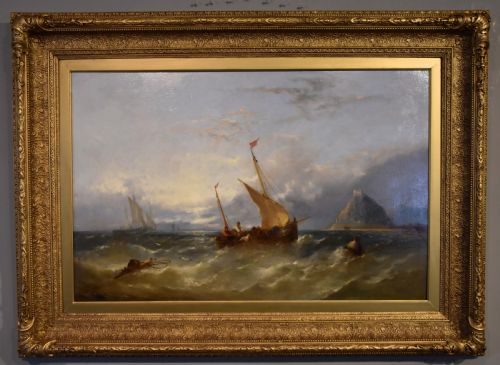
A gilded frame seascape painting captures maritime views, coastal harbours, and deep-water shipping on canvas or board, framed in gold-toned wood and gesso. These works range from calm Venetian lagoons to dramatic shipwrecks off British and European coasts.
The selections available here span from the nineteenth century into the early twentieth century, encompassing Victorian marine art, Edwardian coastal watercolours, and traditional oil paintings. Buyers will frequently encounter framed oils depicting sailing vessels, schooners, and bustling ports.
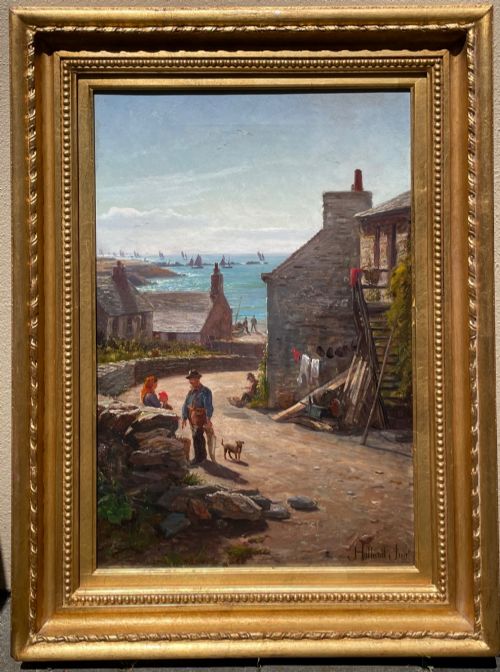
The physical presentation relies heavily on period frames built from wood and ornate gesso, which complete the maritime subject matter. Whether depicting British shores or Mediterranean waters, each piece reflects the artistic preoccupation with water and shipping during the Victorian and Edwardian eras.
How they were made
Makers built these works using oil paint applied to stretched canvas or wooden board, occasionally utilising watercolour on paper for lighter coastal studies. Artists layered pigments to capture the atmospheric shifts of sky and sea, from calm calms to turbulent gales.
The accompanying surrounds are constructed from wood, finished with layers of gesso and gold leaf or giltwood to create the characteristic metallic brilliance. This combination of traditional canvas preparation and moulded gesso frames protects the artwork while providing a formal display boundary.
Gilded Frame Seascape Painting Retail Price Guide 2026
Typical asking prices for gilded frame seascape painting among the pieces listed under this phrase on Sellingantiques today, from the lower quarter to the upper quarter. They describe what is for sale here now, not the wider market.
The listings span multiple periods from the seventeenth century through to the 1930s, using oil on canvas, wood, gesso, and gold leaf.
What varies in quality
The standard of a gilded frame seascape painting rests upon the artist's handling of light, water movement, and maritime rigging accuracy. Superior examples demonstrate a confident command of brushwork that renders the texture of waves and clouds with conviction.
Frame construction also distinguishes the pieces, as hand-carved giltwood and deep relief gesso mouldings outclass simpler, flat wooden surrounds. The cohesion between the painting's atmospheric depth and the decorative weight of the frame dictates the overall standing of the work.
John Wilson Carmichael·Abraham Hulk I·Thomas Bush Hardy·Gustave de Breanski·William Henry Williamson
The Gilded Frame Seascape Painting Glossary
- Gesso
- A plaster-like mixture applied to wood frames before gilding, providing a smooth base for intricate ornamentation. It allows craftsmen to carve crisp decorative details that catch the light.
- Giltwood
- Timber coated with gold leaf or gold paint to give a rich, metallic finish. This material forms the primary structure of many traditional picture surrounds.
- Marine Art
- Paintings and works on paper depicting ships, harbours, coastal views, and naval engagements. This genre flourished during the nineteenth century alongside maritime trade and exploration.
- Oil on Canvas
- Pigment mixed with drying oil applied to a woven fabric support stretched across a wooden frame. It remains the dominant medium for durable, luminous historical paintings.
- Watercolour
- A painting method in which fine pigment is suspended in a water-soluble binder on paper. These works offer a lighter, more translucent interpretation of coastal scenes.
Gilded Frame Seascape Painting: Frequently Asked Questions
What subjects do these paintings show?
The artworks depict a wide variety of maritime subjects, including three-masted schooners, coastal shipwrecks, and calm Venetian canals. Many pieces focus on specific geographic locations such as the Isle of Wight, the Dutch coast, and Portsmouth harbour.
Artists also recorded historical vessels and naval scenes, capturing the daily activity of working ports and open ocean navigation during the nineteenth and early twentieth centuries.
How should I hang a heavy framed painting?
Due to the dense wooden construction and heavy gesso ornamentation of period surrounds, these artworks require secure wall anchors. Ensure the hanging wire and wall fixings match the substantial weight of the piece.
Position the artwork away from direct sunlight and dramatic temperature fluctuations to protect both the canvas pigments and the delicate giltwood frame over time.
Are watercolours framed differently from oils?
Watercolour paintings on paper require protective glass and mount boards to prevent environmental damage. They typically feature lighter wooden frames compared to the deep, ornate mouldings built for heavy oil canvases.
Oil paintings on canvas or board remain exposed to the air within the frame rebate, needing only occasional gentle dusting rather than sealed glazing.
How do I identify a Victorian maritime painting?
Victorian maritime works often display detailed rigging, specific types of sailing ships, and dramatic coastal weather conditions characteristic of nineteenth-century realism. Signatures, artist plaques, and period framing styles help confirm the era of production.
Subject matter involving steamships, traditional barques, and recognizable British or European coastal landmarks further aids in dating the piece accurately.