



Antique Beach Scene Artwork
These antique beach scene artwork pieces capture the shifting light of the coast on canvas, paper, and wood.
Antique Beach Scene Artwork
When you search for antique beach scene artwork, you encounter coastal views spanning the nineteenth century up to the mid-twentieth century.
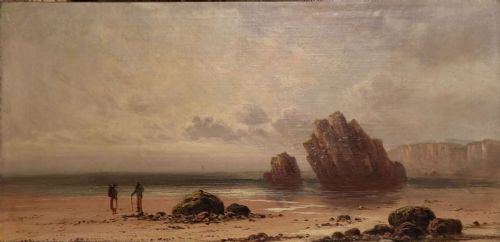
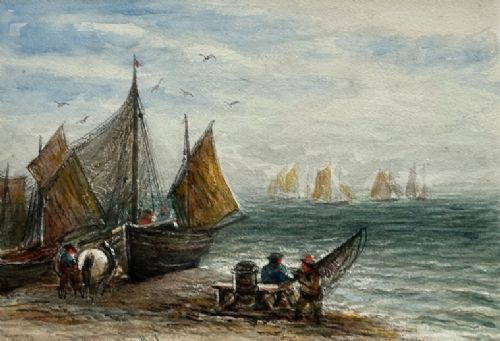
The selections on this page feature oil paintings and watercolour paintings depicting harbours, rocky shores, and fishing boats.
Victorian marine landscapes and British impressionism dominate the forms, alongside French school and Newlyn school compositions.
How they were made
Artists painted these coastal views using oil paint on canvas or board, and applied watercolour on paper.
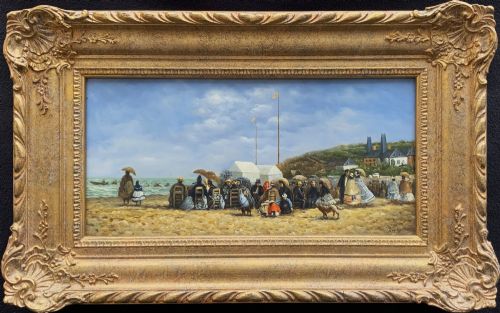
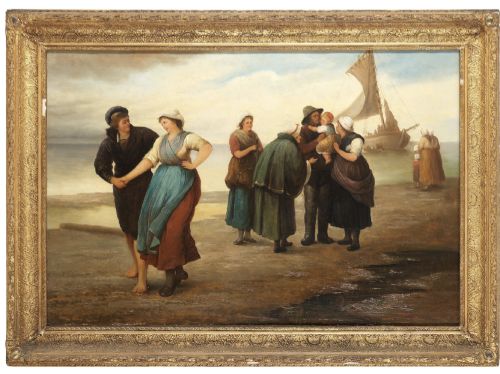
Makers set many of these works within wood frames, occasionally embellished with gold leaf or hand enamelled polychrome details.
Listings include oil paintings, watercolour paintings, and drawings on paper dating from the nineteenth century to 1960.
What varies in quality
The standard of these coastal works rests on the artist's handling of atmospheric light and coastal movement.
Fine examples display confident brushwork and precise draughtsmanship in depicting figures, boats, and tidal environments.
James Orrock·William Banks Fortescue·James Webb·Frederick William Hattersley·Kate E Booth·William Shayer·George Smith·Thomas Bush Hardy
The Antique Beach Scene Artwork Glossary
- Watercolour
- A paint consisting of colour suspended in a water-soluble vehicle, used extensively on paper for coastal landscapes.
- Canvas
- A closely woven fabric used as a surface for oil painting, stretched across a wooden frame.
- Giltwood
- Wood carved and coated with gold leaf or gold paint, frequently seen on period frames.
- Marine landscape
- A work of art depicting the sea, coastal views, ships, and beach scenes.
Antique Beach Scene Artwork: Frequently Asked Questions
What periods do these beach artworks come from?
The pieces span from the nineteenth century through the early and mid-twentieth century.
You will find Victorian works alongside later impressionist and post-impressionist interpretations.
What materials were used for these paintings?
Artists worked primarily with oil paint and watercolour on canvas, board, and paper.
Many pieces retain their period wood frames, some featuring gold leaf or enamelled detailing.
How should I display coastal art at home?
Hang these works away from direct sunlight to protect watercolours and oil pigments from fading over time.
Pairing the artwork with a suitable period frame enhances the historical character of the piece.
What subjects appear in these coastal scenes?
Common subjects include fishing boats hauled onto the shore, harbour walls, and figures gathering kelp.
Artists also recorded specific locations, from Cornish harbours to French coastal villages and Spanish bays.