

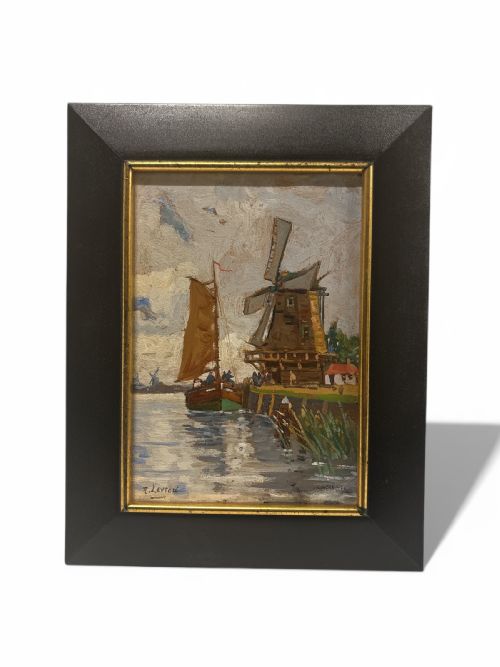


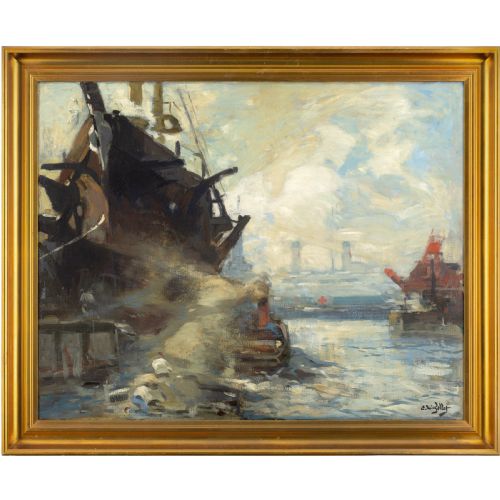
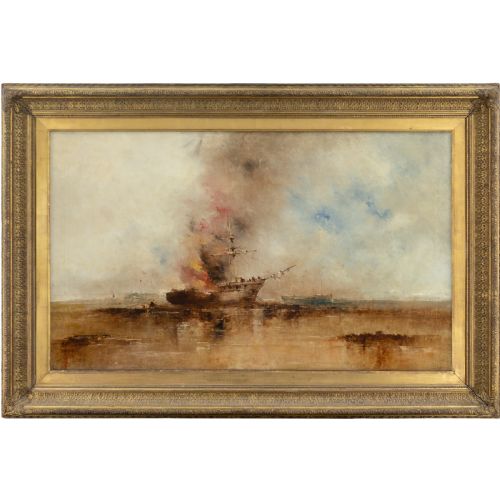
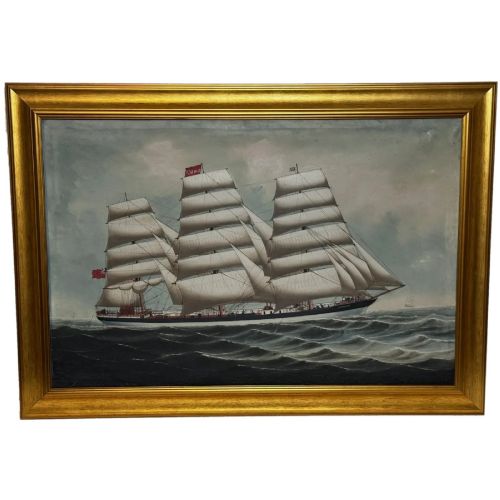
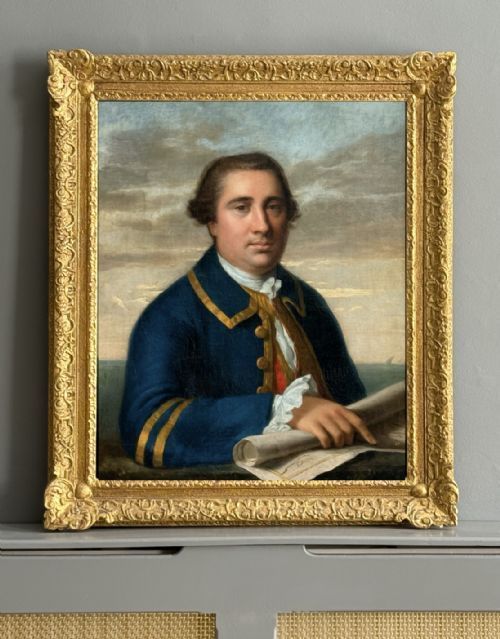

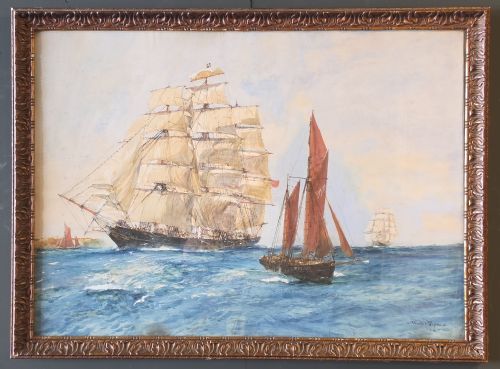
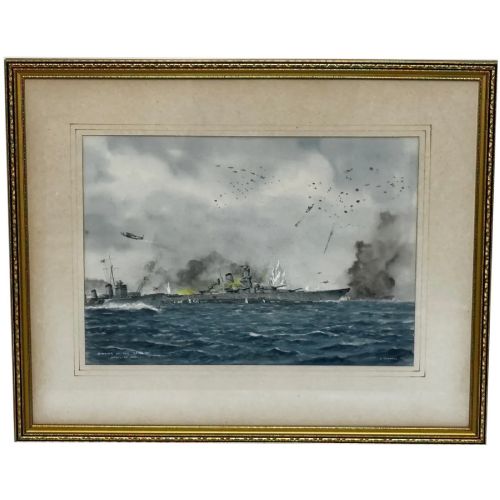

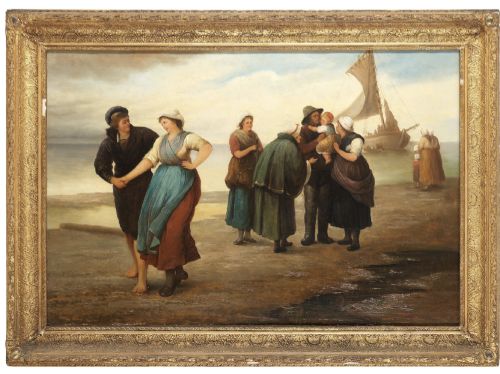
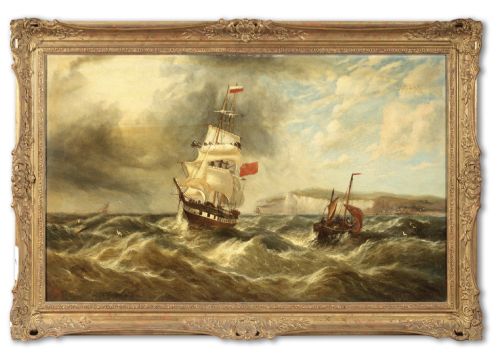
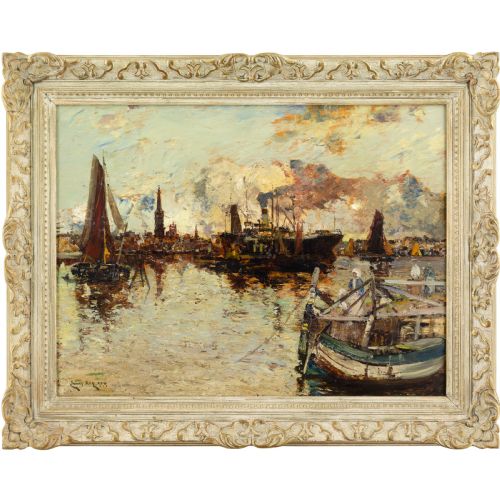
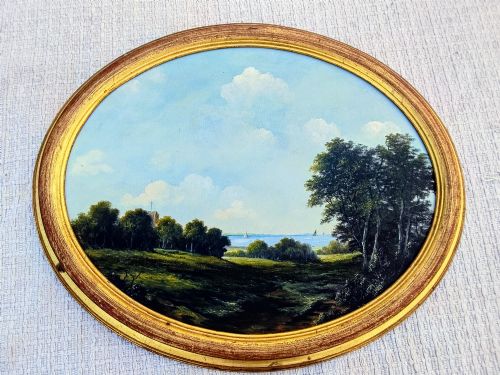
Gilt Framed Maritime Art
Gilt framed maritime art brings the movement of coastal waters and the dignity of historic vessels into a room.
Gilt Framed Maritime Art
When you search for gilt framed maritime art, you encounter oil paintings, watercolours, and works on board that capture seascapes, naval engagements, and harbour scenes. The examples gathered here span from the seventeenth century through the Victorian era and into the twentieth century, reflecting shifting artistic interpretations of ships and coastal life.
The dominant forms are oil on canvas and watercolour paintings, frequently housed in their original or period-appropriate gilt wood surrounds. These works portray everything from merchant vessels in rough waters to calm Venetian lagoons and quiet fishing ports.
Materials and Techniques
Artists painted primarily with oil paint on canvas, panel, or board, while others utilised watercolour on paper to achieve lighter, transparent atmospheric effects. Canvases and wooden panels were prepared with grounds before the application of pigments to build depth in water and sky.
The enclosing frames combine carved or moulded wood finished with layers of gilt, which provides a reflective border that separates the painted scene from the wall.
Gilt Framed Maritime Art Retail Price Guide 2026
Typical asking prices for gilt framed maritime art among the pieces listed under this phrase on Sellingantiques today, from the lower quarter to the upper quarter. They describe what is for sale here now, not the wider market.
Listings feature works executed in oil on canvas, oil on board, and watercolour on paper, spanning from the seventeenth century to the twentieth century.
Evaluating the Pieces
Quality rests upon the artist's command of light, shadow, and maritime architecture, where a sure hand distinguishes a credible depiction of rigging and hull construction from a generic composition. The subtlety of the palette in handling turbulent seas or evening light separates ordinary decorative works from accomplished paintings.
The preservation of the paint surface and the condition of the surrounding gilt wood frame also contribute significantly to the integrity of the object.
Eugène-Louis Gillot·William McAlpine·Reginald Arthur Borstel·Lemuel Francis Abbott·Charles Edward Dixon·Eric Tufnell·William Banks Fortescue·John Rose Miles·James Kay·Francis Moltino·Bernard Benedict Hemy·Thomas Creswick·Willem Bos·John Wilson Carmichael·Abraham Cooper·Joseph Farquharson·John Moore of Ipswich·Nicholas Condy
The Gilt Framed Maritime Art Glossary
- Gilt wood
- Wood that has been coated with a thin layer of gold leaf or metallic powder. This finish brightens the perimeter of a painting.
- Seascape
- A work of art depicting the sea, coastal views, or ships. These subjects gained popularity during the nineteenth century.
- Watercolour
- A paint consisting of pigment suspended in a water-soluble vehicle. It is typically applied to paper in translucent washes.
- Panel painting
- A painting executed on a flat piece of wood rather than canvas. These rigid supports were common in earlier periods.
Gilt Framed Maritime Art: Frequently Asked Questions
What periods do these paintings cover?
The selection includes works originating from the seventeenth century, through the Georgian and Victorian eras, up to the mid-twentieth century.
This broad chronological span allows collectors to choose between seventeenth-century Dutch scenes, nineteenth-century British coastal views, and early twentieth-century interpretations.
Are the frames original to the paintings?
Many pieces retain their period gilt wood frames, which complement the age and style of the artwork.
Frames are selected or preserved to match the aesthetic standards of the painting's era.
What subjects are most common?
Common subjects include sailing ships, warships, merchant vessels in rough waters, quiet harbour scenes, and coastal landscapes.
Artists frequently documented specific locations such as Valletta harbour, Venice, St Ives, and the Thames.
How should I care for an oil painting?
Oil paintings on canvas or board require stable indoor humidity and protection from direct sunlight to prevent pigment degradation.
Dust should be removed gently from the surface and the gilt frame using a soft, dry brush.