


Traditional Marine Oil Painting
Traditional marine oil painting captures the drama of the sea through canvas, wood, and pigment across the nineteenth and twentieth centuries.
Traditional Marine Oil Painting
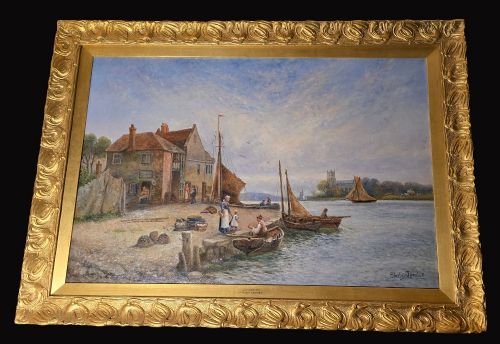
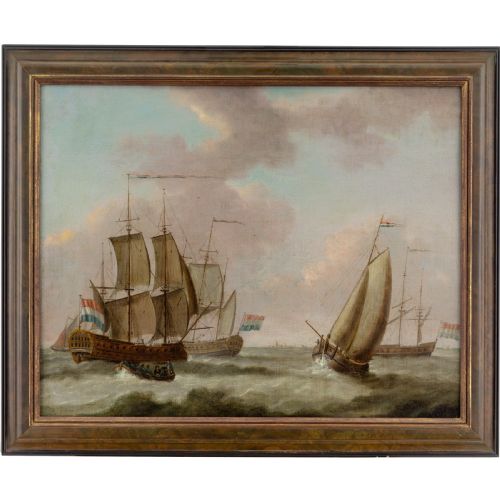
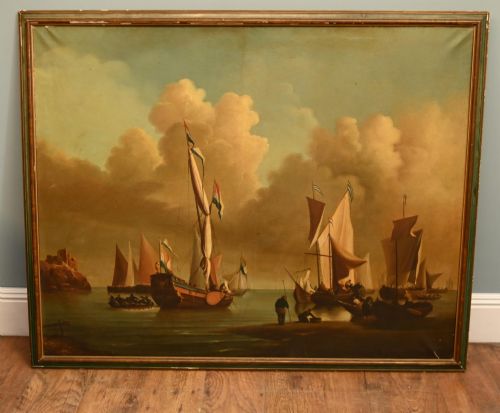
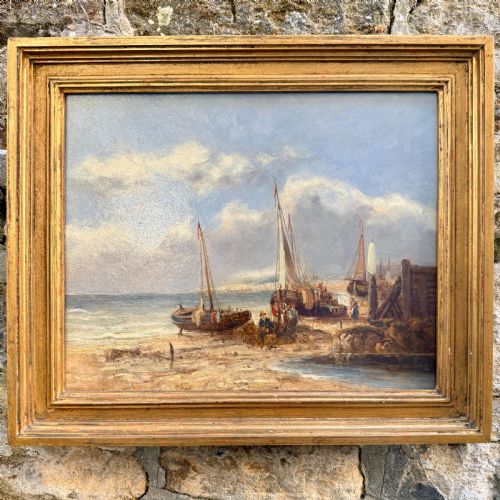
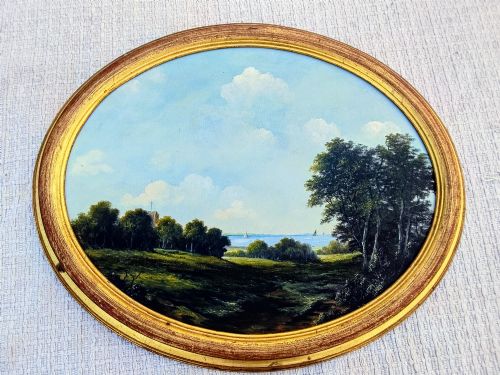
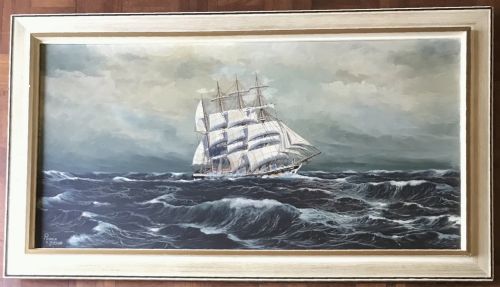
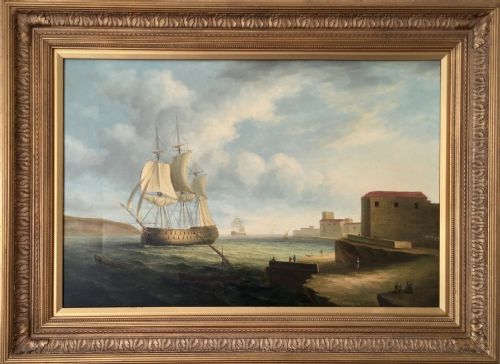
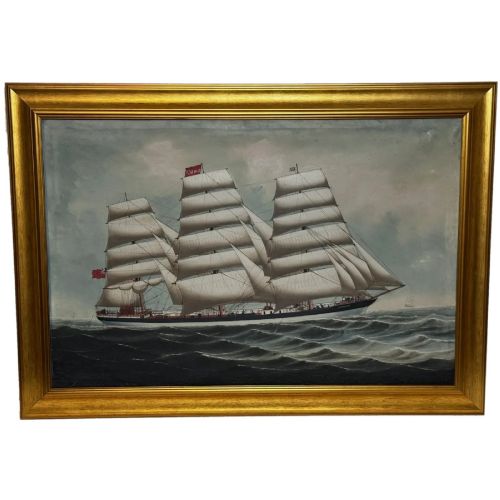
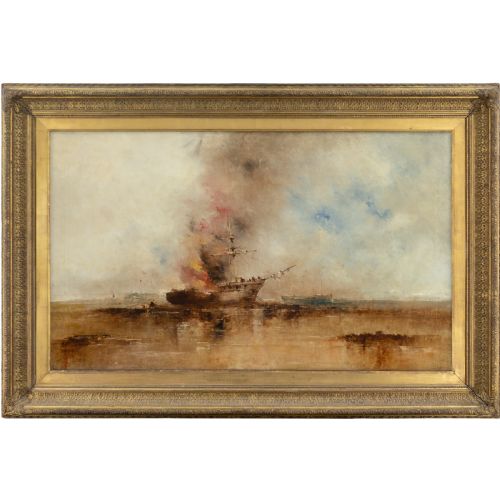
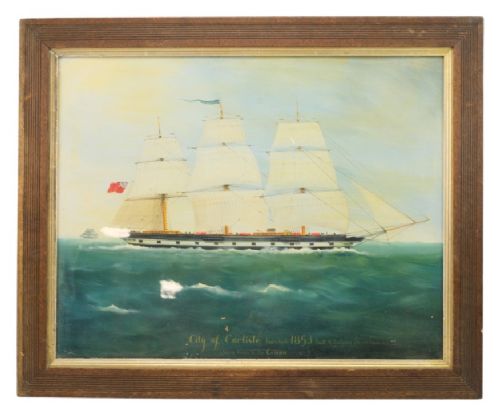
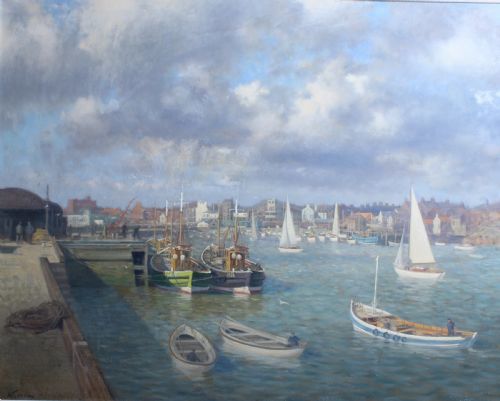
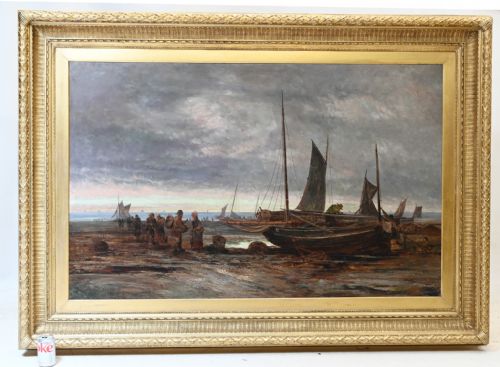
Traditional marine oil painting brings together scenes of coastal harbours, shipping vessels, and open waters produced during the nineteenth and twentieth centuries. These artworks range from serene sunset waterscapes to dramatic depictions of warships and choppy seas.
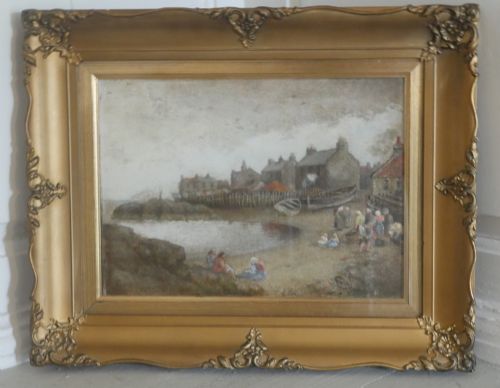
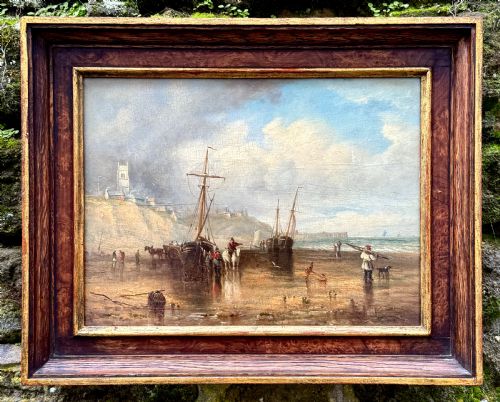
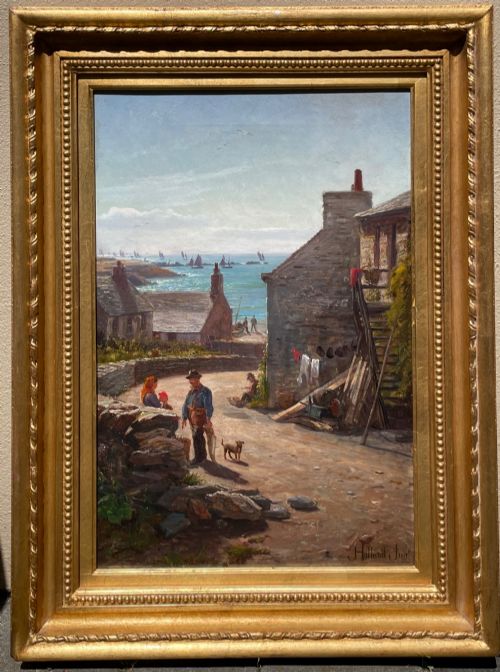
The most common examples on this page are Victorian maritime works and early twentieth-century coastal views on canvas or panel. Many feature specific locations such as the Isle of Man, Cornwall, and Mediterranean ports.
Makers and schools from Britain, France, and the Netherlands dominate the selection, often recording historical vessels, lighthouses, and everyday fishing boats.
Materials and construction
These works rely on oil paint applied to prepared canvas or wooden panels, utilising the rich texture of the medium to render water and sky. Frames of giltwood or gilded wood frequently accompany the paintings, complementing the visual depth of the maritime scenes.
Artists built up their compositions through layered brushwork, capturing the play of light on coastal waters and the specific rigging of ships. Panel supports offer a rigid base for finer details, whilst canvas accommodates larger maritime expanses.
Traditional Marine Oil Painting Retail Price Guide 2026
Typical asking prices for traditional marine oil painting among the pieces listed under this phrase on Sellingantiques today, from the lower quarter to the upper quarter. They describe what is for sale here now, not the wider market.
Several paintings record bustling nineteenth-century harbours where tiny painted figures watch unseen tides turn.
Distinctions in quality
The standard of a traditional marine oil painting rests upon the artist's command of light, atmosphere, and maritime architecture. Finer pieces demonstrate precise handling of vessel rigging and convincing movement in the waves rather than generic formulae.
Condition and originality also set works apart, particularly the preservation of the pigment layer and the integrity of the original support. Stronger examples maintain their tonal depth without excessive restoration or overpainting.
James Hardy·William McAlpine·Reginald Arthur Borstel·Edward Mills·Thomas Creswick·John Holland·Walter Goodin·William Edward Webb·James Kyd·Stanley Leader·George Shaw·Hendrik Willebrord Jansen·Alfred Henry Vickers·George Henry Knight·Thomas Rose Miles·John Callow
The Traditional Marine Oil Painting Glossary
- Oil on Canvas
- A traditional painting technique where oil-based pigments are applied to a stretched woven fabric support. This combination allows for rich blending and textured brushwork.
- Giltwood
- Timber carved and coated with a thin layer of gold leaf or metallic gilt. It frequently frames antique artworks to enhance their visual presentation.
- Panel
- A rigid wooden board utilised as a painting support instead of canvas. Artists often favoured panels for smaller, highly detailed coastal scenes.
- Seascape
- A work of fine art depicting the sea, coastlines, or marine vessels. These compositions focus primarily on maritime environments and weather conditions.
- Maritime Art
- Fine art that portrays or draws inspiration from the sea, ships, and shorelines. It encompasses historical naval battles, port scenes, and coastal landscapes.
Traditional Marine Oil Painting: Frequently Asked Questions
What subjects appear in these paintings?
These artworks depict coastal harbours, historical warships, fishing boats, and open seas under various weather conditions. Many pieces record specific locations around Britain and Europe, including the Isle of Man and Cornish ports.
Artists also captured lighthouses, naval engagements, and daily maritime commerce, reflecting the importance of the sea during the nineteenth and twentieth centuries.
How do I date a marine painting?
Dating relies on stylistic clues, framing, canvas types, and the specific vessels depicted in the scene. Nineteenth-century works often show distinct rigging styles and costume details for figures on the shore.
Signatures, artist attribution, and exhibition labels on the reverse also provide reliable indicators of the period of creation.
Where were these paintings displayed?
Historically, maritime art hung in the parlours and drawing rooms of shipping merchants, naval officers, and coastal residents. They served as both decoration and a celebration of maritime enterprise.
Today, they suit traditional interiors, studies, and living spaces that appreciate historic coastal aesthetics.
How should I care for an oil painting?
Keep oil paintings away from direct sunlight, high humidity, and rapid temperature fluctuations to protect the canvas and paint layers. Dust the surface gently with a soft, dry brush without applying pressure.
Avoid using water or chemical cleaners on the paint or the giltwood frame, as moisture damages traditional materials.