





Edwardian Maritime River Scene
An edwardian maritime river scene captures the busy working waterways and quiet broads of the era with enduring charm.
Edwardian Maritime River Scene
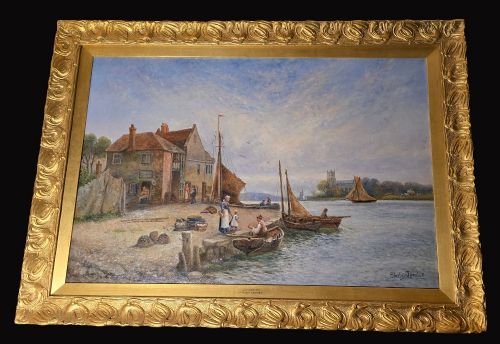
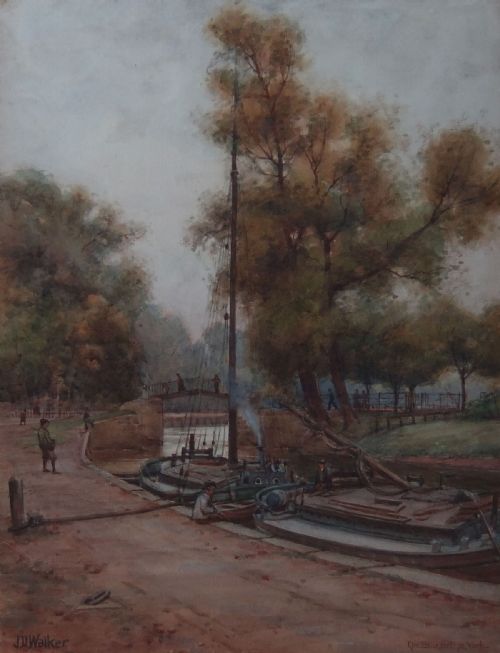
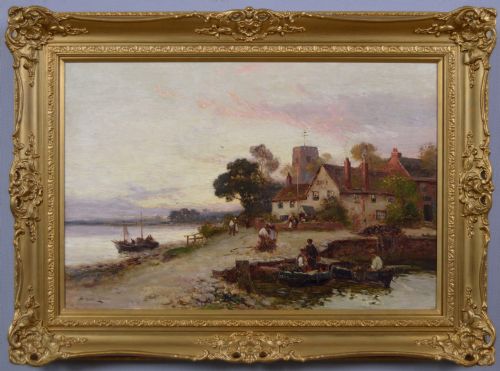
An edwardian maritime river scene brings the historic waters of the Thames, local broads, and northern rivers directly to your wall. These pieces record the commercial shipping, barges, and quiet riverbanks of the period through the eyes of contemporary painters.
The selections available here range from detailed studies of the Pool of London to wide expanses of Norfolk waterways and northern bridges. Oil on canvas and watercolour paint on paper dominate the works, reflecting the preferred mediums of the era.
How they were made
Artists of the period applied watercolour pigment and oil on canvas to capture the shifting light on water and the atmosphere of busy ports. Timber framing often supports these works, paired with gilt accents that complement the palette of the era.
Watercolour paintings on paper rely on deft brushwork and washes to depict the open sky and river currents. Oil paintings utilise heavier application on canvas to give depth to shipping vessels and structural landmarks like Tower Bridge.
Edwardian Maritime River Scene Retail Price Guide 2026
Typical asking prices for edwardian maritime river scene among the pieces listed under this phrase on Sellingantiques today, from the lower quarter to the upper quarter. They describe what is for sale here now, not the wider market.
Listings feature works spanning the late nineteenth century through to the nineteen-twenties, executed in oil and watercolour.
What varies in quality
The strength of the composition and the confidence of the brushwork divide standard works from exceptional examples. A skilled hand renders the movement of water and the rigorous detail of shipping rigging with evident economy and precision.
The preservation of the paper or canvas and the clarity of the medium dictate the visual impact of the piece. Works that retain their original tonality without excessive fading offer a truer representation of the artist's initial intent.
Edward Henry Eugene Fletcher·Leslie Rackham·Walter Duncan·Frank W. Scarborough·Stuart Lloyd
The Edwardian Maritime River Scene Glossary
- Watercolour paint
- A water-soluble medium using pigment and a binder that creates transparent washes on paper.
- Oil on canvas
- A painting technique using pigment suspended in drying oils applied to stretched fabric.
- Gilt
- A thin layer of gold or gold-like material applied to frames or details to provide a decorative metallic finish.
- Riverscape
- A genre of painting depicting a river, its banks, and associated shipping or architecture as the central subject.
- Timber
- Wood utilised for the structural stretching frames or decorative surrounds of the paintings.
Edwardian Maritime River Scene: Frequently Asked Questions
What subjects appear in these scenes?
These works typically depict busy commercial shipping, working barges, and bridges along major waterways like the Thames. Norfolk broads and quieter river landscapes also feature prominently.
The focus remains on the working life of the water, capturing vessels against recognizable urban or rural backdrops of the period.
How do I care for watercolour paintings?
Watercolour paintings require protection from direct sunlight to prevent the pigments from fading over time. Glazing with appropriate glass and maintaining stable indoor humidity levels preserve the paper.
Keep these works away from damp environments and extreme temperature fluctuations to safeguard the delicate medium.
How do oils and watercolours differ?
Oil paintings utilise pigments bound in drying oils on canvas, offering rich textures and deep tones. Watercolour paintings use water-soluble pigments on paper, resulting in transparent washes and lighter luminous effects.
Both mediums were widely used during the period to capture the distinct atmosphere of British rivers.
Where should I hang these paintings?
Select a wall with indirect light to protect the pigments, particularly for works on paper. Rooms with stable humidity, away from direct heat sources, provide the best environment for framed canvas and paper works.
Positioning the piece at eye level allows you to appreciate the fine details of the shipping and riverbanks.