

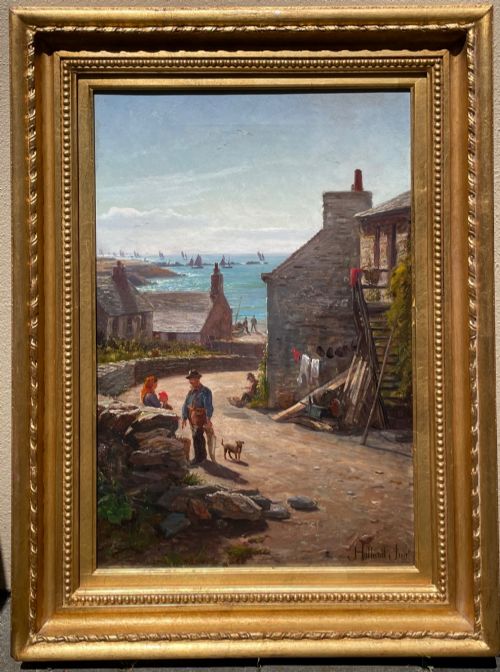


Vintage Port Seascape Painting
A vintage port seascape painting captures the salt air and stone quays of maritime life, bringing the steady rhythm of harbour work straight to your wall.
Vintage Port Seascape Painting
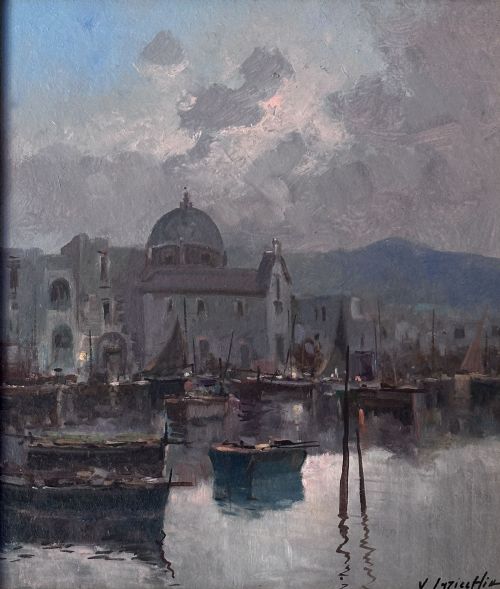
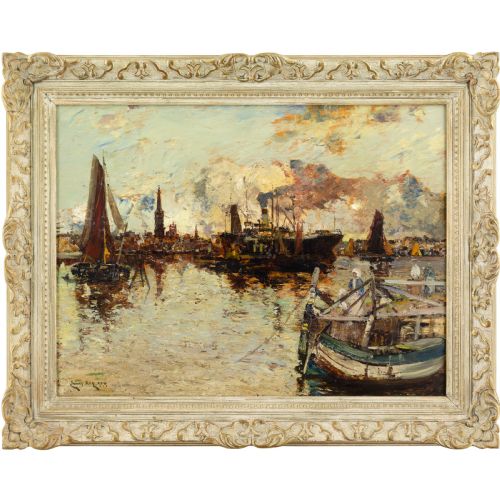
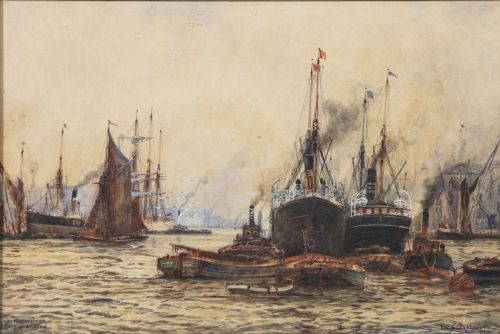
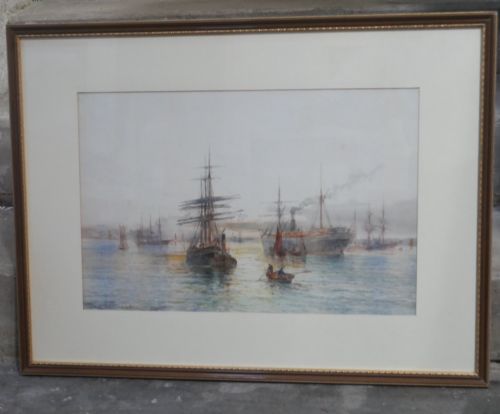
A vintage port seascape painting depicts harbours, quays and maritime scenes from periods spanning the Victorian era through the mid-twentieth century. These works capture specific locations ranging from British fishing villages like Mevagissey and Portscatho to Mediterranean berths and the French Riviera. The selection on this page shows how artists recorded the changing light on water and the daily movement of boats in both oil and watercolour.
Most examples date from the early decades of the twentieth century, including French post-impressionist canvases and Edwardian maritime studies. Buyers encounter works rendered in styles that vary from traditional Victorian marine art to the looser brushwork of French impressionism and the twentieth-century British school. Each piece documents a specific coastal view, whether an Irish bay, a Manx harbour or a busy southern French port.
Materials and technique
The technical approach shifts according to the period and movement represented, moving from the detailed realism of Victorian maritime works to the expressive strokes of post-impressionism. Painters handled the interplay of light and water by building pigment layers on canvas or applying washes to paper, preserving the luminous quality of harbour air.
Vintage Port Seascape Painting Retail Price Guide 2026
Typical asking prices for vintage port seascape painting among the pieces listed under this phrase on Sellingantiques today, from the lower quarter to the upper quarter. They describe what is for sale here now, not the wider market.
Listings feature works created across several decades, including Victorian, Edwardian, and 1930s post-impressionist canvases.
Assessing quality
Quality rests upon the artist's command of light, shadow and atmospheric depth, distinguishing a compelling study from a standard topographical record. Works that capture the specific glare of a southern French quay or the heavy air of a northern port demonstrate superior handling of pigment and composition.
Condition and originality also set the standard, with original frames and stable canvas surfaces preserving the integrity of the work. The strength of the brushwork and the clarity of the coastal atmosphere reveal the skill behind each painted harbour.
James Kay RSW·Frank William Scarbrough·John Holland·Gyrth Russell·Herbert Royle·John William Gilroy
The Vintage Port Seascape Painting Glossary
- Post-Impressionism
- A French art movement developing roughly from the 1880s that extended impressionist ideals while rejecting its limitations. Artists emphasised symbolic content, heavy brushwork and distinct forms.
- Edwardian Maritime
- Art produced during the reign of King Edward VII that focused on shipping, coastal views and maritime life. These works often combine traditional academic precision with emerging tonal awareness.
- Gilt Wood
- Timber that has been coated with a thin layer of gold leaf or gold-coloured pigment. This finish frequently appears on period frames designed to complement oil paintings.
- Watercolour
- A painting method in which the paints are made of pigments suspended in a water-based solution. The technique relies on translucent washes applied to paper.
Vintage Port Seascape Painting: Frequently Asked Questions
What subjects appear in these paintings?
The works depict busy quays, quiet fishing villages, Mediterranean berths and northern sea fronts. Artists recorded sailing vessels, steamships and local architecture set against changing coastal light.
Scenes range from Cornish harbours and Irish bays to French Riviera ports and Welsh docks, reflecting maritime commerce and leisure across different decades.
How do I date a seascape painting?
Dating relies on stylistic evidence, artist signatures, framing materials and recorded exhibition histories. Victorian works show tighter academic detail, while twentieth-century examples embrace impressionist brushwork.
Post-impressionist French works often carry specific period markers, such as circa 1930s clothing or architecture captured in southern ports like Toulon.
Are watercolours as durable as oils?
Watercolour paintings on paper require protection behind glass and conservation-grade framing to prevent fading from light exposure. Oil on canvas pieces generally prove more resilient against environmental factors.
Both mediums survive well when kept away from excessive moisture and direct sunlight.