


Nineteenth Century Maritime Painting
When you search for a nineteenth century maritime painting, you find works capturing coastal scenes, shipping vessels, and harbour life through the Victorian and Edwardian eras.
Nineteenth Century Maritime Painting
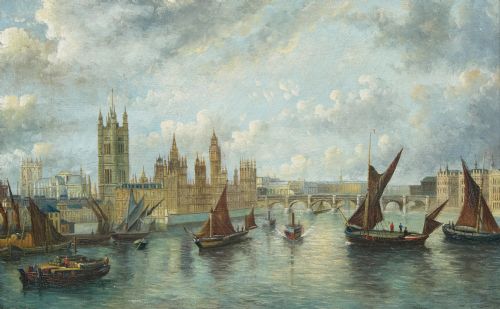
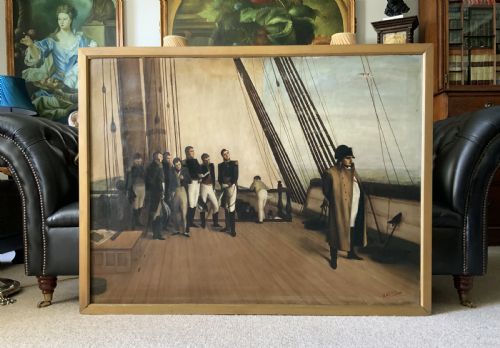
Nineteenth century maritime painting encompasses framed oil paintings and watercolours depicting coastal views, naval engagements, and harbour activity. These works span the Victorian period and extend into the early twentieth century, reflecting a strong cultural connection to the sea.
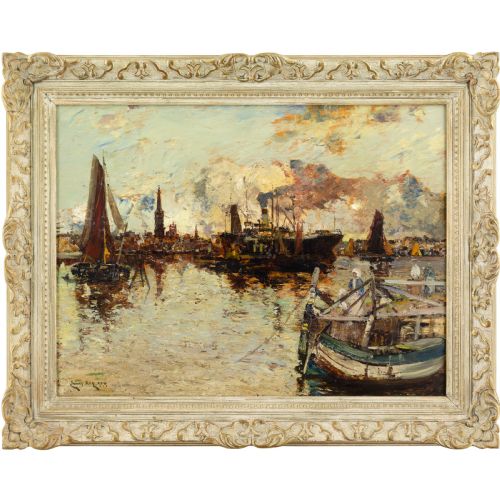
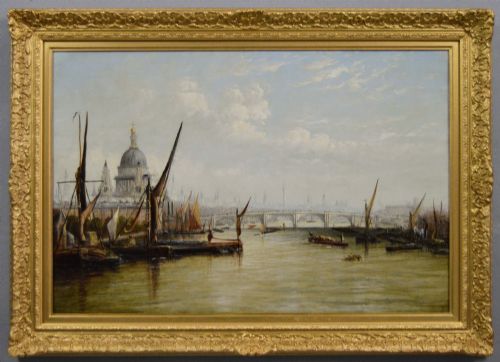
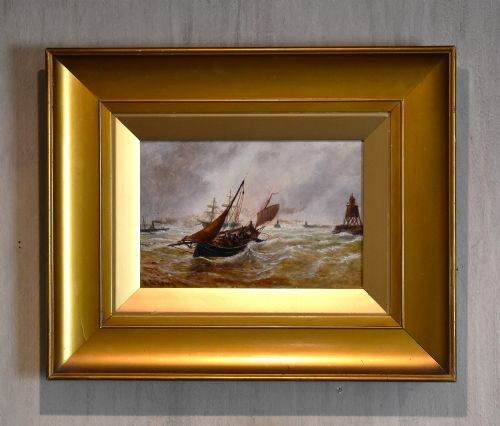
The most common examples on this page are oil on canvas landscapes and watercolours showing vessels in choppy seas, quiet estuaries, or bustling continental ports. Makers and artists ranged from regional British painters to continental European masters.
Materials and technique
Artists primarily used oil paint on stretched canvas or applied watercolour to paper, occasionally incorporating wood frames such as giltwood or maple. The handling of pigment ranged from tight, detailed depictions of rigging to looser, impressionistic brushwork capturing light on water.
Support materials like canvas and paper were mounted in traditional frames, while related maritime items utilised painted pine or leaded glass with hand-painted details. These physical components defined the durability and presentation of each piece.
Listings feature works from the 1860s through the 1920s, utilising oil paint, watercolour, and leaded glass.
What varies in quality
Quality rests in the artist's ability to render the movement of water, atmospheric light, and correct vessel proportions with convincing depth. Stronger works display confident brushwork and a balanced composition that anchors the ships or coastal architecture within the maritime setting.
Condition of the canvas, pigment stability, and the originality of the frame also separate standard examples from finer collector pieces. Works by documented painters command greater attention than unsigned school pieces due to established artistic attribution.
James Kay RSW·Francis Moltino·Abraham Cooper RA·Bernard Benedict Hemy·Jean-Baptiste Olive·William Greaves·Thomas Bush Hardy·George Dodgson Callow·H. Hadfield Cubley·Henri Ottman·Alfred Pollentine·Ludwig Hermann·Samuel John Milton Brown·Frank Myers Boggs·William Edward Webb·Hubert Thornley·Thomas Rose Miles RCA·James Aitken·Stuart Lloyd
The Nineteenth Century Maritime Painting Glossary
- Oil on Canvas
- Pigment mixed with drying oil applied to a woven fabric support stretched across a wooden frame. This medium allowed artists to build rich textures and deep tones.
- Watercolour
- A paint consisting of colorants suspended in a water-soluble vehicle, typically applied to paper. It was frequently utilised for lighter, more immediate coastal sketches.
- Giltwood
- Wood carved and coated with a thin layer of gold leaf or gilt powder. It is commonly found on traditional frames surrounding nineteenth-century fine art.
- Reverse Glass Print
- An image created or transferred onto the back side of a glass panel and viewed from the front. This technique protected the artwork from dust and atmospheric damage.
Nineteenth Century Maritime Painting: Frequently Asked Questions
What subjects appear in nineteenth century maritime paintings?
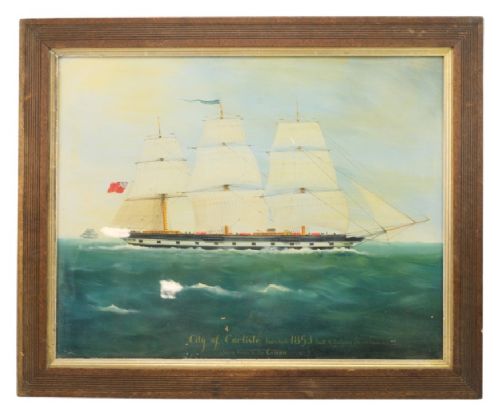
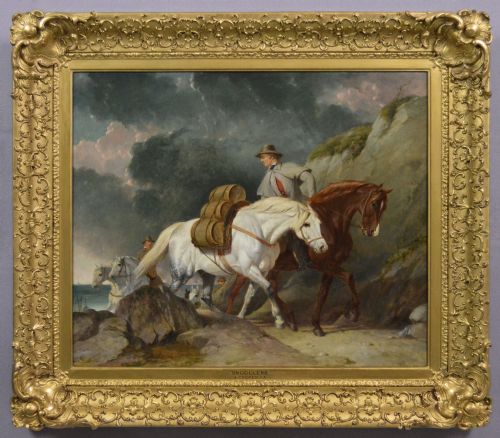
These artworks depict masted sailing ships in choppy seas, quiet river estuaries, bustling continental quaysides, and coastal paths with figures. Some pieces also record specific naval engagements or historical vessels.
Scenes range from British coastal towns like Whitby and Filey to Mediterranean ports and Venetian lagoons, offering a diverse view of nineteenth-century maritime life.
How do I care for an antique oil painting?
Keep oil paintings out of direct sunlight and away from rapid temperature shifts that can cause canvas to warp or paint to crack. Dust the surface gently with a soft, dry brush without applying pressure.
Avoid using liquid cleaners on the canvas or the frame. Professional conservation should be sought if the paint layer shows signs of lifting or heavy dirt accumulation.
Are watercolours as durable as oil paintings?
Watercolours on paper are more sensitive to light and moisture than oil on canvas. They require framing behind glass with acid-free mounts to prevent fading and paper degradation.
Placing watercolour works away from direct sunlight ensures the pigments retain their original tone and intensity over decades.
How can I tell a Victorian painting from an Edwardian one?
Victorian works, produced between 1837 and 1901, often feature tighter detail and dramatic maritime narratives. Pieces from the 1900s and 1910s occasionally lean towards looser brushwork influenced by impressionism.
Examining the canvas backing, framing style, and any artist signatures or dates provides the most reliable guide to the exact period of creation.