

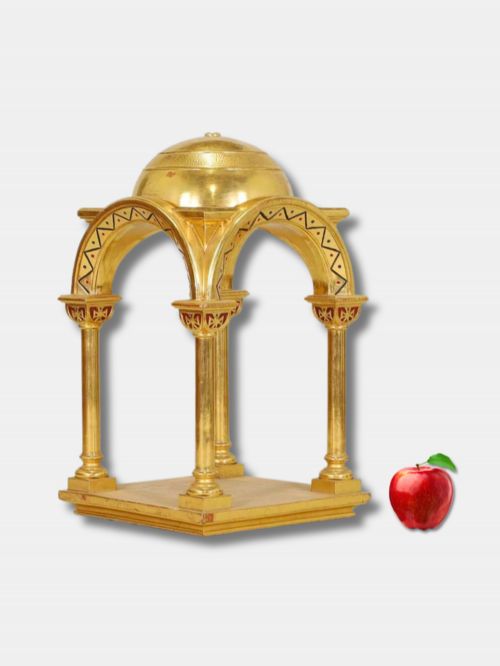
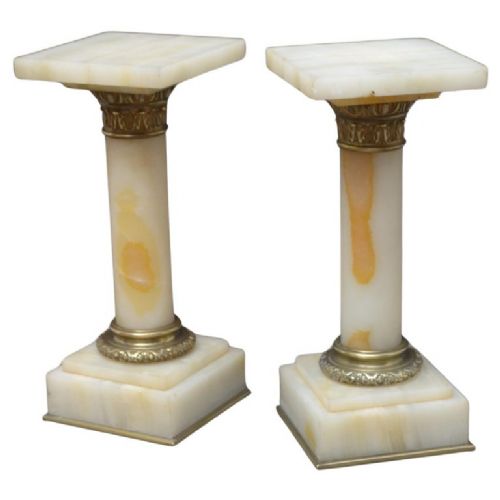


Gilt Column Stand
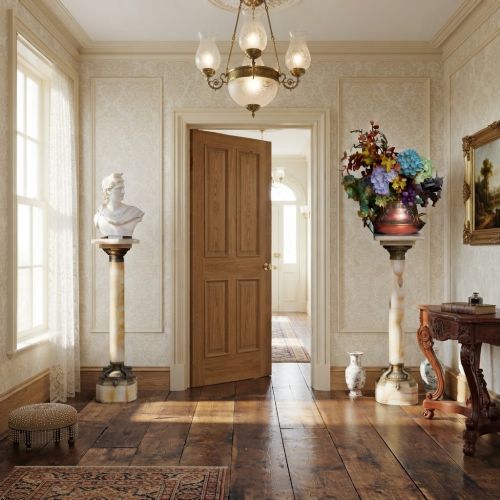
These gilt column stand options bring neoclassical presence into a room, supporting urns, lights and figures with gilded height.
Gilt Column Stand
A gilt column stand serves to elevate decorative objects, lighting and busts within domestic interiors, drawing the eye upward through architectural proportion. These pieces frequently manifest as tall pedestals, torcheres and standard lamps designed to command a corner or frame a doorway.
The versions encountered on this page span the nineteenth century through the early twentieth century, drawing heavily on Neoclassical, French Empire and Louis XVI revival vocabulary. Makers utilised timber, marble and onyx to construct vertical supports that mimic classical stone architecture.
Originating largely from British, French and Italian workshops, these items range from simple fluted wooden shafts to elaborate compositions featuring bronze mounts and inset stone tops. Buyers select them to introduce verticality and reflective metallic warmth into reception rooms and halls.
Materials and Construction
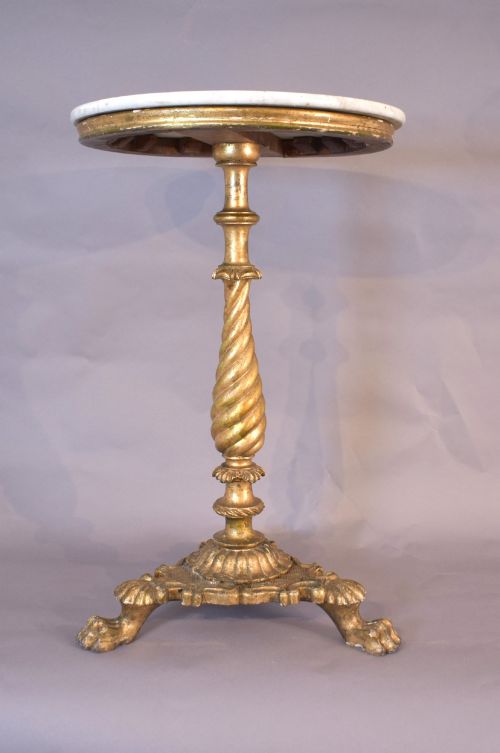
Giltwood and gesso provide the golden surface sheen characteristic of these pieces, applied over carved timber bases through traditional water-gilding or oil-gilding methods. Artisans built up intricate relief decoration using gesso before laying thin sheets of metal leaf onto the surface.
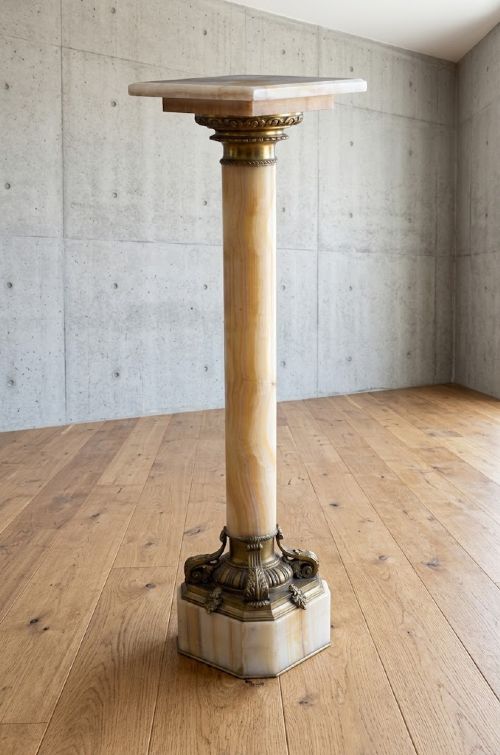
Ormolu and gilt bronze furnish the decorative collars, capitals and mounts that accent stone shafts, requiring skilled foundry work and precise chasing. Marble and onyx form heavy, stable tops and central columns, often paired with brass or wood to create contrasting textures.
Listings feature pieces spanning the 18th Century, 19th Century and early 20th Century, constructed from marble, giltwood, gesso, ormolu, brass, gilt bronze, onyx and wood.
Distinctions in Execution
The refinement of the carving and the crispness of the gilt gesso or bronze mounts dictate the standing of an individual column. Superior examples display deeply chiselled acanthus leaves, well-defined fluting and harmonious proportions between the capital, shaft and base.
Material selection significantly alters the character of the piece, with solid marbles and richly figured onyxes elevating pieces above those constructed from painted softwood. The integrity of the underlying structure and the skill in applying the original gilding remain central to the overall standard.
Gillow & Co.·Marguerite
The Gilt Column Stand Glossary
- Torchere
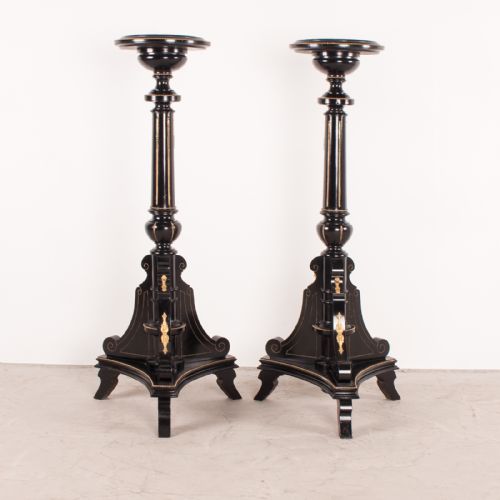
- A tall stand designed specifically to support a candle, lamp or small sculpture. These slender supports often feature elaborate carved decoration and tripod bases.
- Ormolu
- Gilded bronze used for decorative mounts, furniture ornaments and hardware. This technique involves applying a mercury and gold amalgam to bronze before heating.
- Gesso
- A plaster-like mixture applied to wood as a base for paint or gilding. It allows artisans to carve intricate relief patterns before applying gold leaf.
- Neoclassical
- A style of art and architecture inspired by classical antiquity, prevalent during the eighteenth and nineteenth centuries. It emphasises symmetry, straight lines and classical orders.
- Capital
- The uppermost member of a column, situated directly above the shaft. In these pieces, capitals frequently incorporate classical architectural orders such as Corinthian or Doric.
Gilt Column Stand: Frequently Asked Questions
What were gilt column stands originally used for?
These tall stands served primarily to elevate lighting, candelabra, floral arrangements and classical sculpture within grand reception rooms. By raising objects off the floor, they improved visibility and enhanced the architectural symmetry of period interiors.
Over time, many of these columns were adapted to hold electric standard lamps or display cabinets while retaining their original decorative function.
How do I choose the right height for a room?
Consider the scale of the objects you intend to place on top and the height of surrounding furniture. Taller torcheres work effectively in empty corners to draw the eye upward, while shorter pedestals suit displaying busts or urns at eye level.
Ensure the footprint of the base matches the stability required for heavier marble or bronze items.
How do I care for antique gilded surfaces?
Giltwood and gesso surfaces require gentle dusting with a soft, dry brush to prevent accumulation without disturbing the delicate gold leaf. Avoid using liquid cleaners, polishes or modern chemical sprays, which can strip or soften the historic finish.
Keep these stands away from direct sunlight and strong sources of heat to prevent the underlying wood and gesso from shrinking and cracking.
How can I tell the period of a column?
Examine the materials, construction methods and stylistic revival cues visible in the woodwork and mounts. Nineteenth-century examples often lean heavily into French Empire, Louis XVI or Aesthetic Movement vocabularies with heavy cast bronze or carved gesso.
Earlier pieces typically display hand-carved solid timbers and traditional joinery, whereas later twentieth-century iterations incorporate simpler turned forms and machine-finished details.