

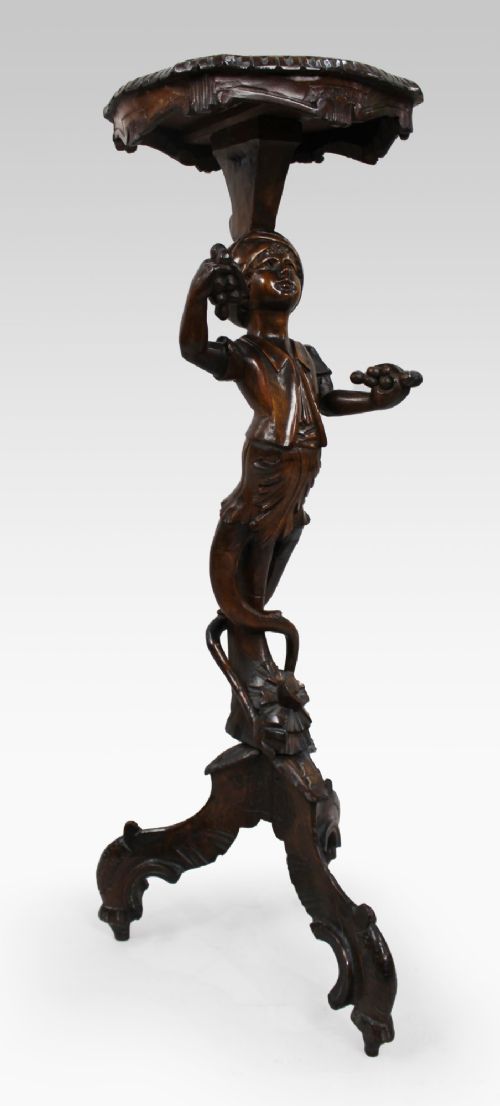


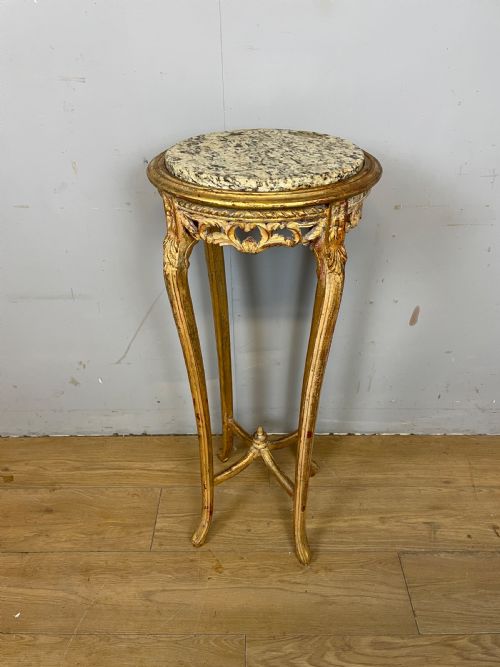


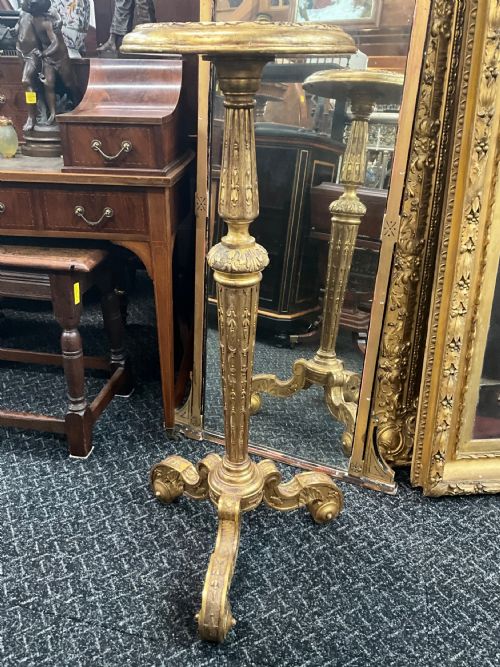
Rococo Display Pedestal
A rococo display pedestal elevates art and sculpture with spirited curves and opulent surface work.
Rococo Display Pedestal
A rococo display pedestal serves as a dedicated plinth or stand for sculpture, urns, and decorative objects. When you search for a rococo display pedestal, you encounter tall supporting structures designed to draw the eye upward in a room. The items on this page span the eighteenth century, nineteenth century, and Edwardian periods.
Forms include triform pedestals, tall torchaires, and plant stands with marble tops. Makers and artisans shaped these supports from walnut, kingwood, giltwood, and cast iron, often finishing them with brass or ormolu mounts. French Rococo, Italian Baroque, and Victorian revivals dominate the design vocabulary of the pieces listed.
The selection ranges from carved figural supports to chiseled brass and onyx pedestal tables. Many pieces integrate marble surfaces designed to hold heavy decorative items safely. Buyers find both French Chateau influences and Venetian Baroque character among these stands.
How they were made
Carpenters and carvers shaped solid timbers such as walnut and kingwood to create the structural core of these supports. Giltwood and gilt gesso decoration brought rich surface texture to frames, whilst ormolu and brass mounts added metallic contrast to the timber. Artisans applied gold leaf by hand to highlight the intricate scrolling of the revival styles.
Cast iron and chiseled brass provided robust frameworks for jardiniere stands and industrial-leaning pedestal tables. Marble slabs were cut and polished to form durable tabletops capable of supporting heavy planters and sculptural works. Gesso layers beneath the gilding allowed craftsmen to carve deep relief scrolls and floral motifs before finishing.
Rococo Display Pedestal Retail Price Guide 2026
Typical asking prices for rococo display pedestal among the pieces listed under this phrase on Sellingantiques today, from the lower quarter to the upper quarter. They describe what is for sale here now, not the wider market.
The documented periods stretch from the eighteenth century through the Victorian and Edwardian eras into the nineteen-thirties.
What varies in quality
The standard of carving determines much of the distinction between ordinary and exceptional stands. Crisp, deep relief work in giltwood or walnut indicates skilled hand-carving rather than mass production. The integration of materials, such as the fit of a marble top into a carved wooden rebate, shows the care taken during assembly.
Surface finishes range from simple painted timber to elaborate applications of gold leaf, vernis martin, and chased ormolu. Ormolu mounts that are sharply cast and securely fitted elevate the visual weight of a pedestal. The structural stability of triform bases and tall torchaires also separates sturdy antique examples from weaker decorative substitutes.
The Rococo Display Pedestal Glossary
- Giltwood
- Timber that has been coated with gold leaf or gold paint. This technique gives wooden carvings the appearance of solid gold while keeping the weight manageable.
- Ormolu
- Gilded bronze or brass used for decorative mounts on furniture and pedestals. The technique involves applying a mercury and gold amalgam to the metal base.
- Torchaire
- A tall ornamental stand originally designed to hold a torch or candle. In later periods, these served as decorative plant stands and sculpture pedestals.
- Vernis Martin
- A type of decorative lacquer finish developed in France. It mimics Asian lacquerwork and appears on fine eighteenth and nineteenth-century furniture.
- Triform
- Having three sides or a triangular plan. This base configuration provides stable floor support for tall, slender display pedestals.
Rococo Display Pedestal: Frequently Asked Questions
What is a rococo display pedestal used for?
These tall stands support heavy jardinieres, marble urns, and portrait busts within an interior scheme. They lift decorative objects to eye level to command attention in a room.
Historically, they occupied corners and halls of grand houses to display prized sculptural works. Today, they serve a similar function in domestic settings for plants and art pieces.
How do I identify the period of a pedestal?
Dating relies on examining the timber species, mounting metals, and decorative techniques used across the frame. Eighteenth-century examples often show hand-carved triform timber construction.
Nineteenth-century revival pieces incorporate cast brass, ormolu, and heavy gesso ornamentation. Edwardian and later twentieth-century stands frequently utilise alternative materials like onyx and cast iron alongside marble.
Are these pedestals strong enough for heavy items?
Solid timber frames and cast iron stands offer substantial weight-bearing capacity for heavy planters and marble sculptures. The inclusion of a fitted marble top ensures the surface remains stable under pressure.
Triform bases distribute the load evenly across the floor. However, slender torchaires with delicate gilt gesso require more careful placement away from high-traffic zones.
Where should I place a display pedestal?
Display pedestals suit empty corners, entrance halls, or focal points against living room walls. Their vertical profile makes use of narrow spaces where traditional furniture does not fit.
Ensure the surrounding floor is level to keep tall torchaires and triform stands completely stable. Position them away from direct sunlight to protect vulnerable giltwood and vernis martin surfaces.