


Gilt Burr Walnut Mirror
A gilt burr walnut mirror brings together figured timber and gleaming gilding, offering a focal point that catches light and adds depth to a room.
Gilt Burr Walnut Mirror
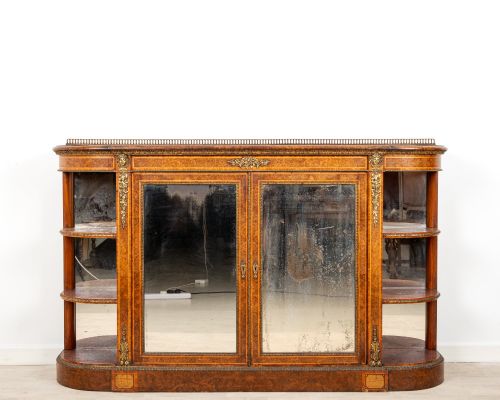
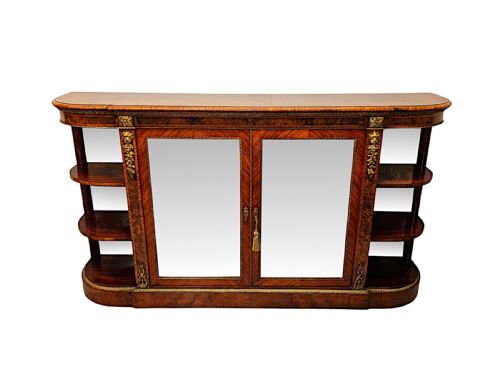
When you search for a gilt burr walnut mirror, you encounter pieces that range from Georgian pier mirrors to Victorian wall hangings. The selection includes overmantel mirrors and cheval glasses alongside the occasional credenza that incorporates mirrored glass.
The version you are most likely to meet on this page is a Victorian wall mirror, often combining burr walnut veneers with parcel gilt details. These pieces span the nineteenth century, drawing on earlier George II and Queen Anne design traditions.
Makers and cabinet makers of the nineteenth century utilised figured walnut veneers to create striking grain patterns within gilded frames. These mirrors served both decorative and practical purposes in period drawing rooms and parlours.
How they were made
Cabinet makers applied thin slices of burr walnut veneer over solid secondary timbers to produce rich, swirling grain patterns across the frame. Ormolu mounts and parcel gilt details were then added to accent the warm tones of the wood.
Glass was silvered and set into the rebated frames, sometimes accompanied by fretwork detailing or architectural mouldings. Traditional joinery methods united the timber frames, ensuring stability for the heavy mirrored glass.
Listings feature items from the eighteenth, nineteenth, and early twentieth centuries, spanning styles from George II and Queen Anne to Victorian and Aesthetic Movement.
What varies in quality
Quality rests in the selection of the burr walnut veneer and the crispness of the giltwork or ormolu mounts. Finer examples display symmetrical grain matching and deep, expressive figuring across the timber surface.
The depth of the gilding and the preservation of the original mirrored glass contribute to the distinction between standard production pieces and finer workshop items. Construction details, such as the weight of the timber and the precision of the joinery, set the better examples apart.
Gillows
The Gilt Burr Walnut Mirror Glossary
- Burr walnut
- A wood veneer taken from the growth excrescences of walnut trees, prized for its swirling, knotty grain patterns. It provides a highly decorative surface on nineteenth-century furniture and frames.
- Ormolu
- Gilded bronze or brass applied as decorative mounts to furniture and mirror frames. It adds metallic contrast to the dark tones of walnut timber.
- Parcel gilt
- A finishing technique where only specific parts of an object are covered in gold leaf. This method highlights carved details and mouldings against a dark wood background.
- Pier mirror
- A tall, narrow mirror designed to hang on the wall between two windows, often placed above a console table or pier table. These mirrors reflected additional light into period rooms.
- Cheval mirror
- A freestanding full-length mirror mounted on a swivel frame between four legs. This form allowed users to adjust the angle of the glass.
Gilt Burr Walnut Mirror: Frequently Asked Questions
What is a gilt burr walnut mirror?
A gilt burr walnut mirror is a decorative looking glass featuring a wooden frame veneered in figured burr walnut and accented with gold leaf or gilt details.
These pieces draw on historical styles such as George II and Victorian revivalism, combining warm timber tones with bright metallic highlights.
How were these mirrors used?
Period mirrors hung above mantelpieces, between windows on pier walls, or stood independently as cheval glasses in bedrooms and dressing rooms.
Their reflective glass and gilded frames served to bounce natural daylight around dimly lit nineteenth-century rooms while acting as statement decorative objects.
How do I live with a burr walnut mirror?
Hang your mirror on a sturdy wall using appropriate fixings to support the weight of the timber frame and glass. Position it away from direct sunlight and excessive moisture to protect the wood veneer and the gilt finish.
Clean the glass gently with a soft cloth and avoid using harsh chemical sprays near the polished walnut surfaces.
How do I tell periods apart?
Earlier eighteenth-century mirrors often feature fretwork and parcel gilt mouldings with simpler walnut grounds. Nineteenth-century Victorian examples tend to incorporate heavier frames, denser burr walnut veneers, and occasional ormolu mounts.
Examining the construction methods, backboards, and the type of glass helps determine whether a piece belongs to the Georgian era or the later revival periods.