
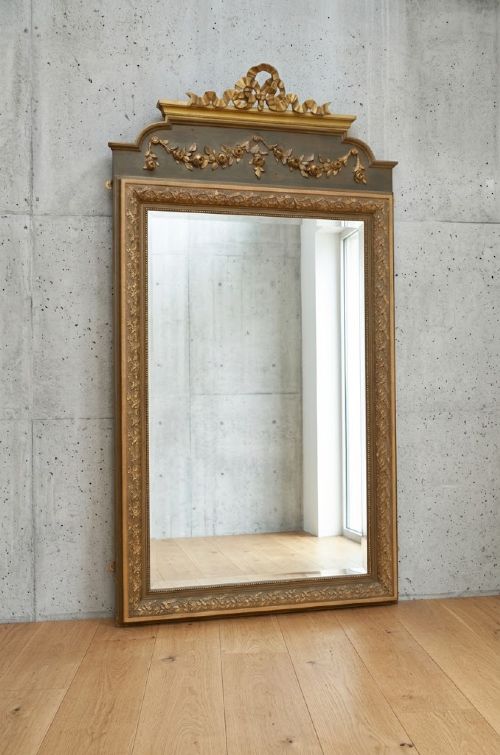


Floral Painted Pier Mirror
These floral painted pier mirror pieces bring height and light to a room, pairing glass with hand-painted foliage.
Floral Painted Pier Mirror
A floral painted pier mirror sits between windows or above a console table, designed to reflect light deep into a Victorian or 18th Century interior. You will most frequently encounter wall mirrors and pier mirrors spanning the Victorian era, the nineteenth century, and the early decades of the nineteen-hundreds.
The styles range from Italian Rococo and French Provincial to George II and Queen Anne Revival. Walnut, giltwood, and painted wood provide the structural framework for these tall glass panels.
How they were made
Wood serves as the primary base, shaped into walnut or painted frames, often accented with gesso and gold leaf. Artisans applied hand-painted foliage directly onto panels or wood surfaces.
Mirrors utilise silvered glass set within carved and gilded surrounds or decorative painted wooden structures.
Listings span periods from the eighteenth century through to nineteen-twenty, featuring walnut, giltwood, and painted wood.
What varies in quality
The finesse of the hand-painted foliate panels distinguishes standard production from finer examples. Crisp carving in the gesso and walnut elements elevates a piece beyond simpler painted woodwork.
The Floral Painted Pier Mirror Glossary
- Pier mirror
- A tall vertical mirror designed specifically to hang on the narrow wall space between two windows. It frequently matches the height of adjacent architectural joinery.
- Trumeau
- A decorative wall mirror incorporating an upper painted or carved panel above the main glass plate. These French pieces often combine oil paintings with mirrored glass.
- Gesso
- A plaster-like mixture applied to wood frames to create a smooth surface for gilding or painting. Skilled application preserves crisp detail in the underlying carvings.
- Giltwood
- Timber that has been coated with thin gold leaf or gold paint. It reflects candle or window light effectively across a period interior.
Floral Painted Pier Mirror: Frequently Asked Questions
Where should I hang a pier mirror?
These tall glasses work best on narrow wall spaces between windows or directly above low tables and mantelpieces. Their vertical proportions draw the eye upward and bounce daylight across the room.
Ensure the wall fixings match the substantial weight of wood, gesso, and glass frames, particularly on older examples.
How do I identify a Victorian mirror?
Victorian examples often draw on earlier George II or Queen Anne revival motifs, mixing walnut or giltwood with hand-painted floral details. Construction methods and backboards usually reveal nineteenth-century origins.
Compare the glass clarity and frame joinery with pieces dated securely to the nineteenth century to confirm the period.
What is a trumeau mirror?
A trumeau is a specific style of wall mirror featuring a painted or carved panel situated above the main glass plate. They originated in France and suit grand salon settings.
The upper panel frequently displays floral or pastoral scenes executed in oil paint.
Are these mirrors suitable for daily use?
They function effectively as practical looking glasses while serving as significant decorative focal points in a hallway or reception room. The silvered glass provides clear reflection.
Position them away from direct moisture to protect the historic painted panels and gilded wooden surfaces.