
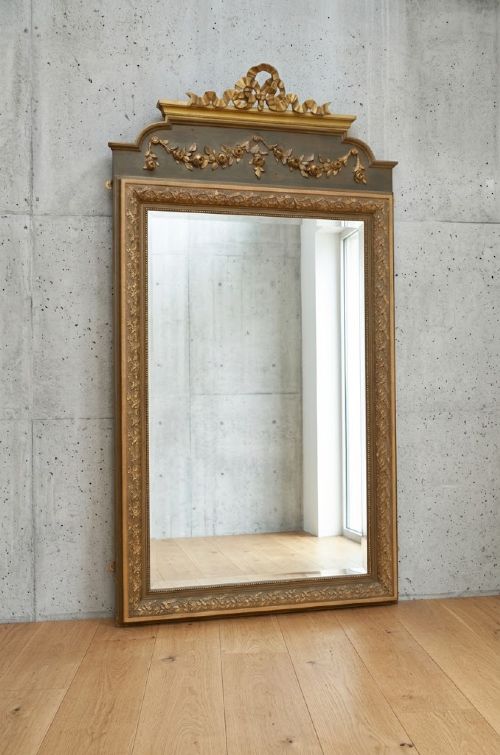


Painted Floral Trumeau Mirror
A painted floral trumeau mirror brings architectural presence and hand-painted artistry to a room, offering a focal point rooted in centuries of European design traditions.
Painted Floral Trumeau Mirror
A painted floral trumeau mirror combines a mirror glass plate with a decorative upper panel, often featuring hand-painted foliate or floral details set into wood. These pieces function as grand wall hangings, pier mirrors, or overmantle fixtures designed to sit above a fireplace or between windows.
The versions encountered on this page span several distinct periods, including Victorian interpretations, 19th-century French provincial designs, and 18th-century continental work. Buyers will find that forms range from tall vertical pier mirrors to expansive overmantle pieces decorated with giltwood, olive green paint, or burr walnut.
Stylistic influences draw heavily from French chateau aesthetics, Belle Époque elegance, and revival movements such as Queen Anne and George II. The core characteristic uniting them is the integration of painted woodwork alongside traditional mirror plates.
Materials and construction
Makers utilised solid timbers such as walnut and painted wood as the foundational structure for these frames, frequently incorporating burr walnut veneers to add rich grain patterns. Frames were then shaped into architectural proportions suited for domestic interiors.
Decoration relied on oil paint and traditional pigments applied directly to wood or inset panels to create floral and foliate motifs. Giltwood accents and applied gilding were often paired with painted surfaces to highlight carved ribbons, crests, and mouldings.
Listings here feature mirrors from the 18th century through to the 1920s, utilising walnut, giltwood, and oil-painted wood across French and British styles.
Distinguishing quality in craftsmanship
Quality reveals itself in the finesse of the hand-painted panels and the harmony between the painted decoration and the gilded woodwork. Finer examples display carefully rendered botanical details and balanced proportions that reflect the aesthetic standards of their period of origin.
The selection of timber and the execution of the frame construction also dictate the calibre of a piece. Solid walnut foundations and finely preserved giltwood details indicate higher workmanship compared to simpler secondary woods and coarser paint applications.
The Painted Floral Trumeau Mirror Glossary
- Trumeau mirror
- An architectural mirror featuring an upper panel - often painted or carved - integrated above the glass plate. These pieces originated in France to fill the wall space between windows.
- Pier mirror
- A tall vertical mirror specifically designed to hang on the narrow section of wall between two windows. They frequently incorporate lower consoles or match nearby furniture.
- Overmantle mirror
- A wide mirror designed to be mounted directly above a fireplace mantelpiece. They often mirror the horizontal proportions of the hearth below.
- Foliate panel
- A decorative section featuring stylised leaf and plant motifs. In these mirrors, such panels are frequently hand-painted with oil colours.
- Giltwood
- Timber that has been coated with a thin layer of gold leaf or gold paint. This technique adds reflective warmth and highlights carved architectural details.
Painted Floral Trumeau Mirror: Frequently Asked Questions
Where should I hang a trumeau mirror?
These mirrors suit principal reception rooms, hallways, or above fireplace mantels where their height and decorative panels can command attention. Placing them opposite a window helps maximise natural light within the space.
Ensure the wall construction can support the weight, particularly for larger overmantle or tall pier mirror formats which utilise substantial wooden frames and glass.
How do I care for painted wood and gilt surfaces?
Dust the frames gently with a dry, soft cloth to prevent particulate build-up on the painted and gilded areas. Avoid commercial cleaning sprays, as moisture and harsh chemicals can damage historic paint and gold leaf.
Keep the mirrors away from direct, strong sunlight and sources of excessive heat to protect the timber substrates and oil-painted panels from warping or fading.
What is the difference between a pier mirror and an overmantle mirror?
Pier mirrors are traditionally tall and narrow, built to occupy the wall space between two architectural openings or windows. Their proportions emphasise verticality.
Overmantle mirrors are broader and horizontally oriented, proportioned specifically to sit comfortably above the width of a fireplace surround.
How do I identify a revival style piece?
Revival pieces, such as those from the Victorian era or early twentieth century, borrow decorative vocabulary from earlier periods like the reign of George II or Queen Anne. They combine historic design motifs with the manufacturing techniques of their actual period of creation.
Examining the construction joints, backing materials, and the ageing of the paint and glass often helps clarify whether a piece is an earlier original or a later revival interpretation.