
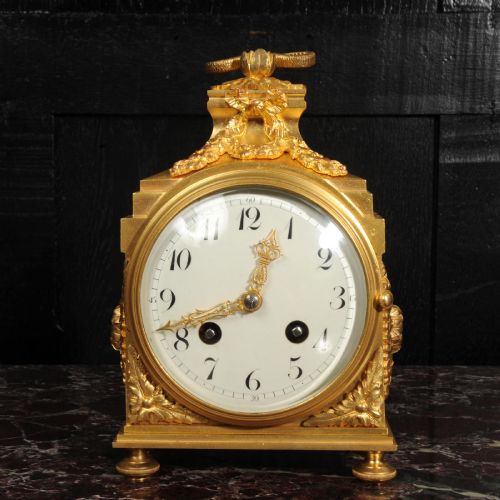
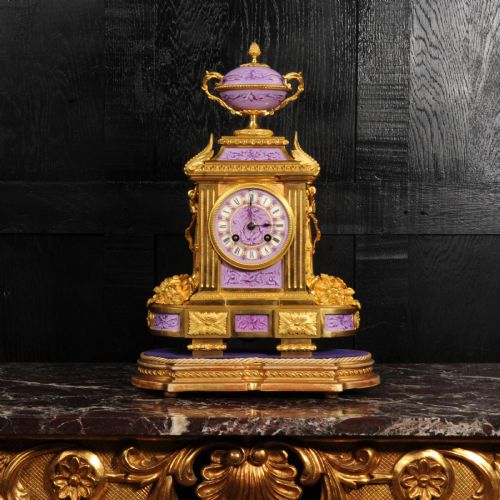
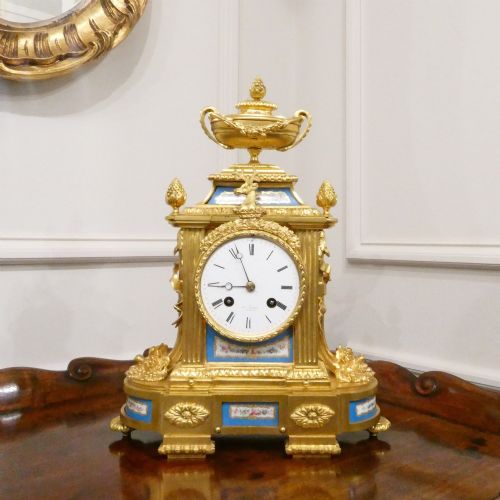
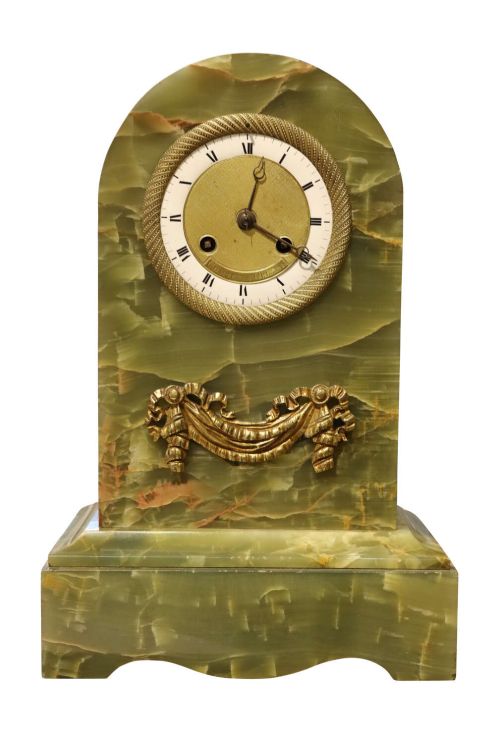
Gilt Bronzed Table Clock
A gilt bronzed table clock brings warmth and precise mechanical artistry to a room, drawing the eye with rich metallic lustre.

Gilt Bronzed Table Clock
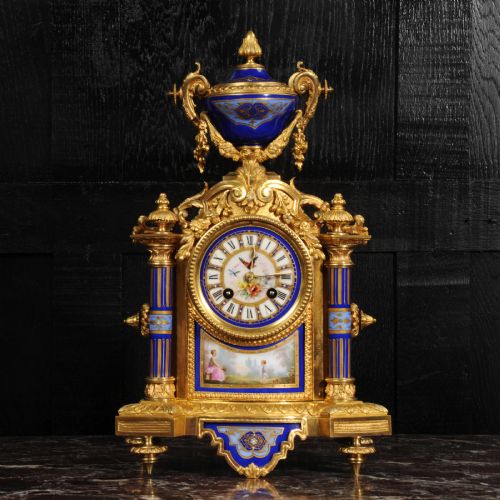
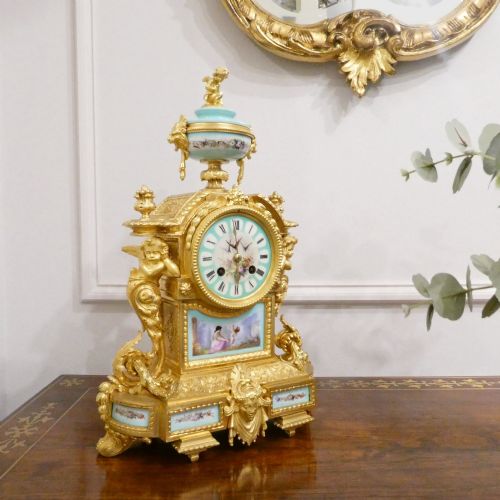
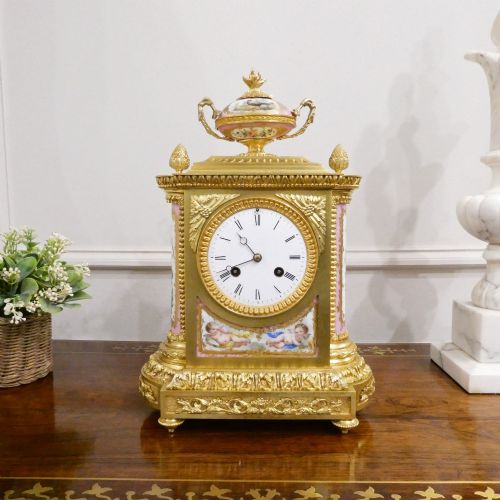
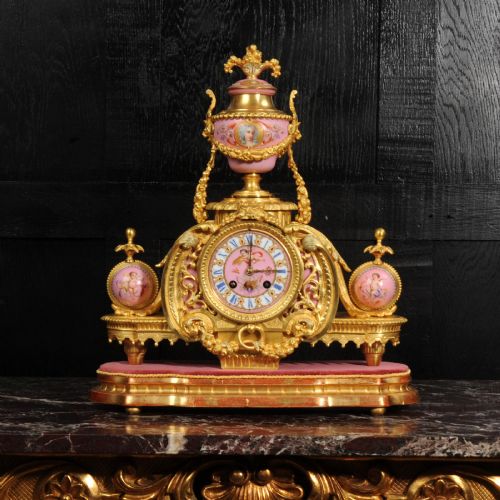
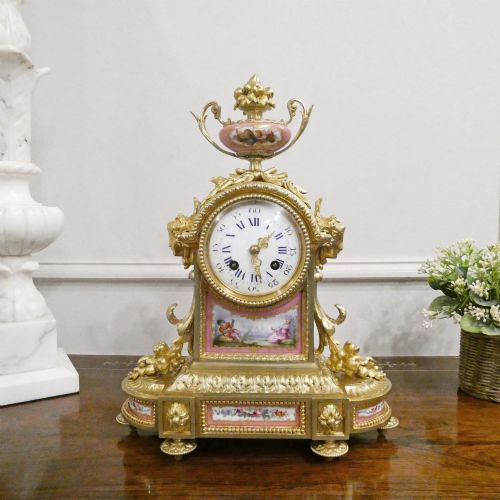
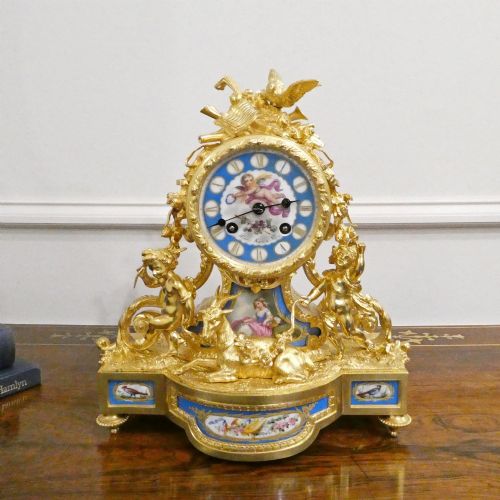
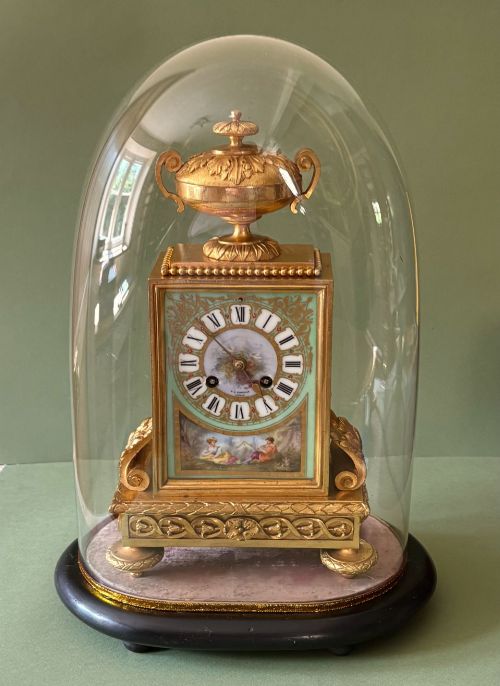
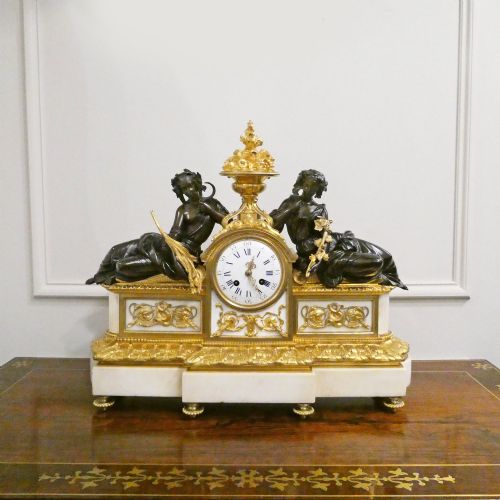
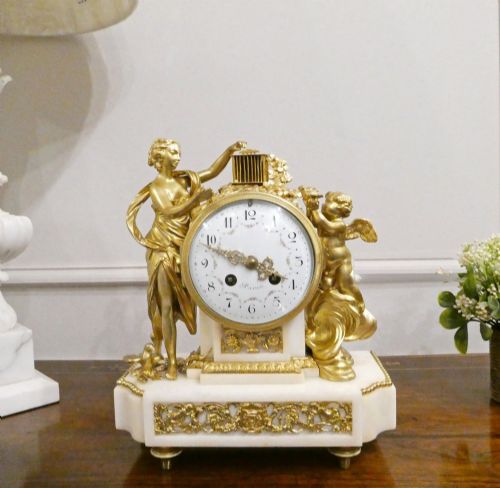
A gilt bronzed table clock is an ornamental timepiece designed for a mantel or surface, combining metal casting with functional horology. The pieces meeting this search phrase are predominantly nineteenth-century French productions, spanning periods such as Regency, Victorian, and the Second Empire.
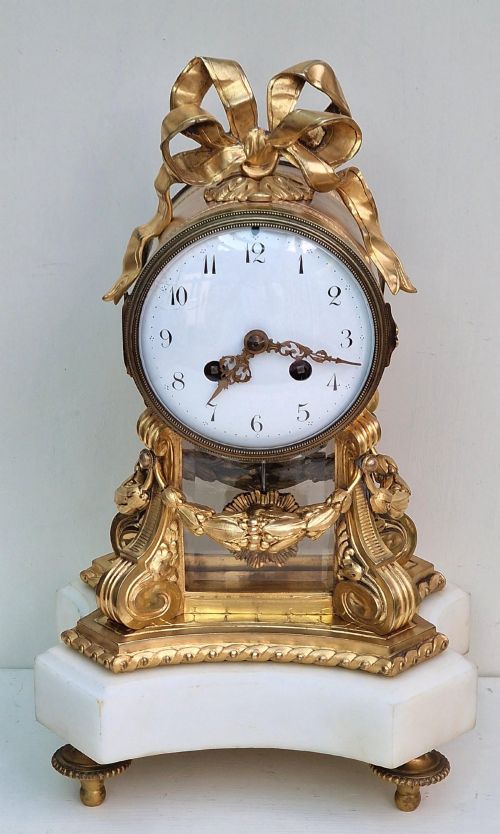
Makers and workshops dressed these timepieces in various stylistic revivals, notably French Rococo, Louis XVI, and Empire designs. Forms range from simple mantel clocks and portico timepieces to elaborate clock garnitures flanked by matching ornaments.
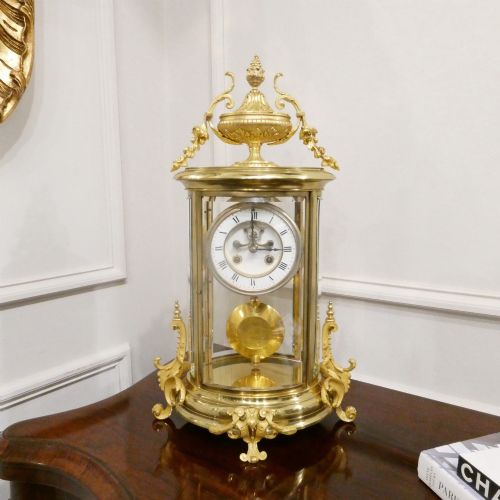
Beyond standard mantel clocks, variations include four-glass cases, drumhead dials, and sculptural subjects depicting classical or romantic themes. Buyers encounter works housed in combinations of gilt bronze, ormolu, marble, porcelain, and enamel.
How They Were Made
Craftsmen cast the primary mounts in bronze or brass before applying mercury gilding or modern electroplating to create the characteristic golden ormolu surface. This metallic work was frequently paired with contrasting materials such as white marble, green onyx, or rich hardwoods.
Clockmakers integrated intricate brass movements, often driving porcelain dials painted with numerals and decorated with hand-painted panels or champlevé enamel. Portico and crystal regulator models required precise alignment of glass panels to showcase the swinging pendulum.
Listings feature nineteenth-century French horology alongside English regency brass timepieces, incorporating marble, porcelain, and champlevé enamel.
What Varies in Quality
Mechanical integrity also separates tiers of production, seen in signed movements by notable makers that retain their original escapements and striking mechanisms. The inclusion of matching garniture pieces or intact hand-painted Sèvres porcelain panels elevates the overall cohesion of the object.
Achille Brocot·Henry Marc·Japy Freres·Samuel Marti·Paul Sormani·Vincenti·Henry Dasson
The Gilt Bronzed Table Clock Glossary
- Ormolu
- Gilt bronze produced by applying a mixture of gold and mercury to a cast bronze object, then heating to evaporate the mercury. This historic technique yields a warm, durable finish characteristic of antique French horology.
- Garniture
- A set of matching decorative objects, typically comprising a central clock flanked by twin urns or candelabra. Such sets were designed to sit symmetrically on a mantelpiece.
- Champlevé
- An enamelwork technique where troughs or cells are hollowed out of the metal surface and filled with vitreous enamel powder before firing. The resulting coloured patterns sit flush with the surrounding metal frame.
- Portico Timepiece
- A clock housed within a architectural frame supported by four columns, often featuring a suspended pendulum swinging visibly between them. This neoclassical form gained popularity during the early nineteenth century.
- Pendule d'Officier
- A portable military-style mantel clock featuring a distinctive overhead carrying handle and a substantial case. These robust timepieces were originally designed for travel by officers.
Gilt Bronzed Table Clock: Frequently Asked Questions
How do I wind a mechanical French clock?
Use the designated key on the dial face to turn the winding arbors gently until resistance is felt. Care must be taken not to overwind the mainspring.
For striking movements, ensure the strike train is wound alongside the time train to keep the mechanism synchronised.
Where should I place a heavy marble clock?
Position the timepiece on a sturdy, level surface such as a heavy sideboard or a reinforced mantelpiece. Weight distribution matters because marble and bronze assemblies are exceptionally dense.
Check that the foundation does not warp over time, as an uneven surface can cause the pendulum to stop swinging.
How do I identify a Louis XVI revival clock?
Look for architectural symmetry, straight tapered legs, urn motifs, and crisp bead-and-reel or leaf mouldings in the gilt bronze mounts. These elements mimic the neoclassical restraint of the eighteenth-century French court.
Enamel dials with delicate script and floral swags frequently accompany this specific decorative vocabulary.
What is a crystal regulator clock?
A crystal regulator is a mantel clock enclosed by glass panels on four sides, allowing light to pass through and reveal the internal movement and swinging pendulum. This style emerged prominently in the later nineteenth century.
The brass framing holds the bevelled glass securely while maintaining a light, airy visual presence.