


Gilt Bronze Wall Clock
These gilt bronze wall clock examples are decorative timepieces shaped by French rococo and Louis XVI styles, offering ornate metalwork for period interiors.

Gilt Bronze Wall Clock
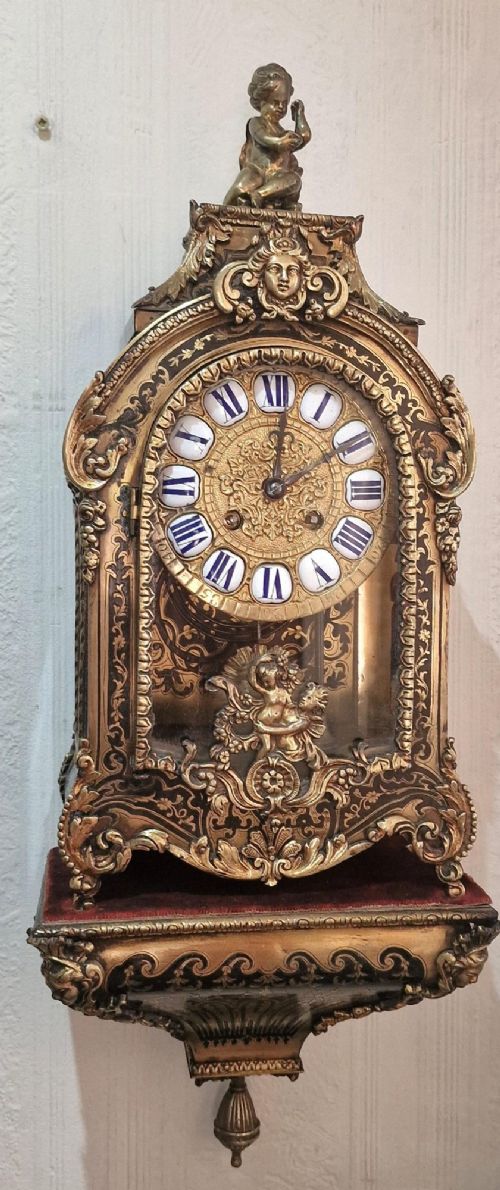
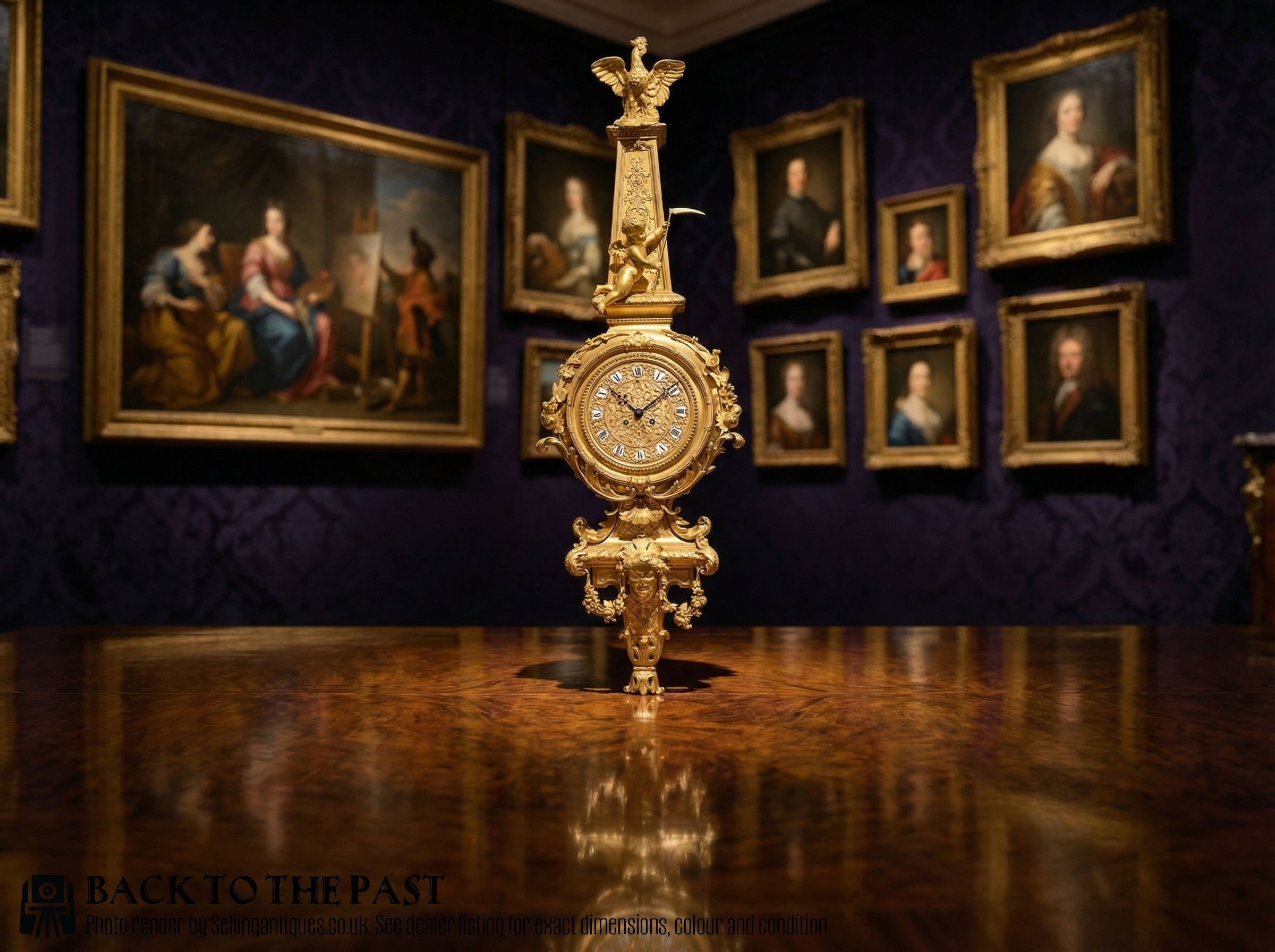
A gilt bronze wall clock is typically a cartel or bracket clock originating from nineteenth-century French workshops, designed to mount directly onto a wall. The form frequently draws upon French Rococo, Louis XV, and Louis XVI revival styles, showing elaborate scrolls, asymmetrical foliage, and neoclassical urn motifs.
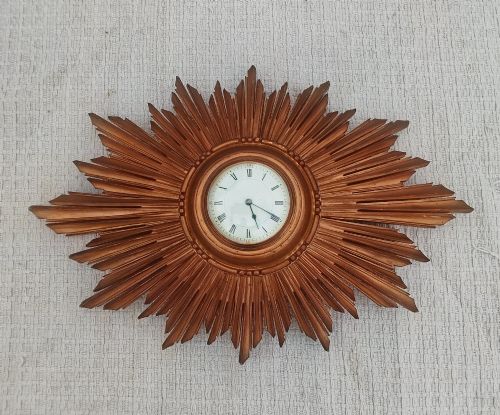
Most pieces seen here date from the nineteenth century, including specific decades like the 1850s, 1860s, 1880s, and 1890s, alongside Victorian and later twentieth-century interpretations. Alongside standard cartel clocks, buyers encounter wall brackets paired with mantel clocks, as well as starburst designs in giltwood.
Materials and construction methods
These timepieces rely heavily on bronze, brass, and ormolu, which is mercury-gilt bronze giving a rich golden finish. Metal cases are cast, chased, and gilded, often combined with enamel dials, glass panels, and occasionally ebonised wood or tortoiseshell in boulle work.
Movements within these cases are mechanical, driven by brass gears and springs, frequently produced by notable French movement makers. Dial faces typically feature individual enamel cartouches for numerals, protected behind curved glass.
Gilt Bronze Wall Clock Retail Price Guide 2026
Typical asking prices for gilt bronze wall clock among the pieces listed under this phrase on Sellingantiques today, from the lower quarter to the upper quarter. They describe what is for sale here now, not the wider market.
Listings feature nineteenth-century French pieces utilising gilt bronze, ormolu, brass, enamel, and tortoiseshell across rococo and Louis XVI styles.
Assessing quality in execution
Quality rests primarily in the crispness and depth of the bronze casting and chording, where finer examples display sharp, hand-finished relief work rather than soft, commercial edges. The complexity of the rococo or neoclassical ornamentation also dictates the tier of the piece, with heavily pierced and sculpted mounts taking significantly more artisan time.
The integration of the movement with the case matters greatly, alongside the survival of original components such as matching wall brackets and enamel dials. Maker attribution, whether signed on the movement or dial, elevates the standing of an individual clock.
Japy Freres·Henri Marc·Raingo Freres·Samuel Marti·Henri Dasson
The Gilt Bronze Wall Clock Glossary
- Cartel clock
- A wall-mounted clock housed in an ornate frame made of bronze, gilt metal, or wood. These pieces usually sit flush against the wall using a secure hanging bracket.
- Ormolu
- Finely ground high-purity gold applied to a bronze base using a mercury amalgamation technique. This historic process creates a durable, warm metallic lustre.
- Boulle
- A form of marquetry employing tortoiseshell and brass inlay developed in France. It often accompanies grand bracket clocks and matching wall supports.
- Enamel
- A glassy substance fused to a metal dial substrate through firing. It provides a smooth, white surface for painted clock numerals.
Gilt Bronze Wall Clock: Frequently Asked Questions
What is the difference between a cartel clock and a bracket clock?
A cartel clock is designed to mount directly to the wall as a single unified object. A bracket clock traditionally sits upon a separate matching wooden or gilt wall bracket.
Some antique examples combine both formats by retaining their original complementary wall shelf.
How can I tell a Louis XV style from a Louis XVI style?
Louis XV and rococo styles use asymmetrical scrolls, C-scrolls, and exuberant naturalistic plant forms without rigid symmetry. Louis XVI and neoclassical styles introduce straight lines, urns, symmetry, and geometric laurel wreaths.
Examining the corner mounts and dial surrounds usually reveals which design vocabulary the maker followed.
Do these clocks keep accurate time today?
Mechanical movements from the nineteenth century require professional servicing and careful periodic adjustment to run reliably. Many surviving examples function well once properly cleaned and oiled by a horologist.