
Gilt Bronze Shelf Clock
A gilt bronze shelf clock brings heavy metalwork and white enamel dials to a mantelpiece, offering nineteenth-century French proportion and mechanical weight.
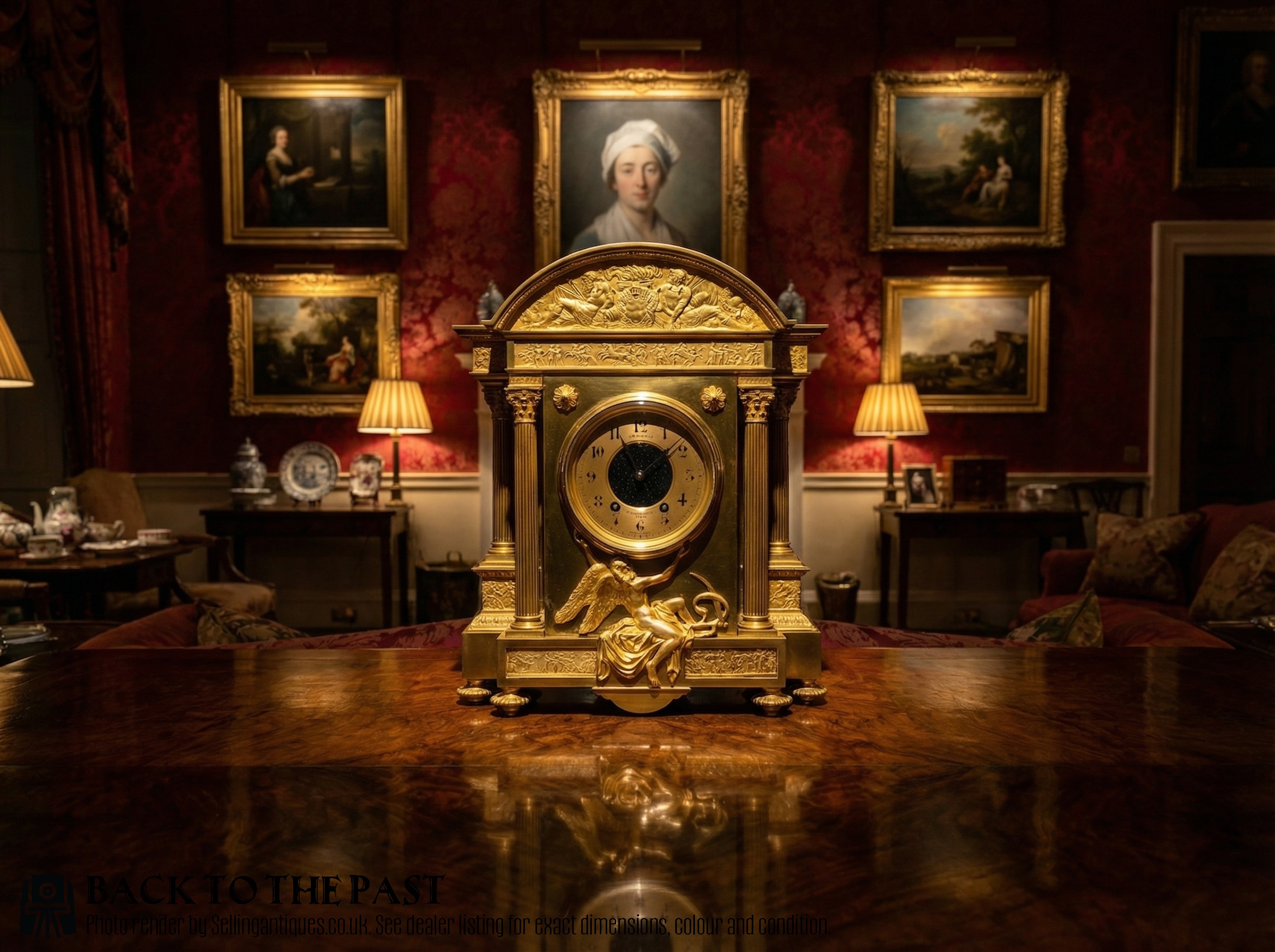
Gilt Bronze Shelf Clock
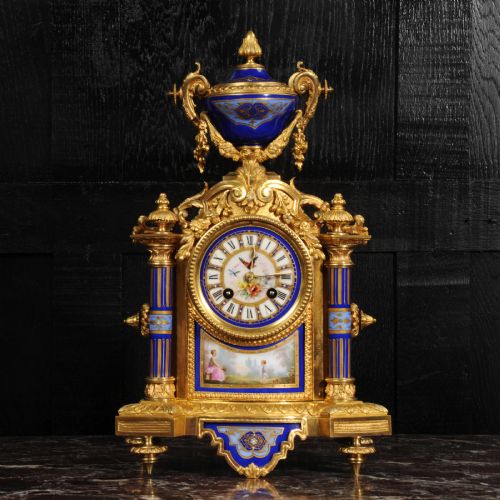
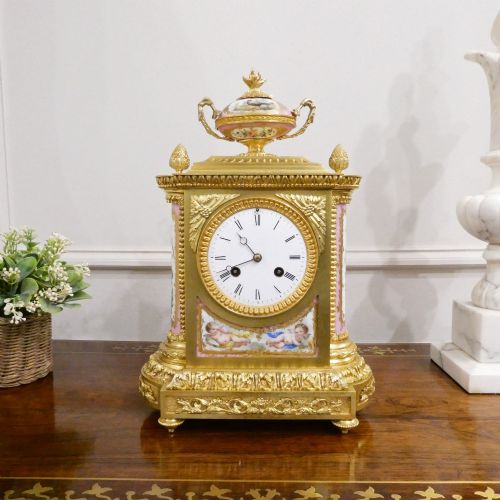
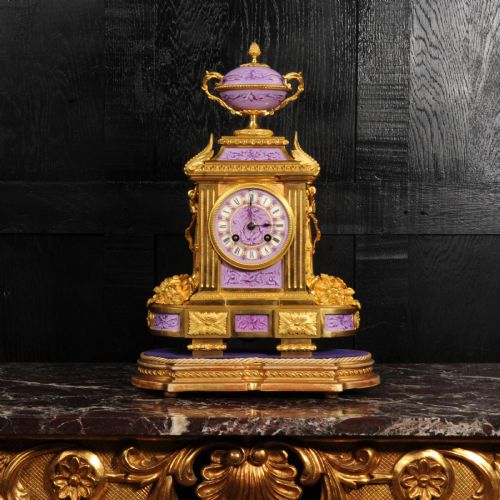
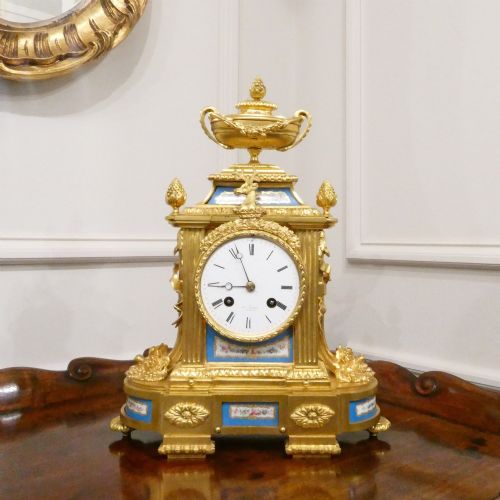
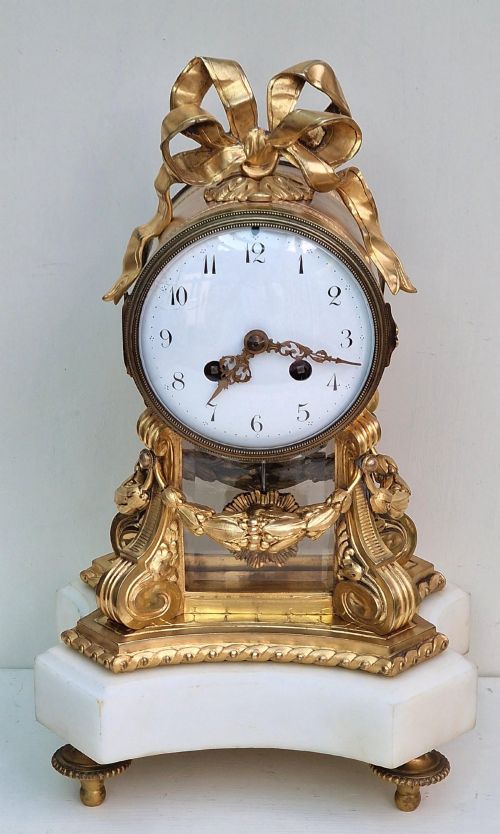
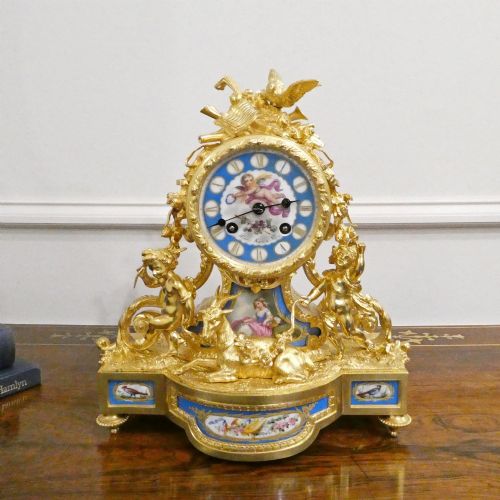
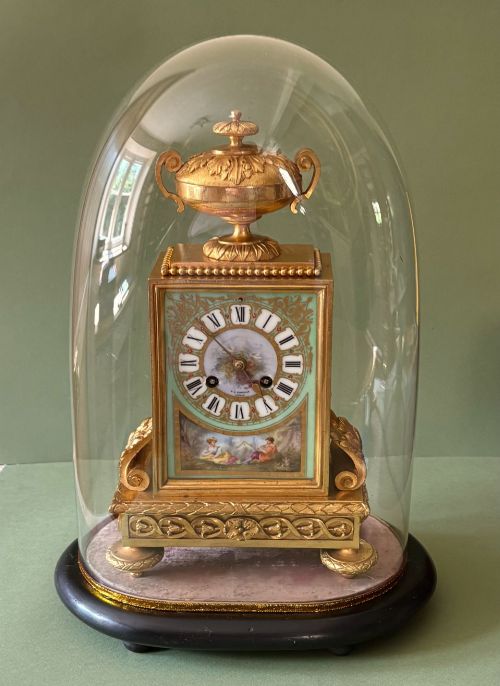
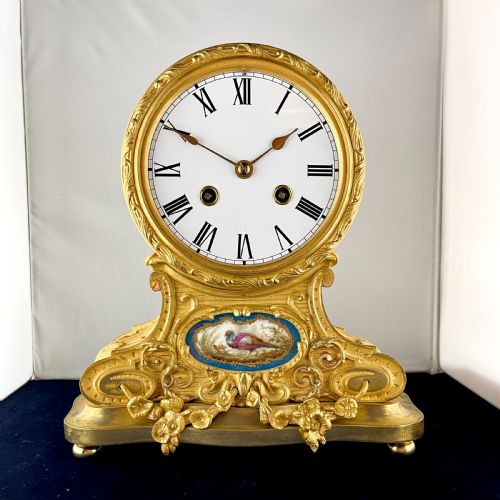
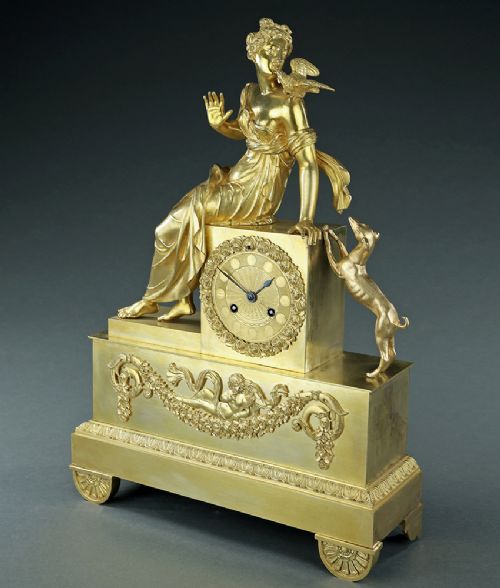
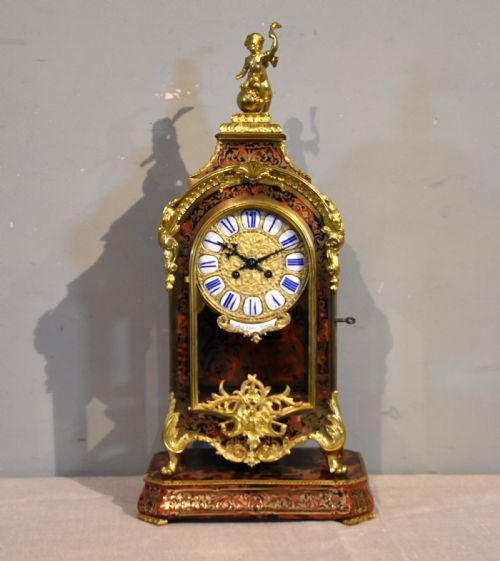
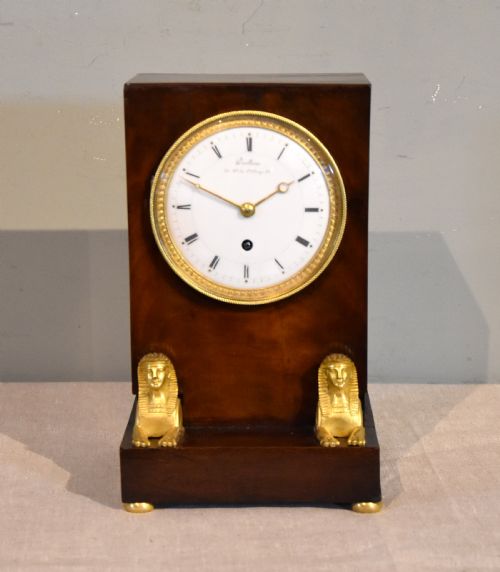
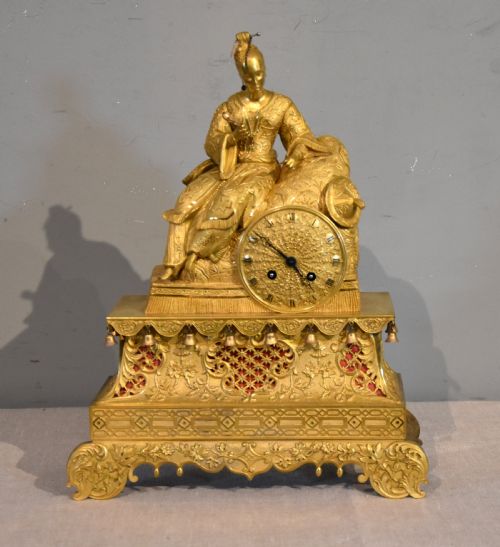
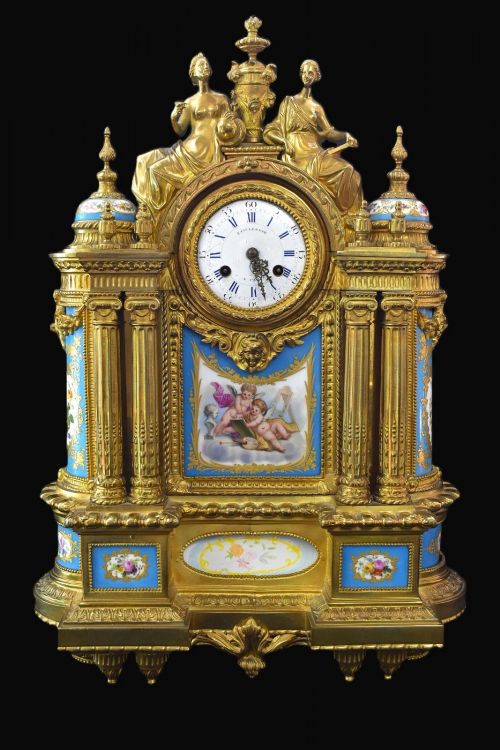
A gilt bronze shelf clock sits upon a mantelpiece, incorporating styles from nineteenth-century French production such as Louis XVI Revival, Rococo, and Empire.
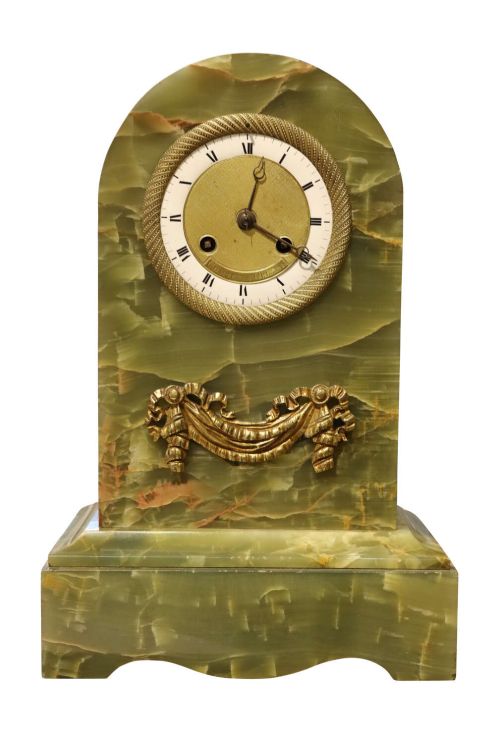
Most pieces encountered here are nineteenth-century mantel clocks originating from French workshops, frequently pairing gilt bronze or ormolu with porcelain panels and marble bases.
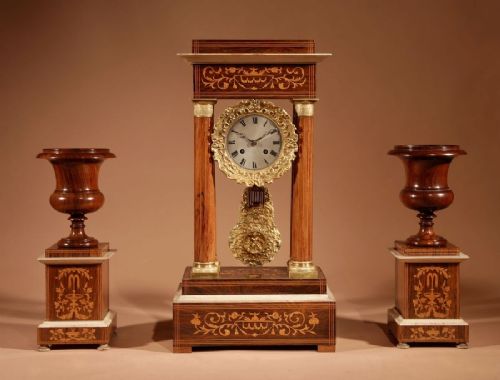
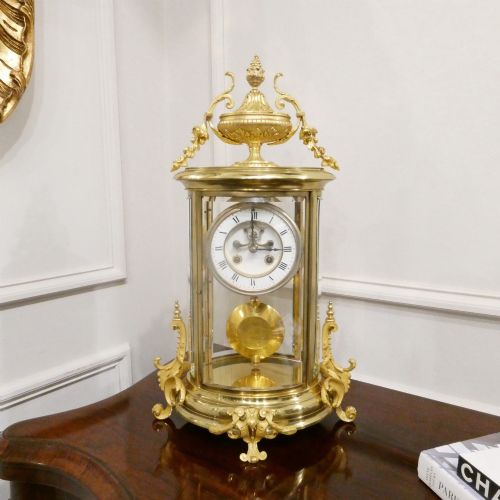
The forms range from architectural portico pieces and four-glass cases to figural designs and drumhead shapes produced during the Victorian period.
How They Were Made
Foundry workers cast bronze or brass components before applying mercury gilding or modern electrogilding to create the characteristic golden surface of ormolu.
Clockmakers fitted mechanical brass movements, often striking on bells or gongs, housed within heavy metal frames alongside enamel dials and glass panels.
Artisans integrated decorative elements such as Sevres porcelain plaques, carved marble plinths, and champleve enamel details into the primary metal chassis.
Gilt Bronze Shelf Clock Retail Price Guide 2026
Typical asking prices for gilt bronze shelf clock among the pieces listed under this phrase on Sellingantiques today, from the lower quarter to the upper quarter. They describe what is for sale here now, not the wider market.
Listings feature nineteenth-century French shelf clocks incorporating materials such as gilt bronze, ormolu, marble, porcelain, and tortoiseshell.
What Varies in Quality
The crispness of the bronze casting determines visual depth, separating sharp, hand-chased foliage and figures from soft, commercial production.
The integration of secondary materials dictates overall merit, distinguishing carefully painted porcelain plaques and solid marble bases from simpler brass and glass assemblies.
Movement sophistication and maker attribution elevate certain pieces, moving from standard mass-produced spring-driven mechanisms to signed work from established Parisian horologists.
Japy Freres·Jean-Baptiste Delettrez·Achille Brocot·Henry Marc·Charles a Orleans·Samuel Marti·Etienne Lenoir·Philippes Paris
The Gilt Bronze Shelf Clock Glossary
- Ormolu
- Gilt bronze produced by applying a gold and mercury amalgam to a bronze base and firing it. This technique creates a rich golden finish characteristic of French decorative arts.
- Champleve
- An enamelling technique where troughs are dug into the metal surface and filled with vitreous paste before firing. The resulting patterns display vibrant coloured compartments.
- Portico clock
- An architectural clock design supported by four columns resembling a classical temple facade. These pieces often feature a suspended pendulum swinging within the central opening.
- Four-glass clock
- A mantel clock housed within a rectangular brass frame fitted with bevelled glass panels on all four sides. This construction allows full visibility of the mechanical movement inside.
- Boulle
- A marquetry process using brass and tortoiseshell inlaid in contrasting patterns. Named after a French cabinetmaker, it appears on select decorative clock cases.
Gilt Bronze Shelf Clock: Frequently Asked Questions
How do I wind the clock?
Most nineteenth-century mechanical shelf clocks utilise a key inserted into winding holes on the enamel dial to tension the internal springs.
Care must be taken not to overwind the movement, turning the key only until firm resistance meets the hand.
How do I set the correct time?
The minute hand is moved gently around the dial to the correct hour, allowing the strike train to complete its sequence at each interval.
Moving the hands backwards can disrupt the striking mechanism and should be avoided during adjustment.
Where should I place the clock?
A stable, level surface such as a mantelpiece or heavy shelf provides the necessary foundation for accurate pendulum or balance wheel operation.
Direct sunlight and damp environments should be avoided to protect the delicate gilt bronze surfaces and enamel dials.
How do I identify the period?
Stylistic indicators such as Louis XVI urn motifs, Empire classical columns, or Victorian architectural marble cases point towards specific decades of manufacture.
Maker signatures stamped on the back plate of the brass movement often narrow down the exact production window.