



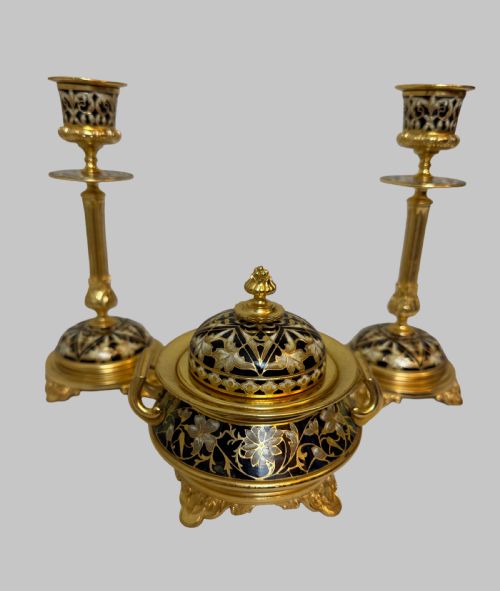
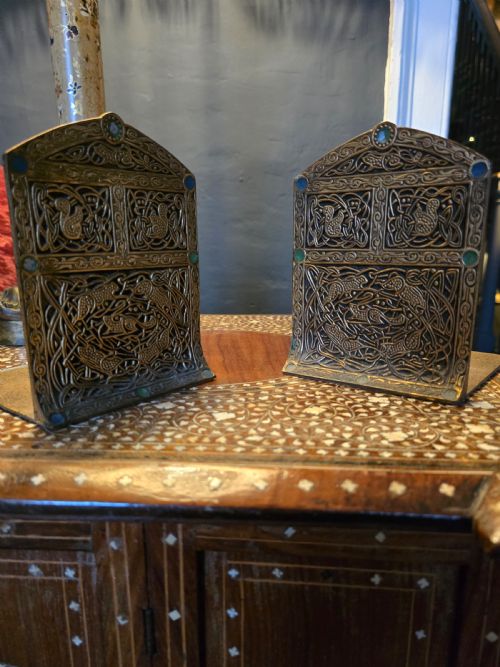

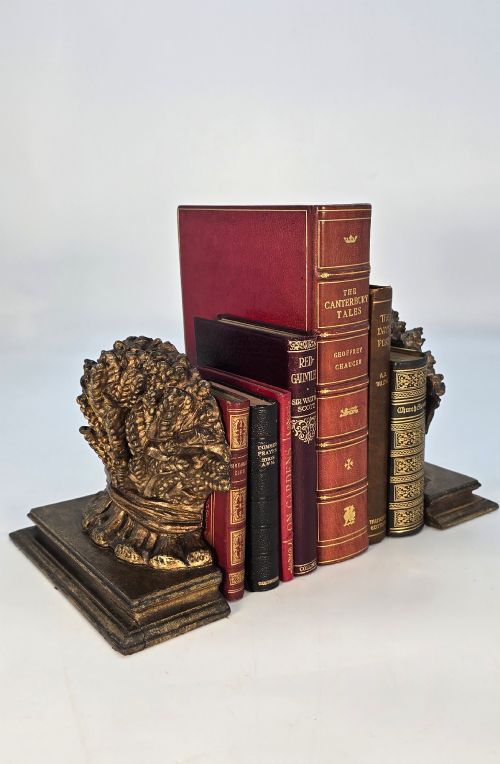


Gilt Bronze Desk Accessory
A gilt bronze desk accessory brings nineteenth-century weight and polish to a modern writing table through cast metal and stone.
Gilt Bronze Desk Accessory
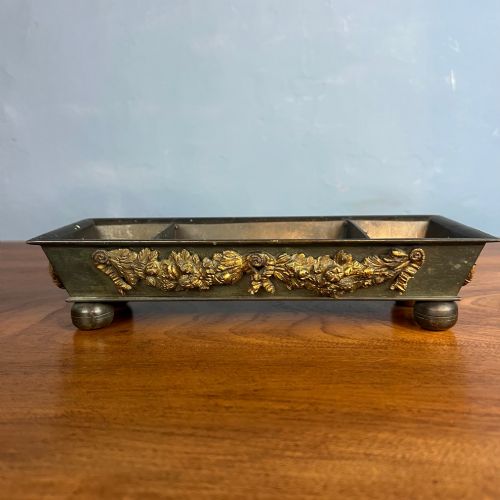
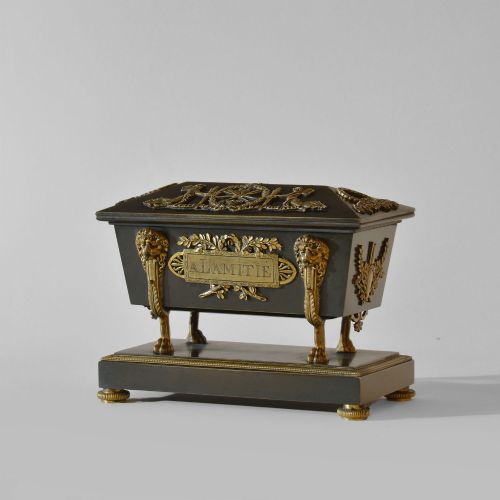
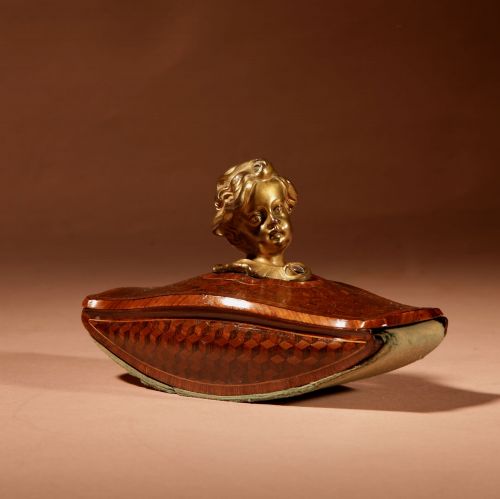
A gilt bronze desk accessory serves as a functional and decorative desk ornament from the nineteenth century and the early twentieth century. When exploring this selection, buyers encounter practical writing tools including inkwells, inkstands, desk blotters, letter openers, and bookends.
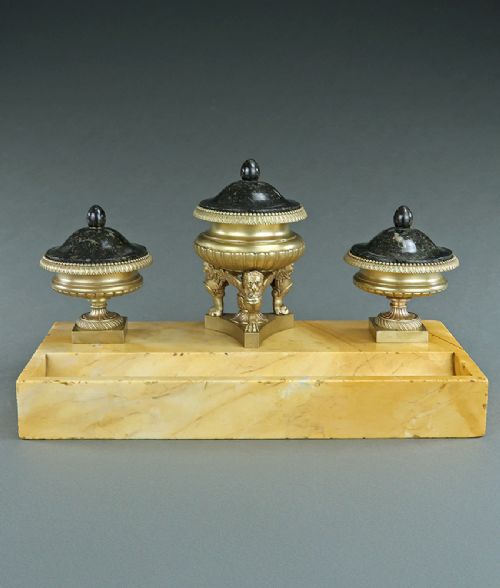
The objects frequently combine cast metal with heavy stone bases such as Sienna marble or vert marble. French workshops produced a large proportion of these pieces, alongside English and American examples from periods spanning the Regency era to the Art Nouveau movement.
Makers utilised diverse sculptural forms ranging from classical Neoclassical designs and French Empire motifs to figural subjects like animals and portrait busts. These items transform everyday writing tasks into displays of nineteenth-century craftsmanship.
Materials and Construction
Artisans created these pieces using bronze, brass, or gilded metals combined with natural stone bases like Sienna marble, onyx, and coromandel-wood. Gilt bronze and ormolu finishes provided a durable, bright golden surface that contrasted with the dark or multicoloured stone.
Techniques involved intricate metal casting, champlevé enamel work, and cold painting, supplemented by glass inserts for inkwells and original glass eyes for figural animal subjects. Workshops mounted the heavy metal castings securely onto stone plinths using threaded pins or screws.
Gilt Bronze Desk Accessory Retail Price Guide 2026
Typical asking prices for gilt bronze desk accessory among the pieces listed under this phrase on Sellingantiques today, from the lower quarter to the upper quarter. They describe what is for sale here now, not the wider market.
Listings feature items from the 1850s, 1860s, 1870s, and 1890s, alongside Regency and Art Nouveau periods.
Distinctions in Quality
Quality resides in the crispness of the metal chasing and the depth of the gilding across the cast surface. Superior examples display sharply defined fur, feathers, or architectural acanthus leaves without the softened edges typical of secondary casts.
The choice and preparation of the stone base heavily influence the standing of an object. Dense, highly polished marbles like Sienna or vert marble with harmonious natural veining elevate the overall presence of the metalwork mounted upon them.
Tiffany Studios New York·Jennings Brothers·Albert Marionnet·Asprey Of London
The Gilt Bronze Desk Accessory Glossary
- Ormolu
- A gilded bronze technique utilising a mercury amalgam to apply gold to a bronze object. This historic process yields a distinctively warm, soft lustre that differs from modern electroplating.
- Encrier
- A French term for an inkstand or inkwell. These desk vessels often incorporate pen trays and sanders alongside the central ink container.
- Champlevé
- An enamelling technique where troughs are carved into the metal surface and filled with vitreous enamel powder before firing. The resulting coloured patterns sit flush with the surrounding bronze.
- Sienna marble
- A yellow-brown decorative marble quarried in Italy, featuring dark grey or purple veins. It provides a rich, colourful foundation for nineteenth-century ormolu mounts.
- Regency
- An English design period spanning the early nineteenth century. Pieces from this time emphasise classical restraint, clean architectural lines, and refined bronze mounts.
Gilt Bronze Desk Accessory: Frequently Asked Questions
What is an ormolu inkwell used for?
An ormolu inkwell held liquid ink for writing with quill or steel nib pens on paper. The heavy bronze and stone construction kept the vessel stable during use.
Beyond writing, these pieces acted as decorative ornaments for private libraries and administrative desks during the nineteenth century.
How do I clean a gilt bronze desk accessory?
Dust the metal and stone surfaces gently with a soft, dry brush to prevent dirt accumulation. Avoid harsh chemical polishes that can strip the historic ormolu surface.
Protect the original gilding by keeping the piece away from direct moisture and handling it by the stone base where possible.
Are these desk accessories French?
Many of the pieces originate from French workshops, particularly from the nineteenth century under the Empire and Napoleon III periods. Paris was a major centre for the production of gilt bronze desk sets and mounted marble pieces.
English, American, and Asian-influenced examples also appear, reflecting broader international manufacturing during the Victorian and Edwardian eras.
How can I date an antique inkstand?
Dating relies on stylistic clues, such as the flowing organic lines of Art Nouveau or the strict symmetry of Neoclassical and Regency designs. Materials like Sienna marble and specific casting techniques also point to active decades.
Maker signatures or foundry marks stamped into the bronze provide definitive chronological markers for pieces by known studios.