

Gilt Brass Urns
Gilt brass urns bring classical presence to a room, drawing on centuries of European metalwork and decorative design.
Gilt Brass Urns
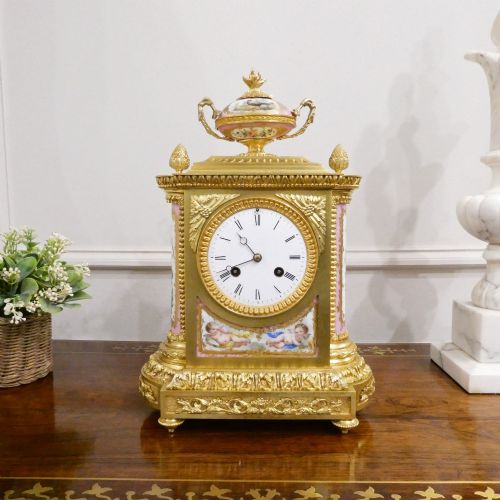
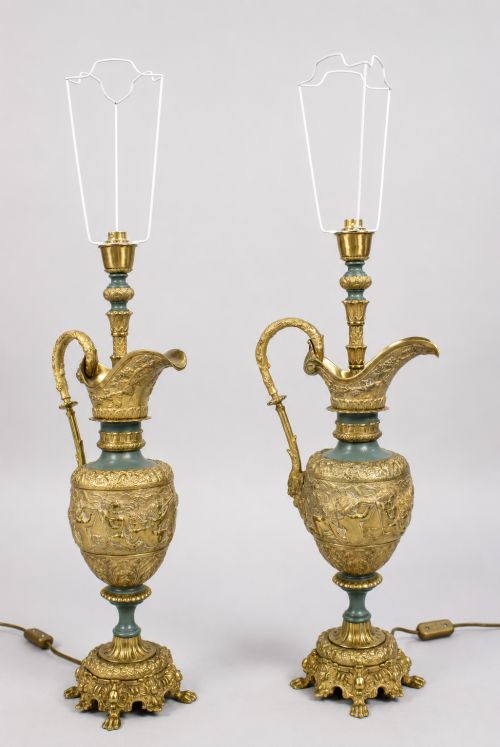
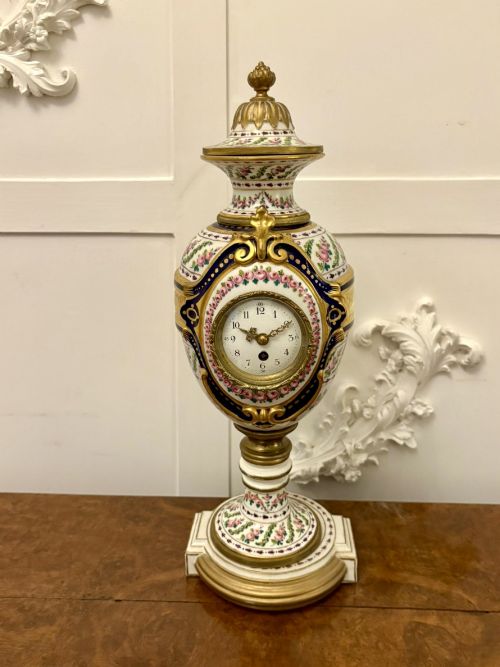
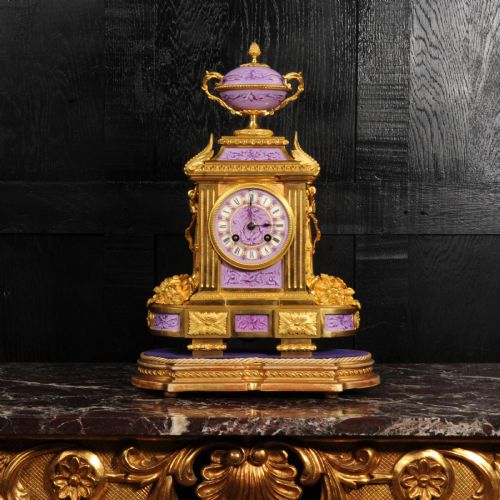
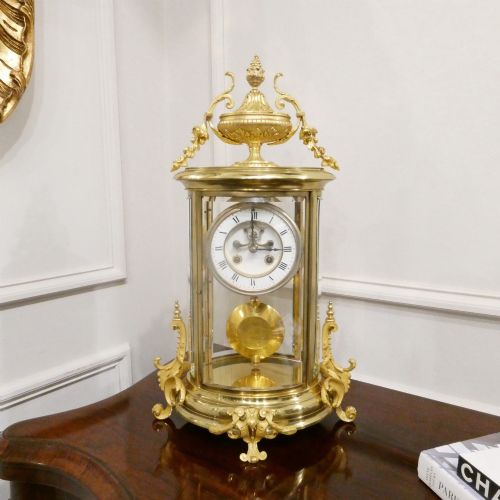
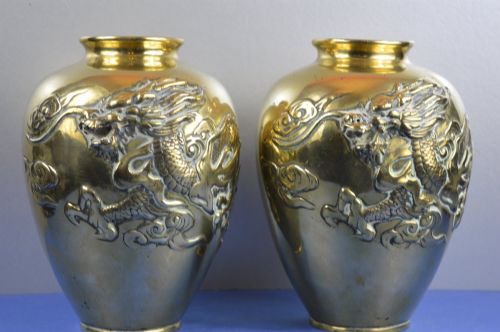
When you search for gilt brass urns, you encounter decorative vessels and mounted objects from the nineteenth century, often appearing alongside related forms such as lamps, clocks, and garnitures. These pieces draw heavily on neoclassical vocabularies and revival styles including Louis XVI and French Rococo.
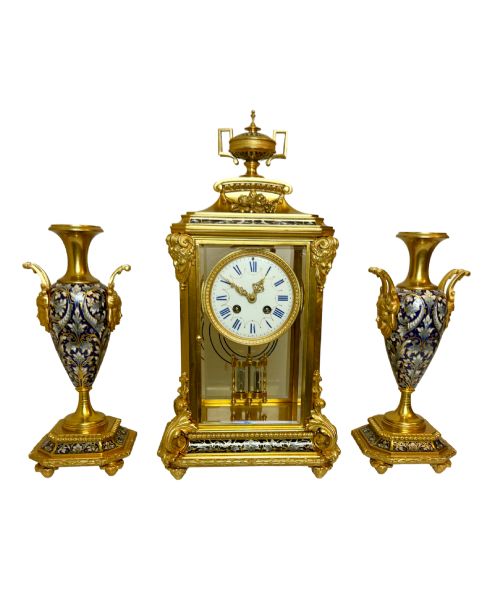
The selections on this page span French, English, and Italian origins, frequently combining metalwork with contrasting materials like marble or porcelain. Many survive as pairs, reflecting their original purpose as symmetrical mantel ornaments or architectural garnitures.
How they were made
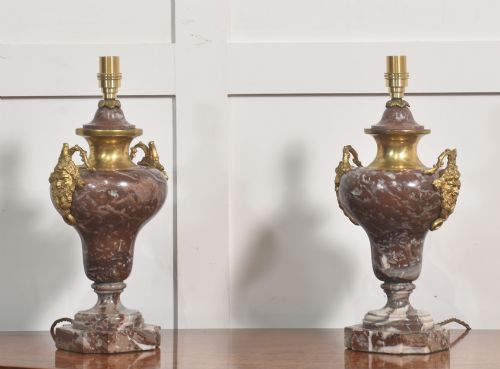
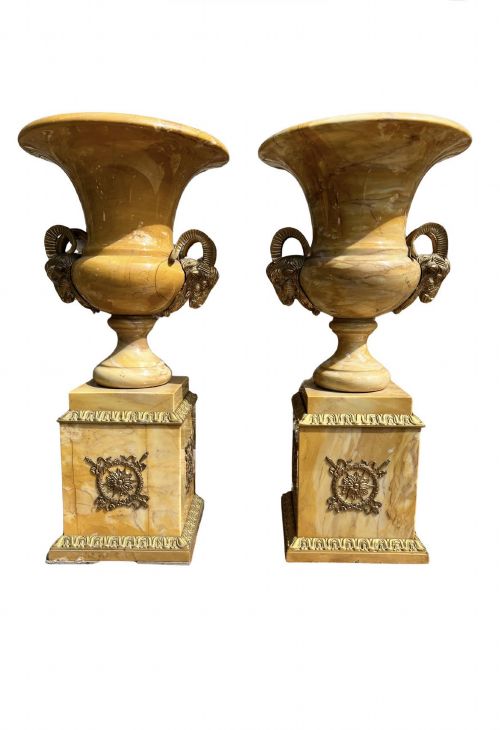
Maker workshops employed cast brass and gilt bronze, often known as ormolu, applying fine chiselling and mercury gilding to achieve crisp surface detail. These metal mounts were then combined with turned or carved stone elements such as rouge marble, white onyx, and Sienna marble.
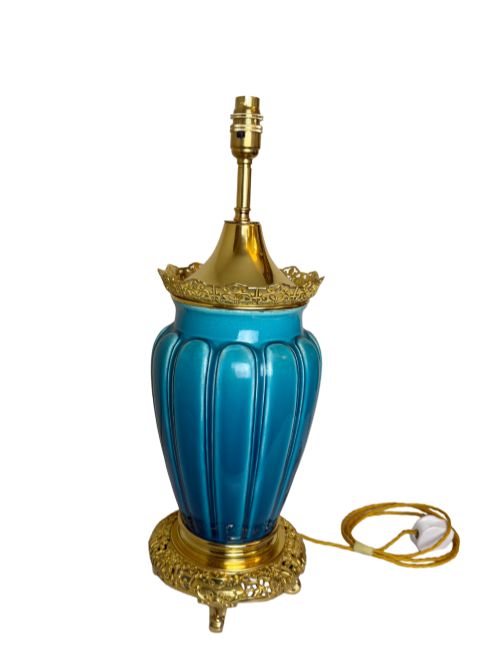
Porcelain components, including hand-painted panels and sections from Sèvres or Chinese export kilns, were integrated alongside enamel work and applied glass elements to create richly textured decorative objects.
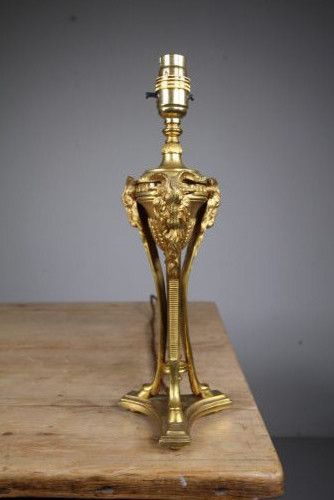
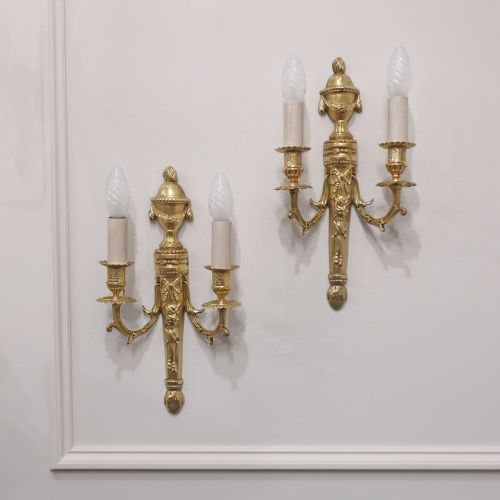
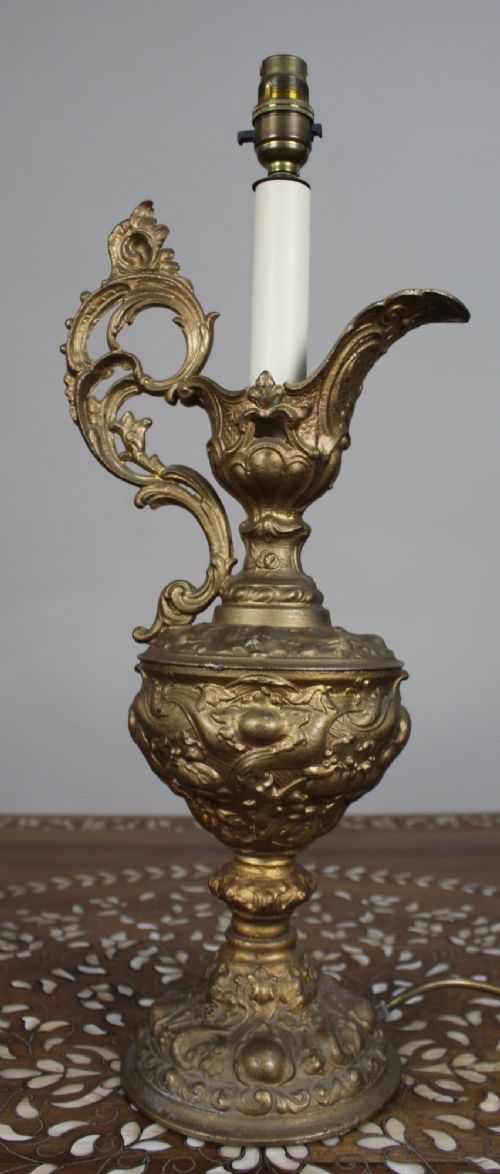
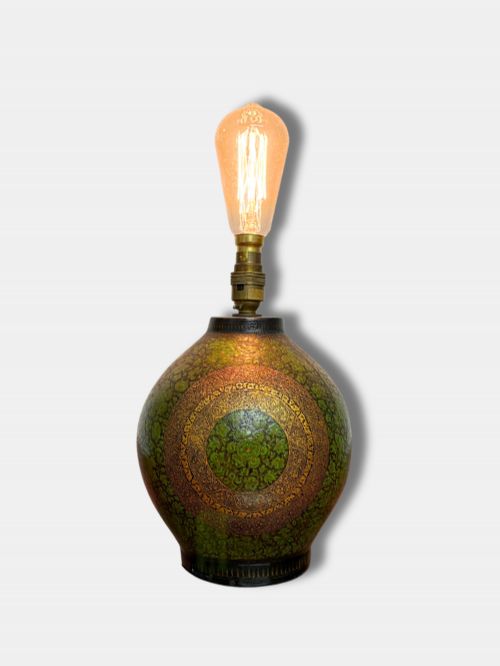
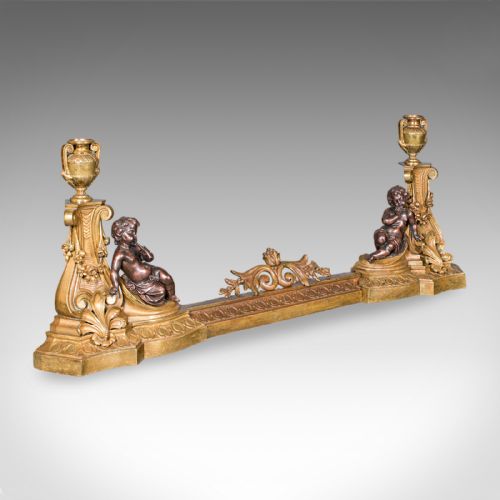
The selection includes table lamps, wall lights, and fireplace fenders adorned with neoclassical motifs.
What varies in quality
The standard of chasing and finishing in the metalwork separates ordinary production from finer pieces, as crisp, deep relief requires skilled hand labour after casting. The weight and selection of the supporting stone base, such as dense Italian marble rather than lighter substitutes, also dictate the calibre of an object.
Coherence of design marks the upper tier, where mounts fit flush against porcelain, glass, or marble bodies without awkward gaps. Original gilding surfaces that retain their varied matte and burnished highlights indicate superior workshop execution.
Jean-Baptiste Delettrez·Achille Brocot·Samuel Marti·Casier·Sacre
The Gilt Brass Urns Glossary
- Ormolu
- Gilded bronze produced through a mercury amalgamation process, yielding a deep golden finish. This technique was widely utilised by French bronziers during the eighteenth and nineteenth centuries.
- Garnish
- A matching set of decorative objects, typically comprising a central clock or vase flanked by matching urns or candelabras. These sets were designed to sit harmoniously upon a fireplace mantel.
- Champlevé
- An enamelling technique where troughs are dug into a metal surface and filled with vitreous enamel powder before firing. The resulting design sits flush with the surrounding brass or bronze partitions.
- Neoclassical
- A revivalist design movement drawing inspiration from classical Greek and Roman art. It relies on symmetrical forms, urn motifs, and restrained architectural details.
- Casting
- The process of pouring molten metal into a mould to form the primary shape of an object. Subsequent hand finishing and chiselling refined the raw metal surface.
Gilt Brass Urns: Frequently Asked Questions
How do I clean gilt brass?
Dust gently with a soft, dry brush to prevent the accumulation of dirt within intricate chased recesses. Avoid harsh chemical cleaners or abrasive cloths that can strip away historic gilt layers.
Moisture should be kept away from adjoining stone or porcelain elements to prevent staining. Professional conservation is recommended if deeper cleaning becomes necessary.
Were these urns purely decorative?
Most surviving examples served as ornamental garnitures designed to enhance domestic interiors, particularly on mantelpieces. Some pieces incorporated functional elements like clocks, inkwells, or lamp fittings.
Pairs were specifically arranged to create formal balance within grand reception rooms. Their visual weight anchored the decorative scheme of a nineteenth-century interior.
How can I identify a French piece?
French production frequently exhibits distinct foundry stamps, clockmaker signatures, or characteristic chasing styles associated with Parisian workshops. The integration of Sèvres-style porcelain and specific Louis XVI revival motifs points directly to French manufacture.
English and Italian pieces often utilised local stone variations, such as Sienna marble, paired with domestic casting traditions. Comparing the weight and alloy composition helps clarify the geographical origin.
What is the difference between ormolu and brass?
Brass is a copper and zinc alloy used structurally and decoratively for its bright golden hue. Ormolu specifically refers to high-status gilded bronze, involving a mercury-gilding process on a bronze substrate.
Ormolu displays a warmer, deeper lustre and permits sharper chisel work than standard cast brass. Many nineteenth-century items combine both materials within a single object.