



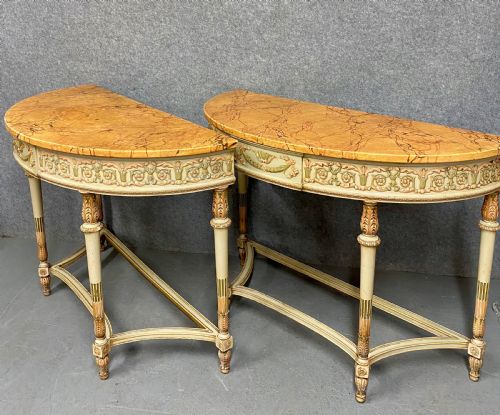


Sienna Marble Pair
Sienna marble pair pieces bring rich yellow warmth and classical design to a room.
Sienna Marble Pair
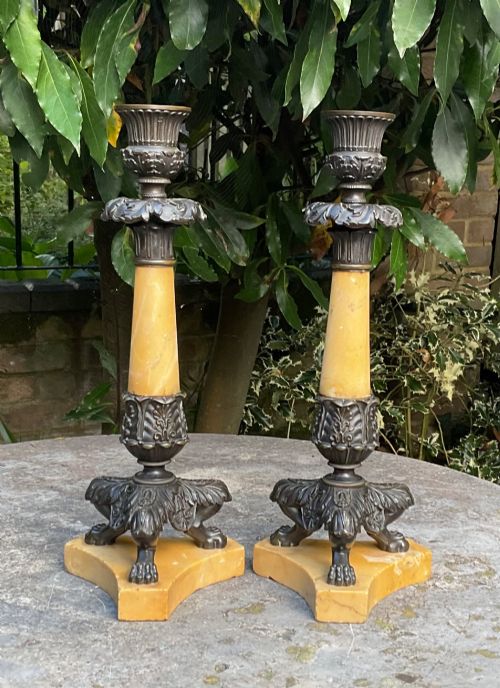
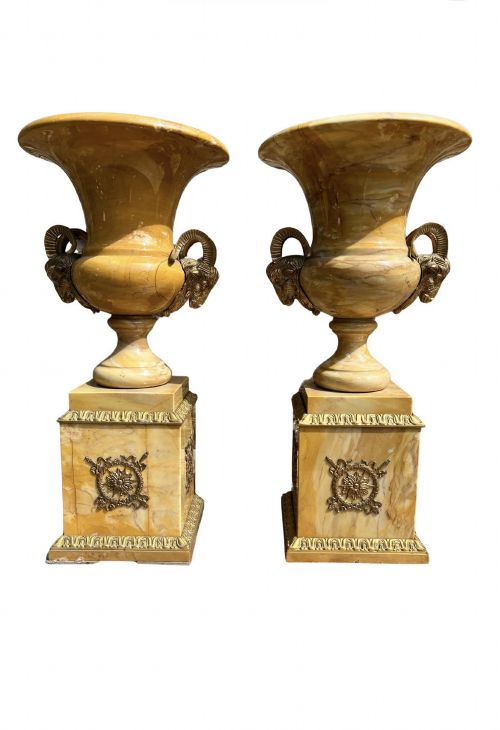
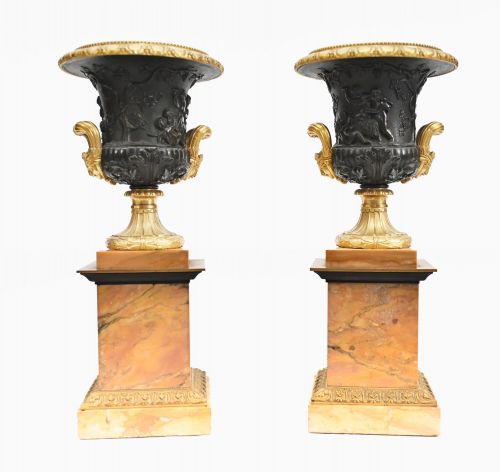
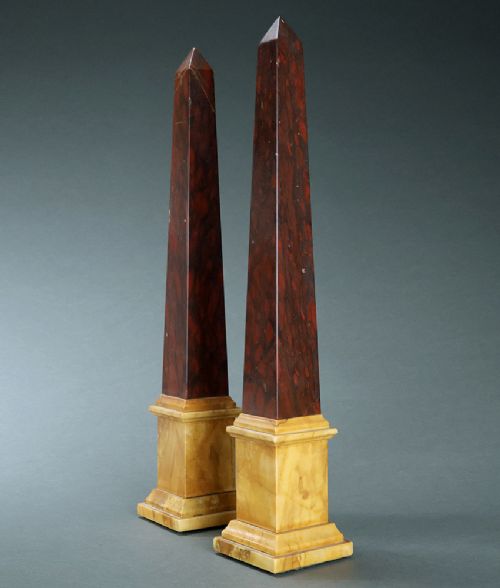
A sienna marble pair consists of matching decorative items formed from distinctive yellow and brown Italian stone, frequently combined with cast bronze or ormolu mounts. Buyers seeking these objects find matched items intended for symmetrical placement on mantelpieces, consoles or side tables.
The pieces appearing on this page span the nineteenth century and the early twentieth century, reflecting Regency, Charles X, French Empire and Grand Tour aesthetics. Forms range from campana urns, tazzas and obelisks to candlesticks, cassolettes and sculptural bases supporting bronze figures.
Many examples directly emulate classical antiquity, recording the influence of Italian travels and archaeological discoveries on British and European interior decoration. Others utilise the warm, variegated stone for later lamp conversions or architectural table lamps.
How they were made
Makers shaped the distinctive yellow stone using lathe-turning and hand-carving techniques, often selecting pieces with dramatic veining and brecciated patterns. This natural stone was then paired with components cast in bronze, brass or gilt metal, sometimes finished with ormolu gilding.
Foundry workers cast the bronze elements using traditional methods, producing figures of cherubs, putti and classical philosophers or structural elements such as plinths, handles and collars. The stone and metal components were joined with internal threaded rods or pinned fittings to secure the heavy assemblies.
Sienna Marble Pair Retail Price Guide 2026
Typical asking prices for sienna marble pair among the pieces listed under this phrase on Sellingantiques today, from the lower quarter to the upper quarter. They describe what is for sale here now, not the wider market.
Several pairs incorporate charming figures of putti, cherubs, harvest spirits and classical philosophers keeping watch over the marble urns.
What varies in quality
The depth and movement of the natural veining within the stone establish the visual impact of each piece, with richer colour distribution commanding greater attention. The precision of the turnery in the marble columns and urn bodies dictates how crisply the profiles meet.
Metalwork detail sets apart the finest examples, seen in the sharpness of chased bronze figures and the richness of original gilding on mounts and handles. The harmony between the bronze castings and the supporting marble base determines the overall balance of the pair.
The Sienna Marble Pair Glossary
- Sienna marble
- A natural decorative limestone quarried in Italy, known for its warm yellow ground marked with dark purple and grey brecciated veining. It became especially popular during the neoclassical period for ornamental objects and fireplace surrounds.
- Campana urn
- A bell-shaped vessel with a flaring rim and a pedestal foot, derived from ancient Roman pottery forms. These vessels appear frequently in bronze and marble combinations.
- Tazza
- A shallow bowl or cup mounted on a stem and foot, designed for display on tables and mantelpieces. In these listings, tazzas often feature marble basins set upon bronze bases or columns.
- Cassolette
- A decorative vase or urn featuring a reversible lid that transforms the vessel from a closed urn into a burner or candleholder. They are frequently recorded in paired configurations combining marble and bronze.
- Grand Tour
- A cultural journey through Europe undertaken by wealthy young men during the eighteenth and nineteenth centuries to study classical art and architecture. Souvenirs from these travels included marble obelisks, bronzes and architectural models.
Sienna Marble Pair: Frequently Asked Questions
What are sienna marble pairs used for?
These matched objects serve as decorative garnitures placed symmetrically on mantelpieces, console tables and sideboards. They introduce classical proportion and warm colour to interior spaces.
Historically, they functioned as display pieces reflecting the owner's cultural interests and travel. Today, collectors use them to anchor formal room schemes or provide architectural accent on furniture tops.
How do I tell a Regency pair from a later one?
Regency and early nineteenth-century pieces display crisper hand-chased bronze details and tighter mineral patterns in the stone. The patination on the bronze components tends to show deeper historical handling.
Later nineteenth-century and early twentieth-century examples often exhibit heavier casting methods or different proportions. Comparing the mounting techniques and the wear on the underside helps clarify the period of production.
Are bronze mounts original to the marble?
Original metal mounts fit the contours of the stone precisely without gaps or modern fixings. The patination across both the bronze and the marble generally shows a consistent age.
Inspect the internal pins and threaded rods to ensure they match historical manufacturing methods. Mismatched wear patterns between the metal and stone can indicate later marriages of components.
How should I clean sienna marble?
Dust the stone and bronze surfaces regularly with a soft, dry cloth to prevent particulate buildup. Avoid water, alcohol or commercial cleaning agents that can damage the polish of the marble or strip the bronze patination.
Consult a specialist conservator if deeper cleaning is required to address old wax accumulation. Gentle care preserves the historical surface and natural lustre of the material.