
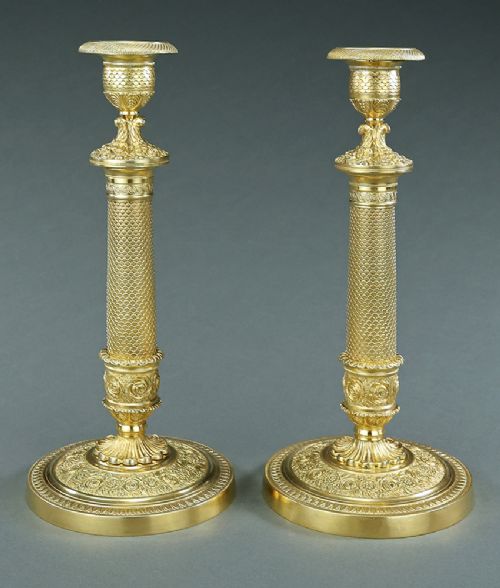
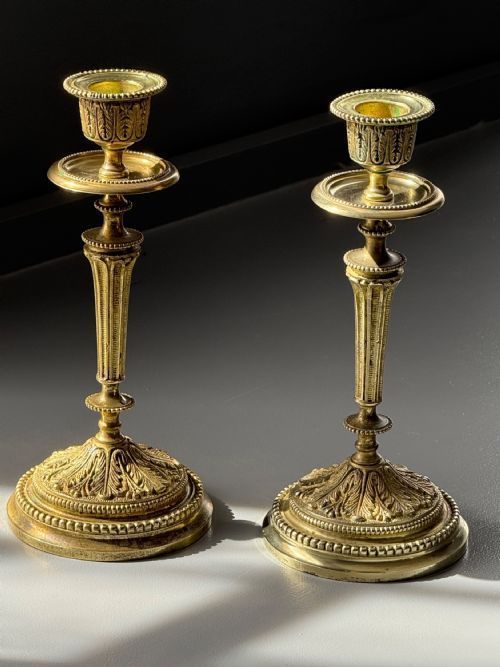
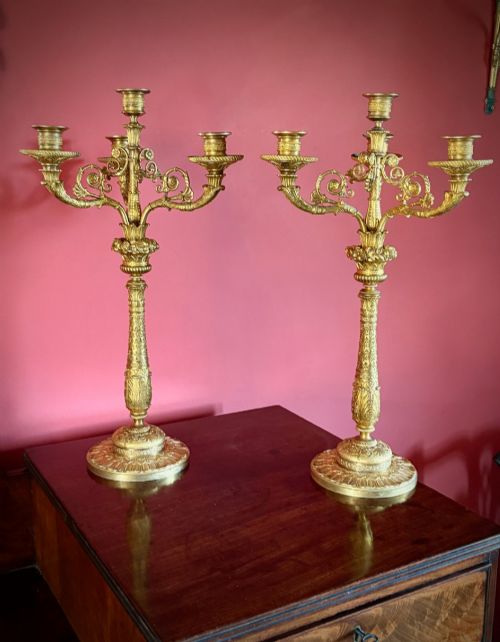
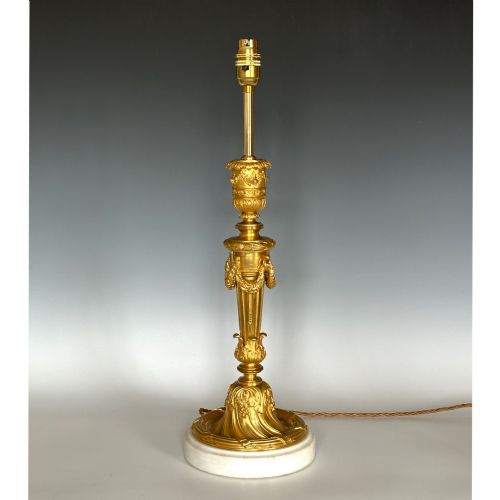
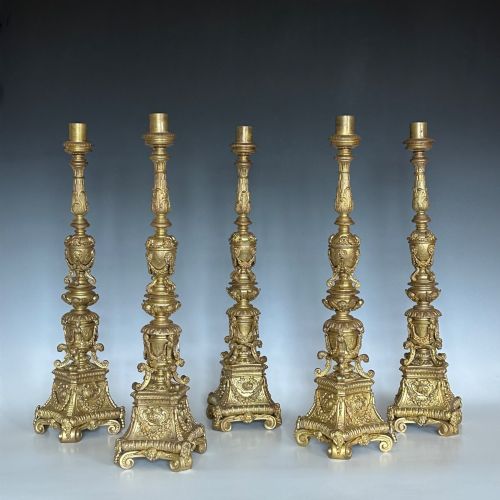
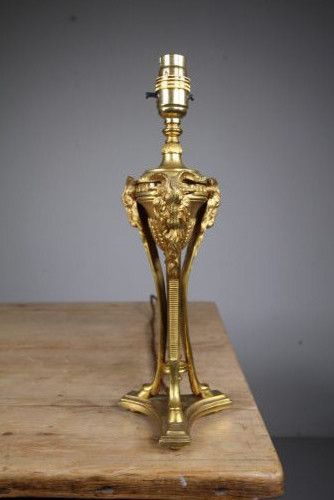
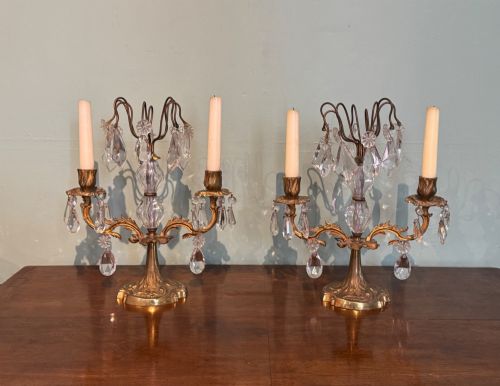
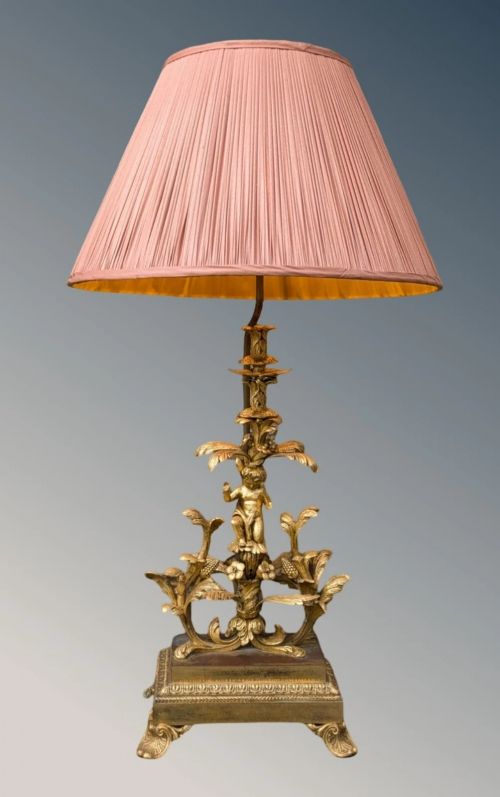


Gilt Brass Table Candlesticks
Gilt brass table candlesticks bring warm metallic reflection to a room, ranging from simple domestic lighting to elaborate French salon pieces.
Gilt Brass Table Candlesticks
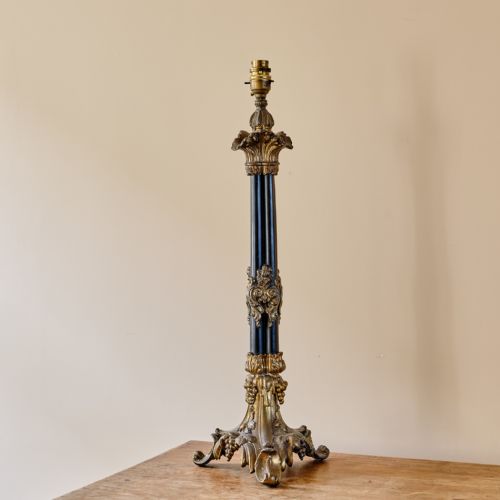
Gilt brass table candlesticks encompass lighting devices made primarily from brass, gilt bronze, and ormolu, often spanning the eighteenth through the early twentieth centuries. Pieces matching this search phrase frequently appear alongside related lighting forms such as candelabra, lamp bases, and lustres.
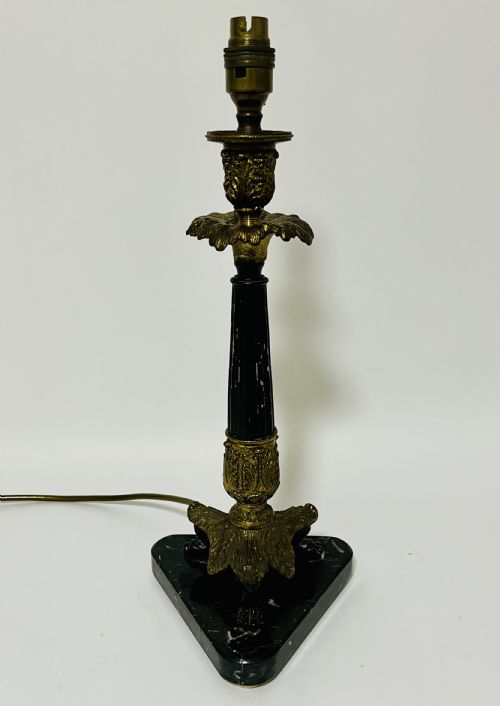
The selection includes distinct regional designs, from French Empire and Louis XVI styles to Victorian English examples. Buyers frequently encounter objects adapted for electricity alongside traditional candle holders.
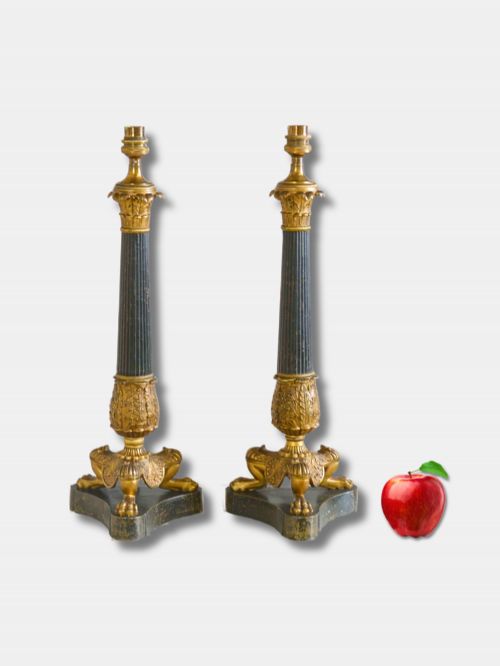
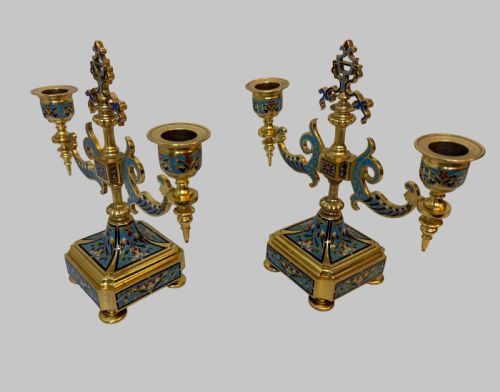
Surviving examples range from single candlesticks to matched pairs and multi-branched candelabra incorporating marble, porcelain, and glass elements.
How They Were Made
Maker workshops utilised metal casting techniques to form intricate components in bronze and brass, applying mercury gilt or ormolu finishes to create a brilliant golden surface layer. Many pieces combine cast metal frameworks with patinated bronze details or applied champleve enamel work.
Structural bases frequently integrate white or coloured marble plinths, glass lustres, and hand-cut crystal drops that reflect candlelight or electric illumination. Craftspeople assembled these multi-part items using threaded rods and screws, allowing for later conversion into table lamps.
The inventory spans the eighteenth, nineteenth, and early twentieth centuries, including Regency and Victorian periods.
What Varies in Quality
The crispness of the chased detail across the cast bronze or brass surface separates standard production from superior workshop output. Deep, hand-chased ornamentation retains sharp contours and clear definition in floral swags, animal feet, and figural motifs.
The durability and richness of the original gilding dictate the visual depth of the object. Heavy fire gilding or ormolu retains a warm, buttery lustre over centuries, whereas thinner plating wears down to reveal the darker base metal underneath.
The Gilt Brass Table Candlesticks Glossary
- Ormolu
- A gilded bronze or brass finish applied through a mercury amalgamation process popular in decorative arts. This technique produces a rich golden appearance characteristic of French furniture and lighting mounts.
- Champleve
- An enamelling technique where troughs are dug into a metal surface and filled with vitreous enamel powder before firing. The resulting coloured patterns sit flush with the surrounding metal frame.
- Lustre
- A glass pendant or drop hung from a lighting fixture to refract and multiply the illumination. These faceted ornaments are commonly found paired with candelabra and candlesticks.
- Patinated Bronze
- Metal darkened or treated chemically to create a controlled surface oxidation. This treatment provides contrast against bright gilt bronze or ormolu mounts.
Gilt Brass Table Candlesticks: Frequently Asked Questions
How do I clean gilt brass?
Dust surfaces gently with a soft dry brush to prevent accumulation in detailed recesses. Avoid harsh chemical polishes that strip historical gilt layers.
Moisture can damage underlying base metals and attached marble or fabric components. Professional conservation cleaning remains safest for delicate antique finishes.
Were these originally electric?
Most antique examples began life holding wax candles before receiving later electrical conversions. Wiring is typically added discreetly through the central shaft during the twentieth century.
Original sconces and drip pans often survive alongside the electrical components. Rewiring should be assessed by a qualified electrician to ensure safety.
What is the difference between ormolu and brass?
Ormolu refers specifically to a high-content copper alloy finished with a gold mercury coating. Brass is a more general yellow alloy of copper and zinc used for structural and decorative items.
While brass can be polished to a bright shine, ormolu possesses a deeper golden tone derived from applied precious metal.
How do I date these pieces?
Stylistic indicators such as Neoclassical motifs, Empire proportions, or Victorian ornamentation provide initial chronological markers. Construction methods, including casting seams and fastening screws, offer further clues to the period of manufacture.
Matching the object to recorded design repertoires helps narrow down the decade or reign.