


Gilt Brass Chenets
Gilt brass chenets are hearth ornaments that frame a fireplace opening, bringing warmth and metallic lustre to a room even when the fire is unlit.
Gilt Brass Chenets
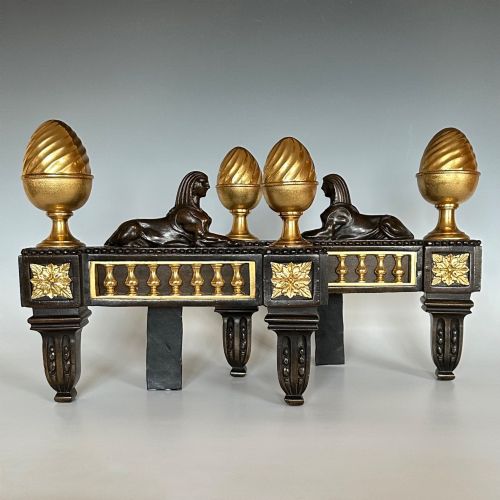
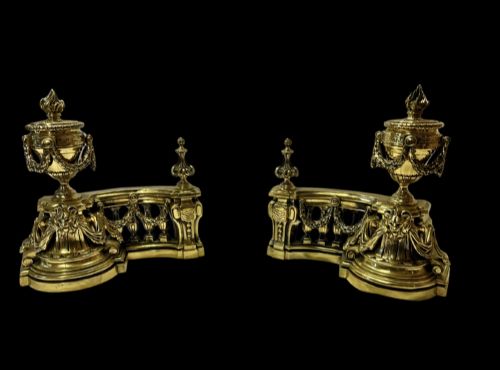
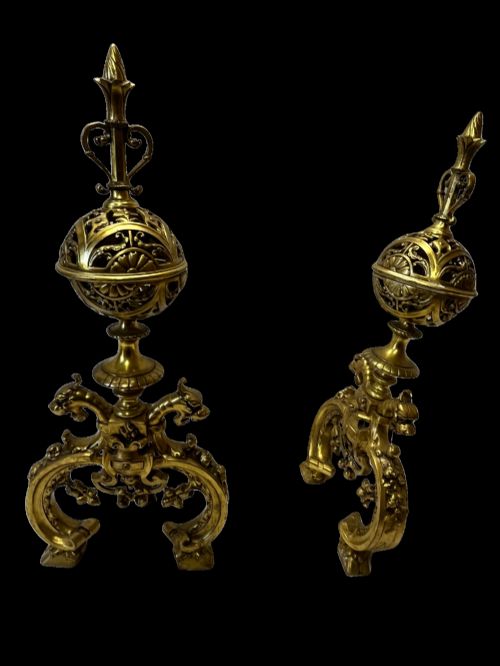
When you search for gilt brass chenets, you look at decorative metal fire dogs and hearth supports designed to hold logs in an open fireplace. The pieces on this page span the eighteenth and nineteenth centuries, taking forms that originate in French domestic interiors.
The selection here encompasses Regency and Georgian examples alongside French Rococo revival pieces from the latter half of the nineteenth century. Most items appear as matched pairs, combining upright ornamental fronts with horizontal iron or steel fire tool rests attached to the rear.
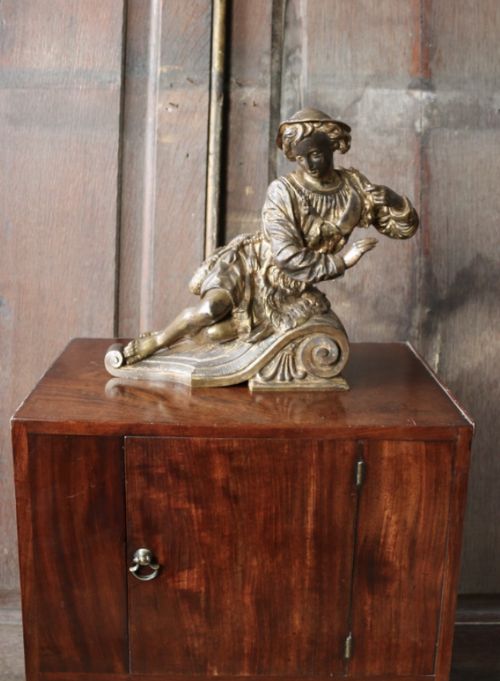
Makers fashioned these accessories to sit on the hearthstone, frequently incorporating adjustable widths to suit different fireplace openings. Alongside traditional andirons, the material includes variants styled as fire guards, fender components, and sculptural figures.
How they were made
The construction of these hearth pieces relies upon a combination of cast and wrought metals, principally brass, bronze, and iron. Foundries cast the decorative figural and floral motifs in brass or bronze, applying a layer of mercury gilding or ormolu to the surface.
Structural components such as the horizontal bars and internal supports utilise heavier forged iron or cast iron to withstand the intense heat of an open hearth. Artisans then assembled the cast ormolu mounts onto the iron frames using threaded bolts and pins.
Cherubs and flame-hued ormolu scrollwork keep watch over hearths, ensuring the fire stays lively even on the gloomiest days.
What varies in quality
Weight and structural integrity also distinguish the upper tier of objects from simpler foundry output. Heavier bronze castings paired with robust iron tool rests indicate a sturdier manufacture intended for functional hearth use rather than purely decorative placement.
The Gilt Brass Chenets Glossary
- Chenet
- A French term for an andiron or fire dog, used to support logs in an open fireplace. They typically feature a decorative vertical front and a horizontal rear bar.
- Ormolu
- Gilded bronze, produced by applying a mercury and gold amalgam to a bronze casting and heating it until the mercury vaporised. The technique creates a rich, matte golden finish.
- Andiron
- A metal support for firewood in a hearth, usually manufactured in matching pairs. They elevate the logs to allow air circulation underneath for better combustion.
- Rococo Revival
- A nineteenth-century design style that emulates the asymmetric scrolls, shell motifs, and naturalistic curves of the eighteenth-century French Rococo movement.
Gilt Brass Chenets: Frequently Asked Questions
How do I use them in a modern fireplace?
These pieces sit directly on the hearth floor inside the fireplace opening, often with their horizontal bars extending backward to hold logs.
In decorative settings without a working fire, they stand flat against the back brickwork or hearthstone to frame the empty space.
What is the difference between a chenet and an andiron?
The words are largely interchangeable, though chenet specifically denotes the French decorative style of fire dog.
English and American makers often used andiron, while continental pieces designed in the Rococo or Louis styles are commonly called chenets.
How do I clean gilt brass?
Dust the surface gently with a soft, dry brush to remove soot and surface debris without scratching the fragile metallic layer.
Avoid chemical polishes and abrasive cloths, as these will wear away the thin ormolu or gilding and expose the base metal beneath.
Were they always sold in pairs?
Hearth accessories of this type were manufactured as balanced pairs to flank both sides of the fireplace opening.
Each piece incorporates a mirrored design or matching figural subject to maintain symmetry across the hearth.