



Vintage Fireplace Iron Stands
These vintage fireplace iron stands organise hearth tools and firescreens across Victorian, Regency, and Georgian periods using cast iron, wrought iron, brass, and steel.
Vintage Fireplace Iron Stands
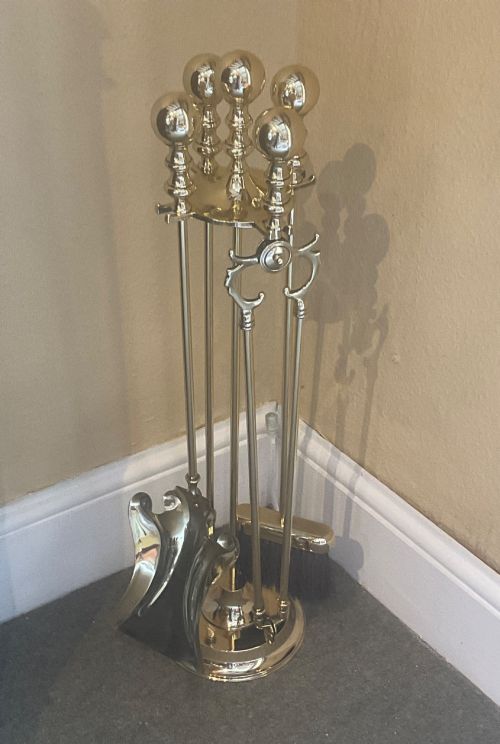
Vintage fireplace iron stands encompass essential hearth accessories including companion sets, firescreens, fire dogs, and tool rests spanning the eighteenth, nineteenth, and early twentieth centuries. These pieces serve both practical functions and decorative roles near the fireplace, grouping pokers, tongs, and shovels or shielding rooms from open flames.
The selections available here range from sturdy cast iron and wrought iron frames to refined brass and steel combinations. English and French workshops produced these items across varied stylistic movements such as Gothic Revival, Arts and Crafts, and Aesthetic Movement.
Buyers encounter substantial manor house companion sets alongside compact footmen and fire tool rests designed for specific hearth layouts. Each form reflects the domestic habits and heating methods of its respective period.
How they were made
Metalworking techniques dictate the construction of these stands, combining cast iron, wrought iron, and steel components with brass or copper accents. Blacksmiths and foundry workers utilised casting, forging, and riveting to shape durable hearth furniture capable of withstanding intense heat.
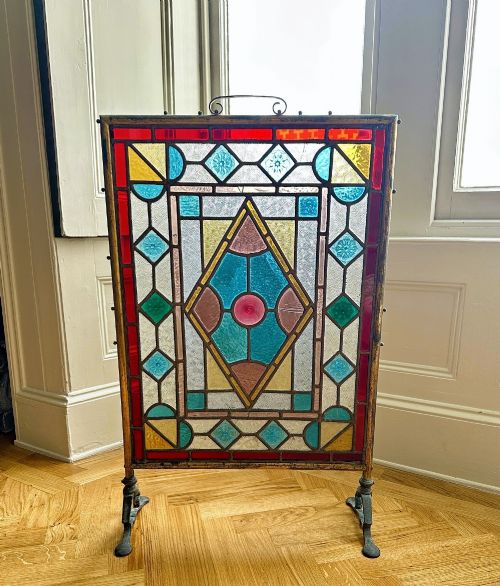
Decorative elements often integrate stained glass panels, painted details, or gilt finishes into the metal frameworks. The physical weight and material density vary according to whether a piece originated as a heavy country house accessory or a smaller domestic footman.
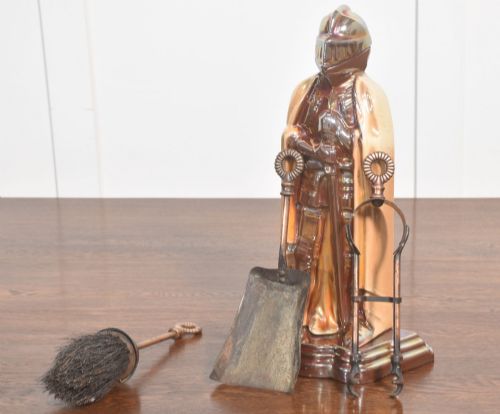
Painted metal knights stand ready to hold your hearth tools.
What varies in quality
Material substance and structural integrity separate robust examples from lighter domestic items, evident in heavy gauge steel, solid brass, and substantial cast iron parts. Superior pieces retain integrated components such as matching tool rests, original fire dogs, and secure fixings without excessive replacement parts.
Artistic execution distinguishes standard production from fine craftsmanship, visible in the precision of Gothic Revival motifs, Arts and Crafts detailing, or hand-finished brass mounts. The harmony of design across companion sets and firescreens indicates the original maker's investment in the object.
The Vintage Fireplace Iron Stands Glossary
- Andirons
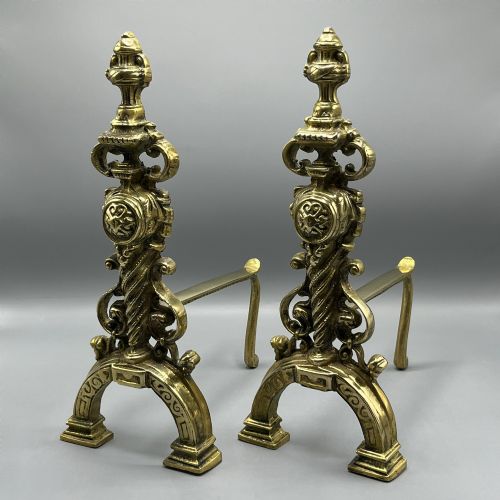
- Iron or brass supports placed in a fireplace to elevate logs for better air circulation. They often feature decorative fronts known as firedogs.
- Companion set
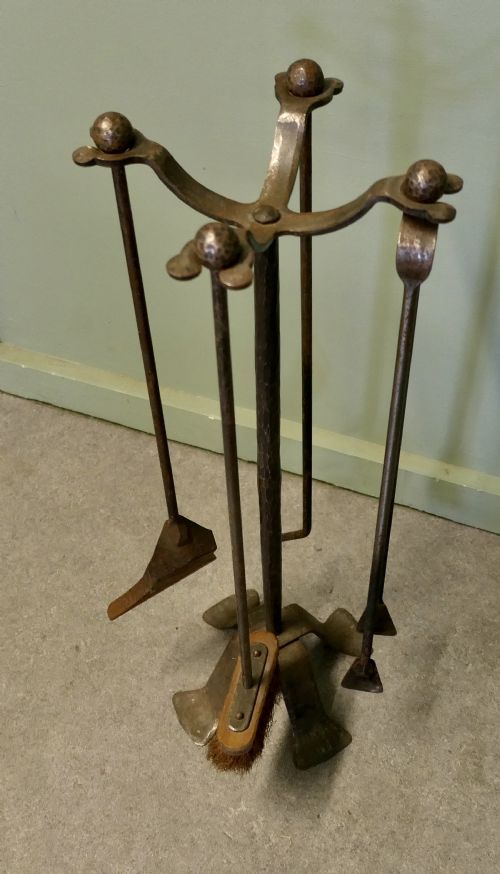
- A matched collection of fireside tools, typically including a poker, tongs, shovel, and brush, housed on a dedicated stand. These sets emerged in various period styles to coordinate with hearth furnishings.
- Footman
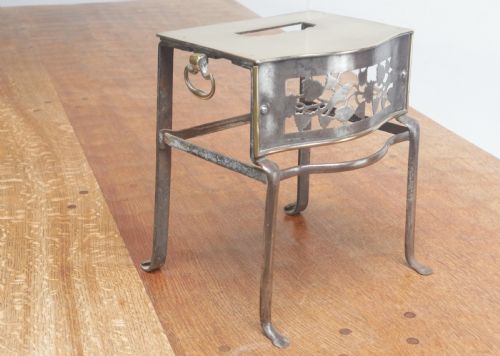
- A metal stand placed by the hearth to keep food or kettles warm. Georgian and Victorian examples frequently combine brass and steel.
- Firescreen
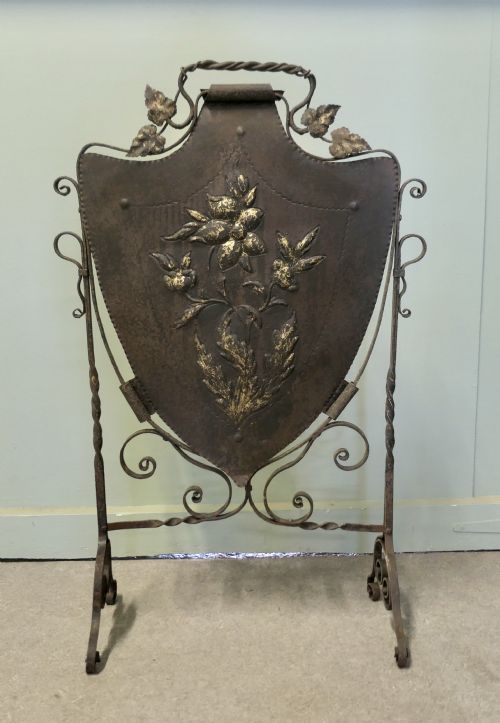
- A barrier placed in front of a fireplace to block radiant heat when a fire dies down. Many incorporate iron stands supporting glass, metal mesh, or fabric panels.
- Chenet
- The French term for an andiron or firedog. These items frequently display decorative brass casting typical of continental hearth design.
Vintage Fireplace Iron Stands: Frequently Asked Questions
How do I choose the right companion set?
Consider the scale of your hearth and the surrounding period details of your room. Matching the metal finish, such as brass or cast iron, creates a cohesive appearance.
Larger manor house sets suit expansive fireplaces, while compact tool rests or footmen fit smaller traditional spaces.
What is the difference between andirons and tool rests?
Andirons sit inside the fireplace hearth to support burning logs and improve airflow. Fireside tool rests provide a dedicated place to hang pokers and tongs beside the opening.
Both items utilise heavy metals like iron and brass to withstand daily use near heat.
How should I maintain cast iron and brass?
Keep metal surfaces clean using dry cloths and avoid harsh chemical cleaners that strip patinas. Cast iron benefits from occasional light oiling to prevent oxidation in damp environments.
Brass elements can be left with their natural aged finish or polished gently depending on personal preference.
How do I date a firescreen or stand?
Examine the manufacturing techniques, material choices, and stylistic markers such as Gothic Revival or Arts and Crafts motifs. Eighteenth and nineteenth-century pieces often display hand-forged ironwork or heavy cast brass components.
Later Edwardian and 1930s items frequently incorporate lighter steel frames and different assembly methods.