
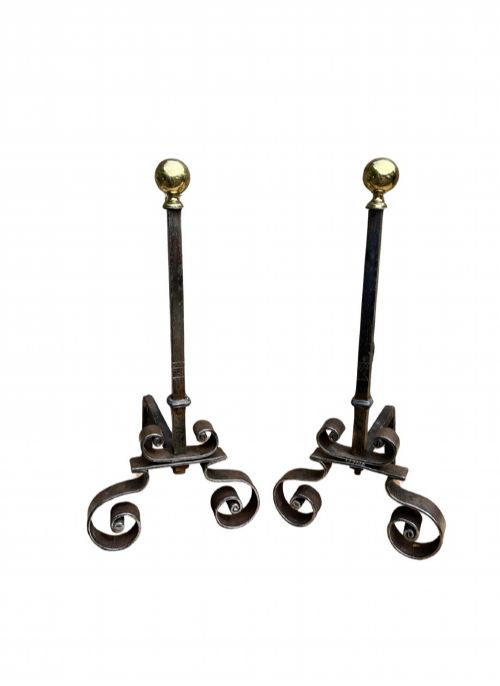
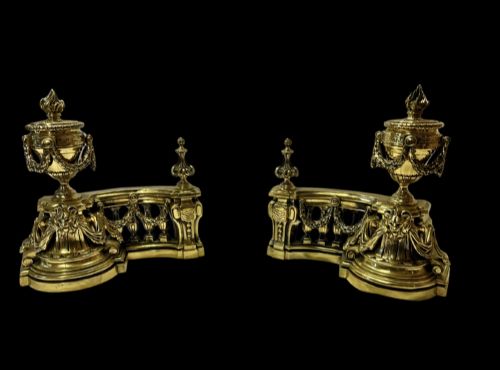
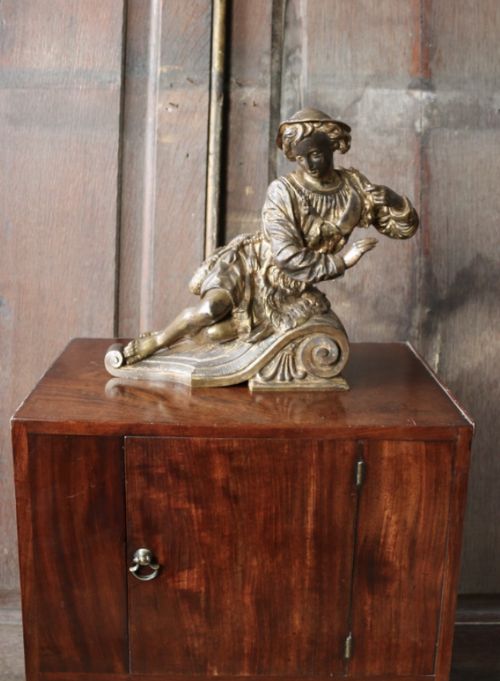


French Brass Firedogs
French brass firedogs anchor an open hearth with sculptural weight, bringing centuries of continental warmth and intricate metalwork to your fireplace.
French Brass Firedogs
When you search for french brass firedogs, you are looking at heavy hearth furniture designed to support logs above the hearth floor for better airflow. The pieces listed on this page span several centuries, reaching from the eighteenth century through the nineteenth century and into the early twentieth century. You will encounter forms styled in French Rococo, Louis XVI, Baroque, and Victorian Neo-Classical designs.
The objects appear under various names including andirons, chenets, and fire dogs, often detailed with sculptural statuettes or tool rests. Materials range from solid brass and gilt bronze to ormolu, sometimes paired with iron components for structural strength. These accessories transform a plain fireplace into a focal point of period design.
How they were made
Maker's workshops produced these pieces primarily through casting metals like brass, bronze, and iron into intricate moulds. Artisans then refined the rough castings by hand, chasing surface details to accentuate the scrolls and figures.
Gilt brass and ormolu variants received a thin layer of gold application over the base metal to create a brilliant, lasting shine. Iron bars and billets were forged separately to bear the direct heat of the fire while the decorative fronts remained ornamental.
Materials documented in the inventory include cast iron, wrought iron, bronze, ormolu, and solid or gilt brass.
What varies in quality
The distinction between ordinary and exceptional pieces lies in the crispness of the cast ornamentation and the depth of the hand-chasing. Superior examples display sharply defined acanthus leaves and expressive figures rather than softened, generalized contours.
Weight and material density also separate standard production from monumental work, with heavier gilt bronze and ormolu mounts commanding greater visual presence than lighter brass castings.
The French Brass Firedogs Glossary
- Chenet
- The French term for an andiron or firedog, typically featuring an ornate front pillar and a horizontal bar to hold logs.
- Ormolu
- Finely ground high-carat gold mercury-gilded onto a bronze or brass object, creating a rich golden surface finish.
- Andiron
- A metal support placed in a fireplace to hold wood above the hearth floor, consisting of a vertical decorative front and a horizontal rear leg.
- Rococo
- An eighteenth-century design style characterised by asymmetrical scrollwork, shell motifs, and elaborate curved ornamentation.
- Chasing
- The hand-work of hammering or carving metal surfaces with fine punches to sharpen details after casting.
French Brass Firedogs: Frequently Asked Questions
What is the difference between andirons and firedogs?
Andirons and firedogs are functionally identical terms for the same hearth supports. Both refer to the paired metal structures that hold logs in an open fireplace.
Regional preferences and historical terminology usually dictate which word a maker or seller uses. French pieces are frequently called chenets alongside these English terms.
How do I know if they are antique?
Examine the construction methods visible on the reverse side of the vertical standard and the horizontal iron billet. Hand-filed surfaces, cast bronze components, and worn gilding generally indicate nineteenth-century or earlier manufacture.
Check for signs of genuine hearth use, such as heat discolouration on the iron bars, which distinguishes period pieces from modern reproductions.
Can I actually burn wood on them?
Most antique firedogs are sturdy enough to support burning logs, particularly those featuring robust iron billets behind the decorative brass fronts. Lighter decorative pairs are better suited for display or holding gas logs.
Assess the thickness of the iron support bar before building a large fire to ensure it can handle the weight and heat.
How do I clean brass and ormolu?
Dust the metal gently with a soft, dry cloth to remove surface particles without disturbing the aged patina. Avoid abrasive metal polishes, which strip away original gilding and ormolu finishes.
Professional conservation cleaning is advisable if heavy soot accumulation obscures the fine details of the cast ornamentation.