
Gilt Brass Cabinet
A gilt brass cabinet brings together fine cabinet timbers and polished metal mounts to create a striking focal point for any room.

Gilt Brass Cabinet
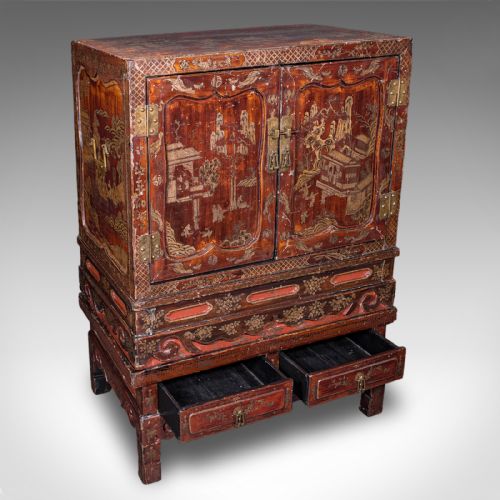
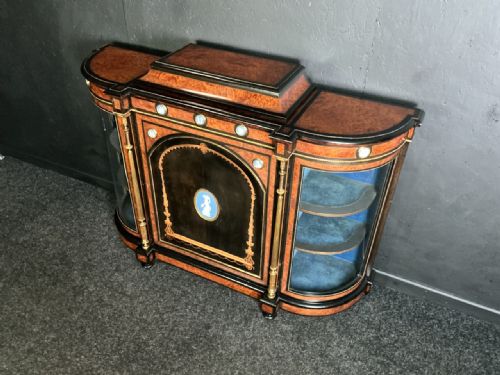
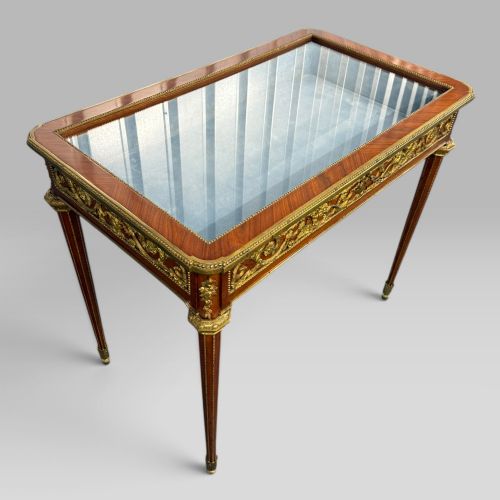
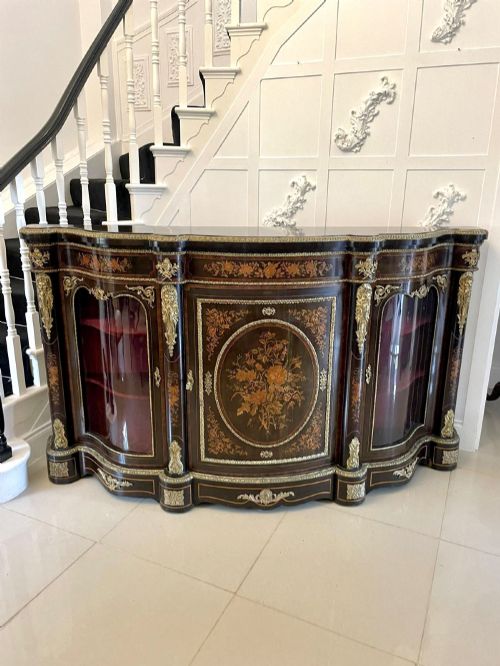
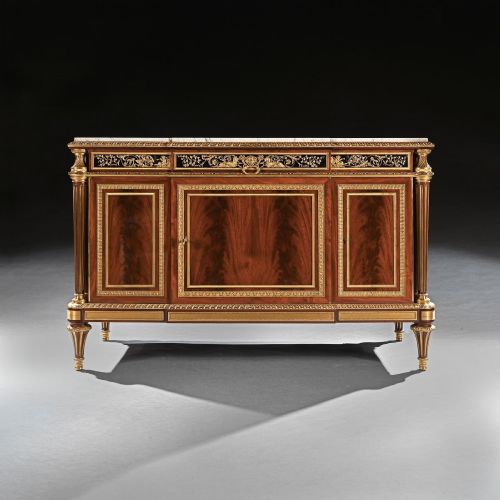
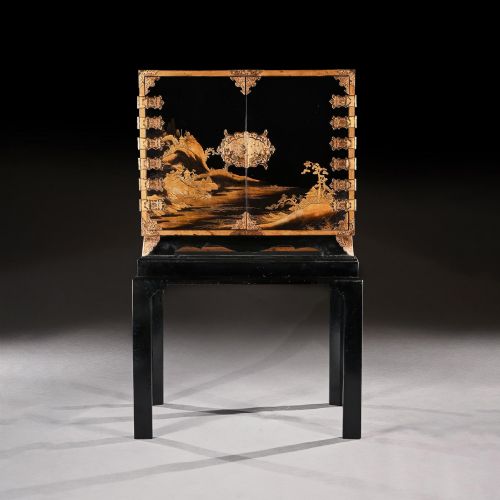
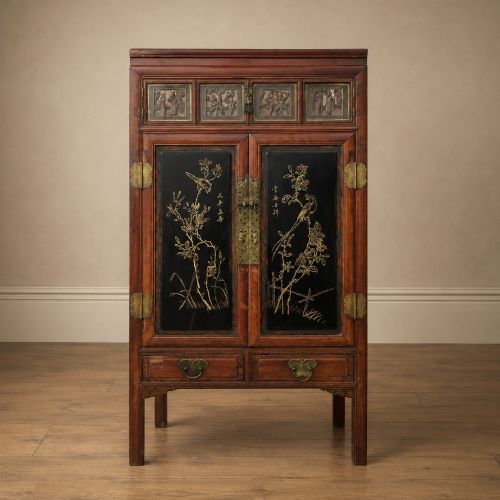
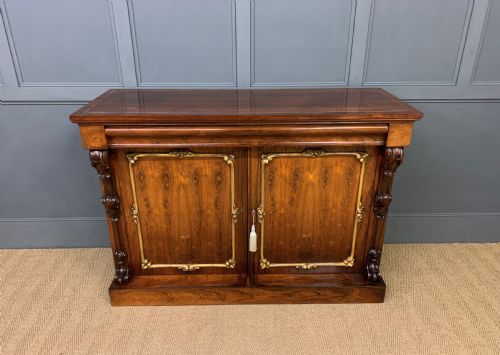
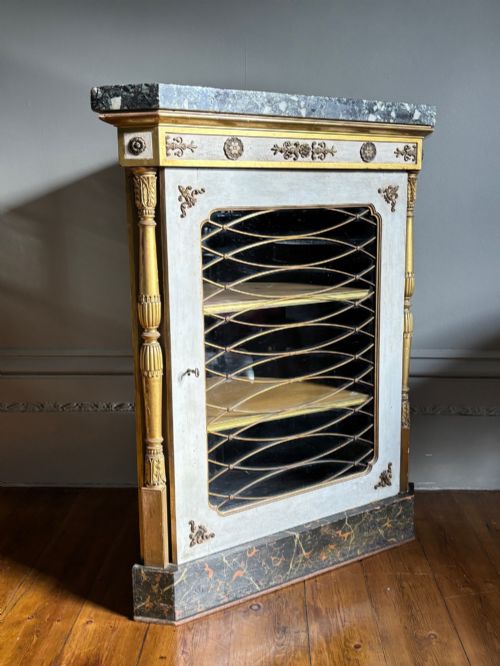
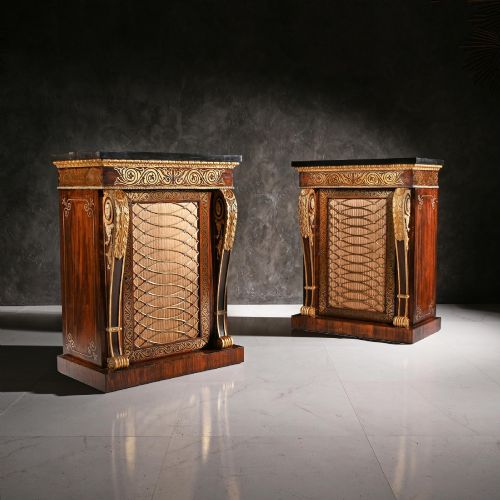
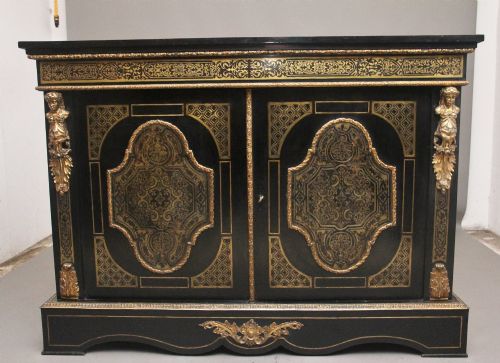
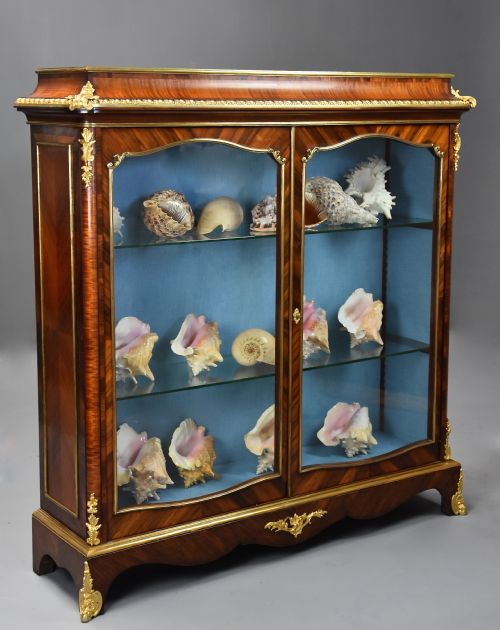
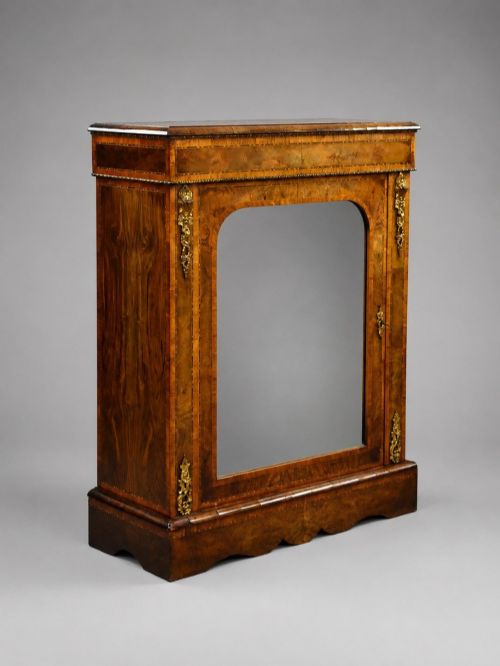
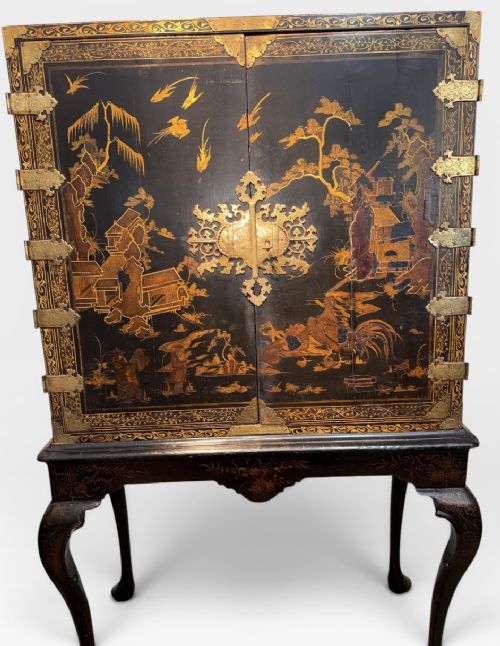
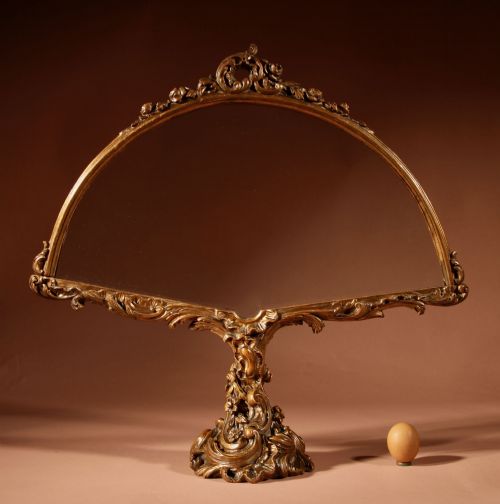
A gilt brass cabinet is a piece of antique storage furniture featuring brass or ormolu mounts, frames, galleries, and inlays. When searching for a gilt brass cabinet, you encounter diverse forms ranging from compact pier cabinets and side tables to large breakfront credenzas and display vitrines.
The pieces appearing here span the Regency and Victorian periods, alongside later twentieth-century interpretations. Timbers such as rosewood, mahogany, and ebonised wood form the primary structures, accented with gilt brass details and occasionally porcelain plaques.
Originating predominantly from British and French workshops, these items serve as both functional storage and display surfaces. The category encompasses everything from formal glazed bookcases to low credenzas designed for drawing rooms.
Materials and construction
Makers built the carcass of a gilt brass cabinet using dense hardwoods like mahogany, rosewood, kingwood, or walnut, frequently applying veneers or ebonisation. Metalwork components, including cast ormolu mounts and gilt brass stringing, were then meticulously fitted to the timber surfaces.
Glazing, marble tops, and marquetry inlays frequently accompany the brass elements on these cabinets. Workshops utilised traditional joinery techniques to ensure stability, supporting heavy marble slabs and intricate glass display doors.
Listings feature eighteenth and nineteenth-century pieces alongside twentieth-century revivals, utilising materials like mahogany, rosewood, and marble.
Assessing quality in construction and design
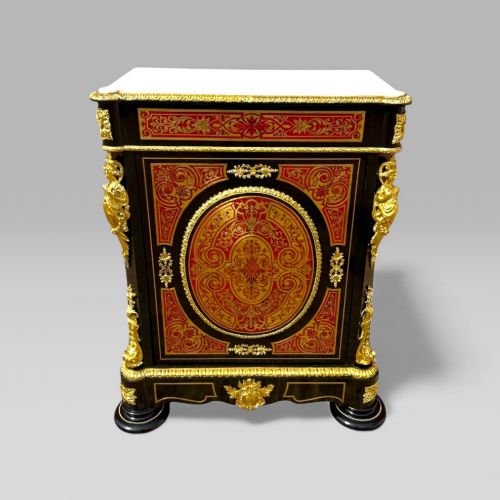
Quality rests in the crispness of the cast brass mounts and the precision with which they are integrated into the wood. Finer examples display hand-chased details on the ormolu and sophisticated marquetry or boulle work across the timber carcass.
The choice of primary timber and secondary woods indicates the workshop tier, with solid mahogany or figured walnut preferred over simpler carcases. Heavier gauge brass and intact original galleries separate superior pieces from standard production.
François Linke·Henry Dasson·Louis Constantin Le Gaigneur·Paul Sormani·Samuel Marti
The Gilt Brass Cabinet Glossary
- Ormolu
- Gilded bronze or brass applied as decorative mounts on furniture. It provides a bright metallic contrast against dark timbers like rosewood and ebonised wood.
- Boulle
- A form of marquetry using brass and tortoiseshell inlaid in intricate patterns. It originates from French cabinet-making traditions.
- Pier cabinet
- A narrow display cabinet designed to fit against the wall space between windows. These pieces often feature glass doors and gilt brass mounts.
- Credenza
- A low sideboard or cabinet originating in the nineteenth century, frequently fitted with doors and open shelves. They serve to display decorative objects in reception rooms.
- Marquetry
- Decorative patterns formed by inserting pieces of wood, ivory, or metal into a veneer. It creates pictorial or geometric designs across cabinet doors and tops.
Gilt Brass Cabinet: Frequently Asked Questions
How do I care for a gilt brass cabinet?
Dust the timber surfaces regularly with a soft, dry cloth and avoid commercial polishes containing silicone. Clean the brass mounts gently without abrasive cleaners to preserve the original gilding.
Keep the cabinet away from direct sunlight and heat sources to prevent the wood veneers from drying out or warping over time.
What rooms suit a gilt brass cabinet?
These cabinets work well in living rooms, dining rooms, and hallways as statement display pieces. Glazed versions suit studies or libraries for housing books and collections.
Ensure the room has stable humidity levels to protect antique timbers and delicate metal fittings from environmental stress.
How do I distinguish Regency from Victorian pieces?
Regency pieces often display restrained neoclassical lines, simpler brass inlay, and dark mahogany or rosewood. Victorian examples tend to feature heavier proportions, elaborate marquetry, ebonised finishes, and richer ormolu mounts.
Examining the internal secondary woods and construction methods helps confirm the manufacturing period.
Are the brass mounts original?
Original mounts show consistent wear patterns, patination, and correct casting techniques appropriate for the period. Screw types and fixing methods on the interior should match the era of the cabinet.
Replacement mounts often appear too bright or show mismatched fixing holes when inspected closely from the inside.