





Vintage Rosewood Side Cabinet
These vintage rosewood side cabinet examples bring rich grain and architectural presence into a room, offering both display space and practical storage.

Vintage Rosewood Side Cabinet
A vintage rosewood side cabinet sits against a wall in a living room, dining room or hallway, providing a flat top surface alongside enclosed cupboard storage or open shelving. When you search for this phrase, you encounter pieces spanning the Regency period through the 1930s, reflecting shifts in taste from architectural classical designs to later revival styles.
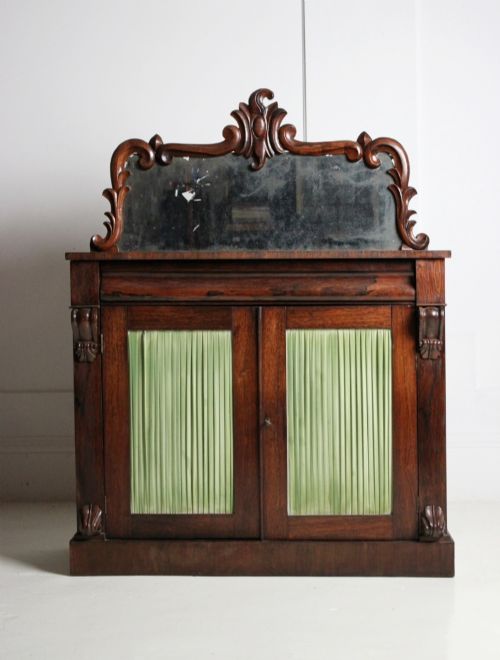
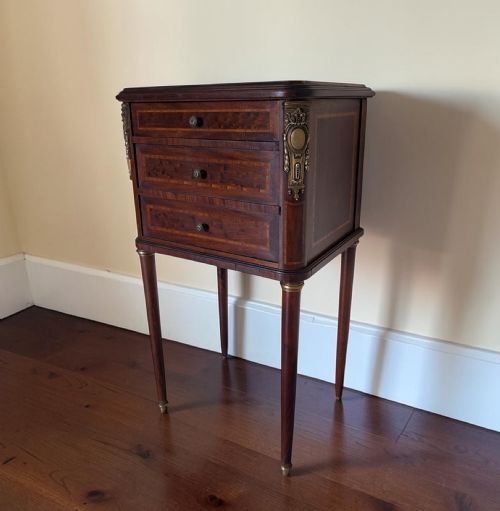
The selections on this page are dominated by Regency and Victorian examples alongside later pieces from the early twentieth century. You will find forms ranging from low chiffoniers with brass grill doors to narrow display cabinets and bedside cupboards.
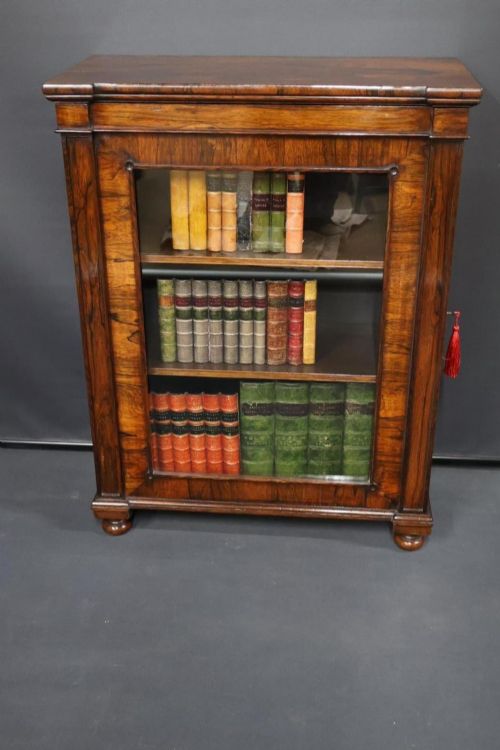
Beyond the standard side cabinet form, related furniture types appear frequently in the evidence, including open bookcases, pier cabinets, commodes, and work tables. These share the characteristic use of rosewood and serve similar functional roles within traditional interior schemes.
How they were made
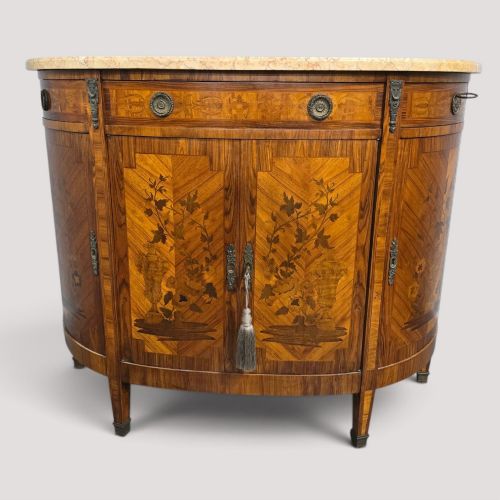
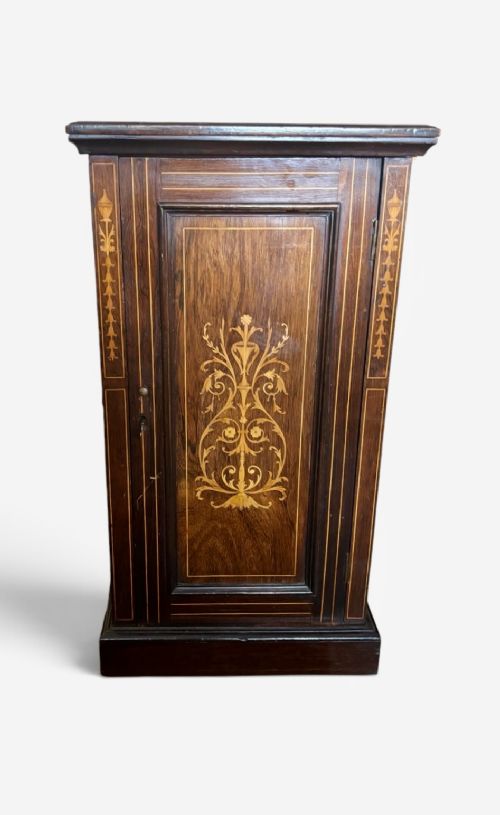
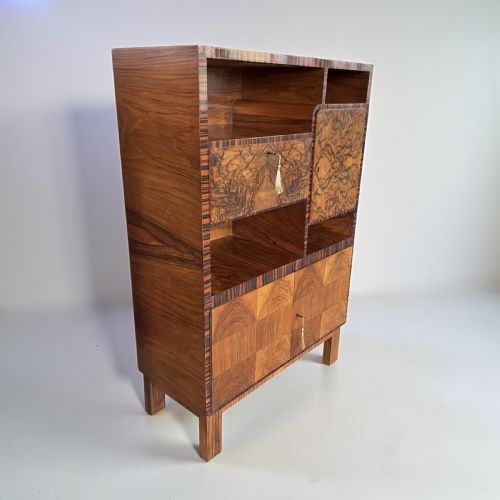
Cabinet makers utilised dense rosewood timbers, often applied as fine veneers over secondary woods to showcase rich, figured grain patterns. These wooden surfaces are frequently enhanced by marquetry inlay using contrasting timbers such as satinwood, or detailed with mother of pearl.
Metalwork played a structural and decorative role, with brass handles, grilles, and inlay work integrated into Regency and Victorian pieces. Ormolu mounts and marble tops appear on pieces influenced by French Louis styles, adding weight and contrasting textures to the timber construction.
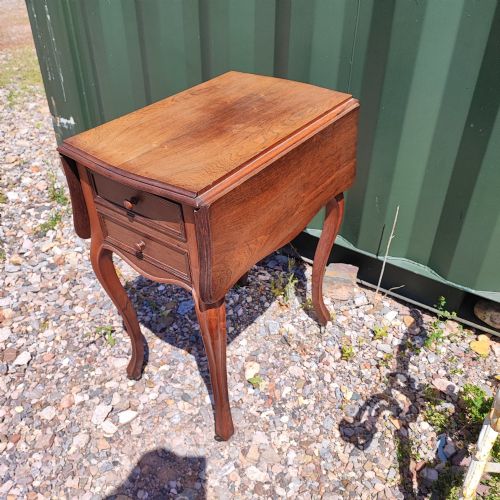
Some nineteenth-century tables cleverly doubled as sewing work stations, hiding threads and needles beneath polished rosewood lids.
What varies in quality
Quality in these cabinets rests upon the choice of timber and the precision of the cabinet work. Superior pieces display carefully matched rosewood veneers with continuous grain flow across doors and drawers, whereas lesser examples rely on simpler cuts of timber.
The refinement of decorative details separates standard pieces from exceptional ones. Finely executed brass inlay, crisp marquetry, and substantial mounts demonstrate the skill of the original workshop.
Edwards and Roberts
The Vintage Rosewood Side Cabinet Glossary
- Marquetry
- Decorative patterns formed by inserting small pieces of wood, veneer, or shell into a solid timber background. This technique creates elaborate floral or geometric designs across the surface of the cabinet.
- Chiffonier
- A low sideboard or cabinet featuring cupboards enclosed by doors, often surmounted by a shelf with a mirror or back panel. Originating in the Regency period, it served as a versatile piece for dining rooms and drawing rooms.
- Ormolu
- Gilt bronze mounts applied to furniture for decorative effect. Popular in French-influenced pieces, these cast metal ornaments accentuate the corners and feet of the cabinet.
- Pier cabinet
- A narrow cabinet designed to fit into the wall space between windows. These pieces often feature glass doors to display collections of porcelain or small objects.
- Gonçalo-Alvez
- A dense exotic hardwood sometimes used in place of rosewood, featuring striking dark brown and amber figuring. It appears in high-status nineteenth-century cabinet work.
Vintage Rosewood Side Cabinet: Frequently Asked Questions
What is a rosewood chiffonier?
A chiffonier is a low cabinet with enclosed storage below, which developed during the Regency period as a practical piece for the home.
These pieces often include a raised shelf at the back and brass grille doors, making them suitable for displaying decorative items while keeping books or linens out of sight.
How do I care for rosewood furniture?
Rosewood requires stable humidity and protection from direct sunlight to prevent the timber from drying out or fading.
Regular dusting with a dry, soft cloth is sufficient for maintenance, avoiding silicone-based polishes that can build up on the antique polish over time.
How can I tell Regency from Victorian cabinets?
Regency cabinets typically feature restrained classical proportions, architectural brass inlay, and clean rectilinear lines.
Victorian pieces often introduce heavier ornamentation, curved revival styling such as Louis XV influence, and more elaborate marquetry work.
Where were these cabinets used originally?
These cabinets were placed in principal rooms like drawing rooms, parlours, and dining rooms to serve both social and storage functions.
Their decorative surfaces held lamps and ornamental objects, while the interior spaces accommodated tableware, documents, or books.